

1. Introduction to Ephesus
Ephesus, located near the town of Selçuk in Turkey's Izmir province, is one of the best-preserved ancient cities in the world. Known for its remarkable ruins and its role in both Roman and early Christian history, Ephesus was once a thriving metropolis, home to thousands of people. Today, it’s a major tourist attraction and a UNESCO World Heritage Site. But as you prepare to explore its wonders, you may be wondering: "Is there a lot of walking in Ephesus?"
2. Is There a Lot of Walking in Ephesus?
Yes, exploring Ephesus requires a significant amount of walking. The ancient city spans a large area, with key landmarks and ruins scattered throughout. The entire site covers about 2 kilometers (1.2 miles) from the Upper Gate (Magnesia Gate) to the Lower Gate (Harbor Gate), so walking from one end to the other will cover a few kilometers. Additionally, many attractions, like the Terrace Houses and the Great Theatre, involve walking up slopes or climbing stairs.
Walking Distances:
- Upper Gate to Lower Gate: Approximately 2 kilometers (1.2 miles)
- Curetes Street: 300 meters (0.2 miles)
- Library of Celsus to Great Theatre: 200 meters (0.12 miles)
- Overall Walking Distance: Visitors typically walk 3 to 5 kilometers (2-3 miles), depending on how much of the site they explore.
3. How to Prepare for Walking in Ephesus
Given the extensive walking involved, it’s important to come prepared. Here’s how:
- Wear Comfortable Shoes: The terrain in Ephesus is uneven, with cobblestone streets, marble walkways, and gravel paths. Wear sturdy shoes to avoid discomfort or slipping.
- Dress for the Weather: Ephesus can get quite hot, especially during the summer months, so wear light, breathable clothing. In cooler months, bring layers to adjust to fluctuating temperatures.
- Bring Sun Protection: The site has limited shade, so pack sunscreen, sunglasses, and a wide-brimmed hat to protect yourself from the sun.
- Stay Hydrated: Ephesus involves a lot of walking under the sun, so make sure to bring plenty of water. While there are cafes near the entrance, options inside the site are limited.
4. Key Attractions and Walking Distances
Here are the major attractions in Ephesus and their walking distances:
- The Library of Celsus: Located near the middle of the site, it’s one of Ephesus’ most iconic structures. The walking distance is about 1 kilometer from both the Upper and Lower Gates.
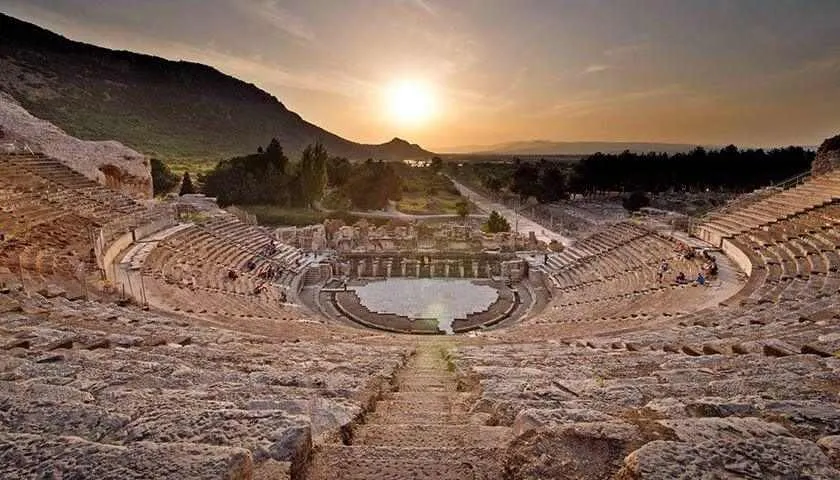
- The Great Theatre: This massive structure, with a capacity of 25,000 spectators, is located near the Lower Gate, about 200 meters from the Library of Celsus.
- Curetes Street: The main street of Ephesus, lined with columns, leading to the Temple of Hadrian. It stretches for about 300 meters.
- The Terrace Houses: These luxurious homes of the elite feature intricate mosaics and frescoes. Located just 100 meters from the Library of Celsus, they involve walking up stairs.
- The Temple of Artemis: Although only a few columns remain, the Temple of Artemis, once one of the Seven Wonders of the Ancient World, is located outside the main site, approximately 2 kilometers from the Upper Gate.
5. Best Routes for Touring Ephesus
Ephesus has two main gates: the Upper Gate (Magnesia Gate) and the Lower Gate (Harbor Gate). Most visitors prefer starting at the Upper Gate and walking downhill, making the tour more comfortable.
Suggested Route:
- Start at the Upper Gate: Enter the site at the Magnesia Gate.
- Walk along Curetes Street: Explore the shops, temples, and statues.
- Visit the Library of Celsus: Admire its stunning architecture.
- Explore the Terrace Houses: If you have a ticket, take time to explore the luxurious homes.
- Finish at the Lower Gate: End your tour by visiting the Great Theatre and exiting through the Lower Gate.
6. Practical Tips for Navigating Ephesus
- Arrive Early: To avoid crowds and heat, arrive as soon as the site opens (usually 8:00 AM). This also gives you more time to explore before it gets too crowded.
- Take Breaks: There are benches and shaded areas where you can rest, though they may be limited. Plan to take breaks, especially if you’re walking in the heat.
- Hire a Guide: Ephesus is large and full of history, so consider hiring a guide for a deeper understanding of the site’s significance. A guide can also help you navigate the site and ensure you don’t miss any important attractions.
7. What to Bring for a Comfortable Visit
- Comfortable Shoes: Be sure to wear sturdy, supportive shoes.
- Sunscreen and Hat: To protect yourself from the sun.
- Water Bottle: To stay hydrated as you explore.
- Guidebook or Map: A guidebook or map will help you navigate the site and understand the history behind each landmark.
- Snacks: While there are cafes near the entrance, consider bringing snacks to enjoy during your visit.
8. Frequently Asked Questions
-
Q: Is there a lot of walking in Ephesus?
- A: Yes, there is significant walking involved. Visitors typically walk between 3 to 5 kilometers during their visit, depending on which areas they choose to explore.
-
Q: Can I visit Ephesus if I have mobility issues?
- A: Ephesus can be challenging for visitors with mobility issues due to its uneven terrain. However, some parts of the site are more accessible. It’s best to check with a tour operator in advance to discuss specific needs.
-
Q: How long does it take to tour Ephesus?
- A: Most visitors spend around 3 to 4 hours exploring Ephesus. If you plan to visit nearby attractions like the House of the Virgin Mary, you may want to allocate more time.
Conclusion
Yes, there is a lot of walking in Ephesus, but it’s part of the immersive experience of exploring one of the most iconic ancient cities in the world. With proper preparation—comfortable shoes, sun protection, and staying hydrated—you can enjoy your visit and make the most of the remarkable history that unfolds before you. Whether you're admiring the grand Library of Celsus or exploring the famous Great Theatre, each step you take brings you closer to understanding the incredible legacy of Ephesus.