

Exploring the Architectural Styles of Ephesus
Discover the diverse architectural styles of Ephesus, from Hellenistic to Roman influences, and how they reflect the city’s rich history and cultural significance. Ephesus, one of the most important ancient cities in Turkey, boasts a rich tapestry of architectural styles that reflect its long history and the various cultures that influenced it. From Hellenistic beginnings to Roman grandeur, the structures in Ephesus tell a story of artistic achievement and historical significance. This guide explores the architectural styles that define Ephesus and highlights some of the city’s most notable structures.
1. Hellenistic Architecture
Overview: Ephesus was initially established as a Greek city, and its early architecture showcases the Hellenistic style, characterized by its emphasis on grandeur, decorative elements, and symmetry.
Key Features:
- Columns and Porticos: Hellenistic architecture often features columns and porticos that create a sense of openness and grandeur.
- Ornate Decorations: Buildings were adorned with elaborate sculptures, reliefs, and decorative friezes, emphasizing beauty and craftsmanship.
Notable Examples:
- The Temple of Artemis: Although only ruins remain today, this temple was one of the largest in the ancient world, reflecting Hellenistic design principles with its grand scale and intricate decorations. It was dedicated to Artemis, the goddess of fertility and hunting.
2. Roman Architecture
Overview: After Ephesus came under Roman control in the 2nd century BCE, its architecture began to reflect Roman influences, characterized by engineering innovation and monumental structures.
Key Features:
- Use of Concrete: Romans were pioneers in using concrete, which allowed for more complex designs and larger structures.
- Arches and Vaults: The Romans extensively employed arches and vaults in their buildings, creating grand spaces and enhancing structural integrity.
Notable Examples:
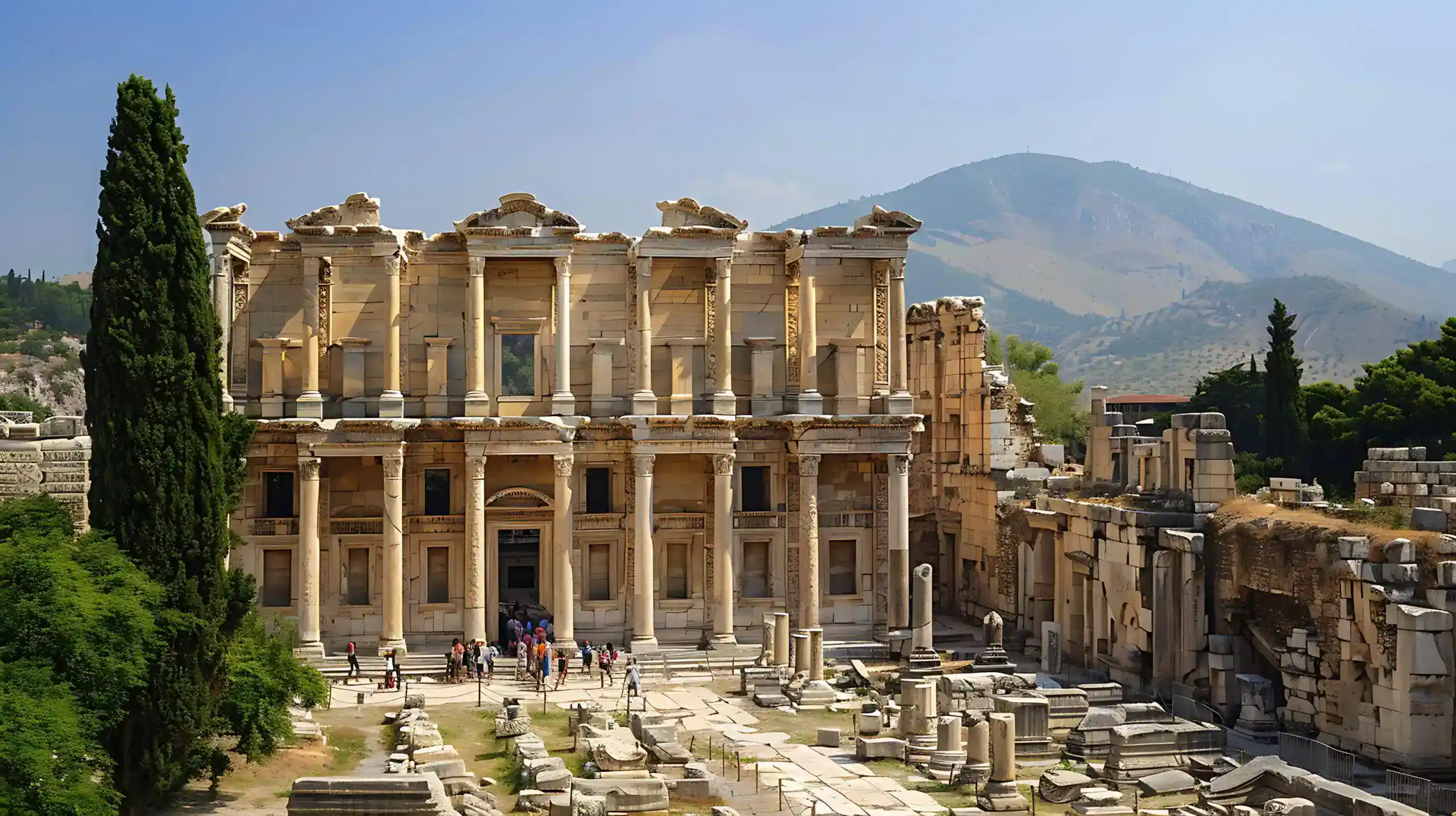
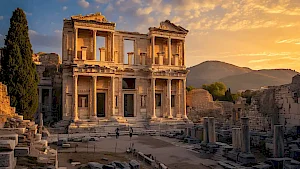
- Library of Celsus: A stunning example of Roman architecture, the Library of Celsus features a grand façade with columns and niches that housed statues. The use of classical architectural elements demonstrates the blending of functionality and beauty.
- Great Theatre: Built in the 1st century CE, this theatre showcases Roman engineering with its large seating capacity of up to 25,000 and advanced acoustics. The design exemplifies the Roman love for entertainment and public gatherings.
3. Late Roman and Byzantine Architecture
Overview: As Ephesus transitioned into the Byzantine era, architectural styles evolved, incorporating elements from both Roman and Christian designs.
Key Features:
- Basilicas: Christian basilicas often featured a longitudinal layout with a central nave and side aisles, reflecting the growing importance of Christianity in the region.
- Mosaics: The use of intricate mosaics depicting religious themes became prominent during this period.
Notable Examples:
- Basilica of St. John: Built in the 6th century CE over the reputed burial site of John the Apostle, this basilica is a significant example of Byzantine architecture. It features a grand layout, remnants of beautiful mosaics, and an impressive stone structure.
- Houses of the Rich: The Terrace Houses, with their elaborate mosaics and sophisticated designs, showcase the transition from Roman to Byzantine influences in domestic architecture.
4. Architectural Blends and Influences
Overview: Ephesus’s architecture reflects a blend of various styles and cultural influences over the centuries, showcasing its role as a melting pot of civilizations.
Key Features:
- Eclectic Designs: Many structures incorporate elements from different architectural styles, reflecting the city’s diverse history.
- Adaptation to Local Needs: The designs often adapted to local customs, materials, and climate, showcasing a practical approach to architecture.
Notable Examples:
- Odeon: This small theatre combines Greek and Roman architectural elements, illustrating the city's evolution and adaptation through time. It was used for concerts, political meetings, and other cultural events.
5. Preservation and Conservation
Overview: The preservation of Ephesus’s architectural heritage is crucial for understanding its historical significance.
Key Efforts:
- Archaeological Excavations: Ongoing excavations continue to uncover new structures and artifacts, providing deeper insights into the architectural history of Ephesus.
- Restoration Projects: Conservation efforts aim to restore and preserve key structures, ensuring that future generations can appreciate the city’s rich architectural legacy.
Conclusion
Ephesus stands as a testament to the architectural brilliance and cultural richness of the ancient world. From its Hellenistic origins to its Roman grandeur and Byzantine influences, the city’s diverse architectural styles reflect the layers of history that have shaped it. Exploring these structures not only reveals the artistry and engineering prowess of ancient builders but also offers a glimpse into the daily lives, beliefs, and values of the people who once inhabited this remarkable city. A visit to Ephesus is not just an exploration of ruins; it’s a journey through time, where every column and façade tells a story of a vibrant past.
Introduction
Discover the fascinating world of Exploring the Architectural Styles of Ephesus in ancient Ephesus. This comprehensive guide explores the historical significance, archaeological findings, and cultural impact of this remarkable aspect of Ephesian heritage.
Historical Background
The history of Exploring the Architectural Styles of Ephesus dates back to the early days of Ephesus. Archaeological evidence suggests that this aspect of Ephesian life played a crucial role in shaping the city's development and cultural identity.
Archaeological Discoveries
Recent excavations have unveiled remarkable findings related to Exploring the Architectural Styles of Ephesus. These discoveries provide valuable insights into how this aspect of Ephesian life evolved over time.
Cultural Significance
Understanding Exploring the Architectural Styles of Ephesus is crucial for appreciating the broader cultural context of ancient Ephesus. Its influence extended beyond the city walls, impacting trade, religion, and daily life.
Visitor Information
Today, visitors to Ephesus can explore the remnants of Exploring the Architectural Styles of Ephesus firsthand. This section provides practical information for making the most of your visit.
Preservation and Future
Ongoing conservation efforts ensure that Exploring the Architectural Styles of Ephesus remains preserved for future generations. Learn about the challenges and successes in maintaining this important historical site.
Frequently Asked Questions
What is the historical significance of Exploring the Architectural Styles of Ephesus?
The Exploring the Architectural Styles of Ephesus holds great historical importance in ancient Ephesus, providing valuable insights into the city's cultural and social development.
What can visitors see related to Exploring the Architectural Styles of Ephesus today?
Visitors to Ephesus can explore well-preserved remains and artifacts related to Exploring the Architectural Styles of Ephesus, offering a glimpse into the ancient world.
When is the best time to visit Exploring the Architectural Styles of Ephesus?
The best time to visit is during the spring (April-May) or autumn (September-October) when the weather is mild and crowds are smaller.
Frequently Asked Questions
What is the historical significance of Exploring the Architectural Styles of Ephesus?
The Exploring the Architectural Styles of Ephesus holds great historical importance in ancient Ephesus, providing valuable insights into the city's cultural and social development.
What can visitors see related to Exploring the Architectural Styles of Ephesus today?
Visitors to Ephesus can explore well-preserved remains and artifacts related to Exploring the Architectural Styles of Ephesus, offering a glimpse into the ancient world.
When is the best time to visit Exploring the Architectural Styles of Ephesus?
The best time to visit is during the spring (April-May) or autumn (September-October) when the weather is mild and crowds are smaller.
Frequently Asked Questions
What is the historical significance of Exploring the Architectural Styles of Ephesus?
The Exploring the Architectural Styles of Ephesus holds great historical importance in ancient Ephesus, providing valuable insights into the city's cultural and social development.
What can visitors see related to Exploring the Architectural Styles of Ephesus today?
Visitors to Ephesus can explore well-preserved remains and artifacts related to Exploring the Architectural Styles of Ephesus, offering a glimpse into the ancient world.
When is the best time to visit Exploring the Architectural Styles of Ephesus?
The best time to visit is during the spring (April-May) or autumn (September-October) when the weather is mild and crowds are smaller.