

Unveiling the Myths of Ephesus: The Story of Artemis
In the ancient city of Ephesus, Artemis was more than just a goddess; she was a central figure in the city’s mythology and spiritual life. Revered as the goddess of the hunt, fertility, and the moon, Artemis held a unique place in Ephesian culture, where she was worshipped at the grand Temple of Artemis—one of the Seven Wonders of the Ancient World. The myths surrounding Artemis and her connection to Ephesus reflect the city’s values, beliefs, and its status as a major center of worship in the ancient Mediterranean.
The Birth of Artemis and Her Divine Purpose
According to Greek mythology, Artemis was the daughter of Zeus and Leto and the twin sister of Apollo. Her birth was marked by remarkable events, as her mother Leto was pursued by the jealous Hera, queen of the gods. Seeking refuge, Leto gave birth to Artemis on the island of Ortygia. Soon after her birth, Artemis helped her mother deliver Apollo, demonstrating her role as a protector and nurturer from the very beginning. Artemis grew up to become the goddess of the hunt and protector of the wilderness. In Ephesus, however, she took on additional attributes associated with fertility and motherhood. Depicted with multiple breasts, the Ephesian Artemis symbolized abundance and the life-giving forces of nature, embodying qualities that resonated deeply with the people of Ephesus.
The Temple of Artemis: A Sacred Shrine
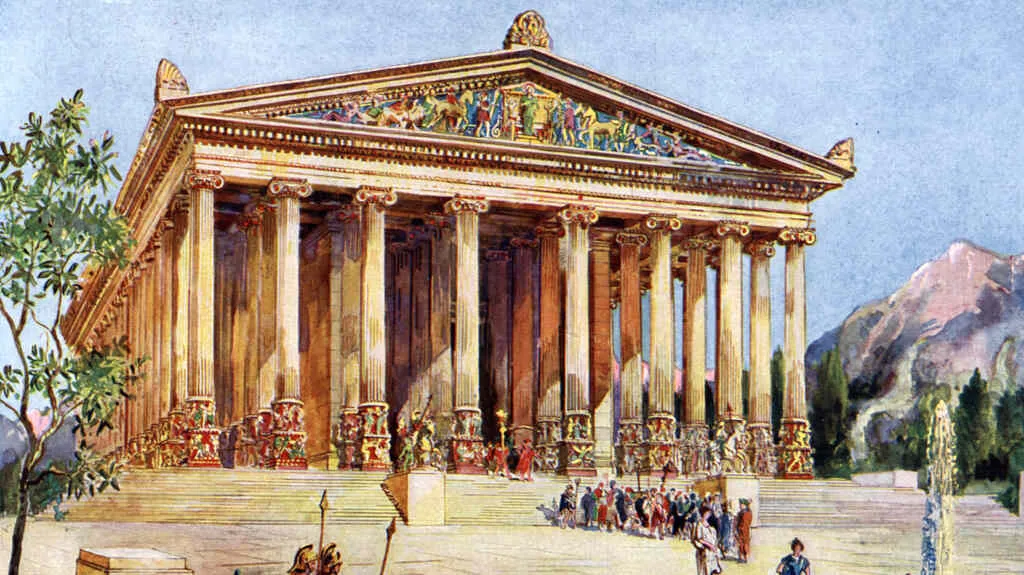
The Temple of Artemis in Ephesus was not only a place of worship but also a site of pilgrimage for people from across the ancient world. The myths surrounding the temple’s construction suggest that Artemis herself chose the location, bestowing a sacred energy upon the site. The temple’s grand scale, with its towering columns and intricate carvings, reflected the devotion of the Ephesians and their desire to honor the goddess in a structure worthy of her divine presence. Festivals held in Artemis’s honor drew large crowds, who participated in processions, sacrifices, and rituals that celebrated the goddess’s role as a life-giver and protector. These festivals reinforced Artemis’s status as the city’s guardian and fostered a sense of community among the people of Ephesus, who saw the goddess as a source of both spiritual and physical nourishment.
Artemis and Her Mystical Powers
Artemis was believed to possess a range of mystical powers that extended to the natural world. As a goddess associated with fertility, she was called upon to bless crops, ensure safe childbirth, and protect against disease. The Ephesians revered her not only as a goddess of the hunt but also as a powerful life-giver whose influence could be seen in the cycles of nature. Legends told of her ability to control wild animals, protect her followers, and bring prosperity to the city. One myth recounts how Artemis defended Ephesus from invaders, using her divine power to shield the city. This story, like many others, reinforced the idea that Artemis was not just a distant deity but an active presence in the lives of the Ephesians, providing protection and guidance.
The Legacy of Artemis in Ephesus
The worship of Artemis in Ephesus endured for centuries, even as new religions emerged in the region. The Temple of Artemis remained a significant spiritual and cultural center until the rise of Christianity, which led to the gradual decline of pagan practices. Despite this, the myths and stories of Artemis continued to influence the city, leaving a lasting legacy that can still be felt today. Although the Temple of Artemis now stands in ruins, the legacy of Artemis endures as a symbol of Ephesus’s cultural heritage. The myths surrounding the goddess and her temple continue to captivate those who visit the ancient site, reminding us of the power of belief and the enduring influence of ancient stories. For more on the story of Artemis and her role in Ephesus, visit the Wikipedia page on Artemis. To explore the historical sites associated with Artemis, consider a guided experience with Ephesus Tours, where you can discover the myths and legends that shaped one of the ancient world’s most fascinating cities.
Introduction
Discover the fascinating world of Unveiling the Myths of Ephesus: The Story of Artemis in ancient Ephesus. This comprehensive guide explores the historical significance, archaeological findings, and cultural impact of this remarkable aspect of Ephesian heritage.
Historical Background
The history of Unveiling the Myths of Ephesus: The Story of Artemis dates back to the early days of Ephesus. Archaeological evidence suggests that this aspect of Ephesian life played a crucial role in shaping the city's development and cultural identity.
Archaeological Discoveries
Recent excavations have unveiled remarkable findings related to Unveiling the Myths of Ephesus: The Story of Artemis. These discoveries provide valuable insights into how this aspect of Ephesian life evolved over time.
Cultural Significance
Understanding Unveiling the Myths of Ephesus: The Story of Artemis is crucial for appreciating the broader cultural context of ancient Ephesus. Its influence extended beyond the city walls, impacting trade, religion, and daily life.
Visitor Information
Today, visitors to Ephesus can explore the remnants of Unveiling the Myths of Ephesus: The Story of Artemis firsthand. This section provides practical information for making the most of your visit.
Preservation and Future
Ongoing conservation efforts ensure that Unveiling the Myths of Ephesus: The Story of Artemis remains preserved for future generations. Learn about the challenges and successes in maintaining this important historical site.
Frequently Asked Questions
What is the historical significance of Unveiling the Myths of Ephesus: The Story of Artemis?
The Unveiling the Myths of Ephesus: The Story of Artemis holds great historical importance in ancient Ephesus, providing valuable insights into the city's cultural and social development.
What can visitors see related to Unveiling the Myths of Ephesus: The Story of Artemis today?
Visitors to Ephesus can explore well-preserved remains and artifacts related to Unveiling the Myths of Ephesus: The Story of Artemis, offering a glimpse into the ancient world.
When is the best time to visit Unveiling the Myths of Ephesus: The Story of Artemis?
The best time to visit is during the spring (April-May) or autumn (September-October) when the weather is mild and crowds are smaller.
Frequently Asked Questions
What is the historical significance of Unveiling the Myths of Ephesus: The Story of Artemis?
The Unveiling the Myths of Ephesus: The Story of Artemis holds great historical importance in ancient Ephesus, providing valuable insights into the city's cultural and social development.
What can visitors see related to Unveiling the Myths of Ephesus: The Story of Artemis today?
Visitors to Ephesus can explore well-preserved remains and artifacts related to Unveiling the Myths of Ephesus: The Story of Artemis, offering a glimpse into the ancient world.
When is the best time to visit Unveiling the Myths of Ephesus: The Story of Artemis?
The best time to visit is during the spring (April-May) or autumn (September-October) when the weather is mild and crowds are smaller.
Frequently Asked Questions
What is the historical significance of Unveiling the Myths of Ephesus: The Story of Artemis?
The Unveiling the Myths of Ephesus: The Story of Artemis holds great historical importance in ancient Ephesus, providing valuable insights into the city's cultural and social development.
What can visitors see related to Unveiling the Myths of Ephesus: The Story of Artemis today?
Visitors to Ephesus can explore well-preserved remains and artifacts related to Unveiling the Myths of Ephesus: The Story of Artemis, offering a glimpse into the ancient world.
When is the best time to visit Unveiling the Myths of Ephesus: The Story of Artemis?
The best time to visit is during the spring (April-May) or autumn (September-October) when the weather is mild and crowds are smaller.