

Exploring Turkey’s Ancient Wonders on the Road to Ephesus
Turkey is a land of ancient wonders, where each city and ruin offers a unique glimpse into the past. On the journey to Ephesus, travelers encounter a series of captivating historical sites that showcase the rich cultural heritage of the region. From the ruins of temples to beautifully preserved theaters, each stop provides an opportunity to explore Turkey’s diverse history and its connections to the ancient world. Here are some of the top ancient wonders to discover as you make your way to Ephesus.
Pergamon: A City of Learning and Worship
Located north of Ephesus, Pergamon was an influential center of Greek and Roman culture. Known for its acropolis and the famous Library of Pergamon, which once rivaled the Library of Alexandria, the city was also home to the Temple of Trajan and the Sanctuary of Asclepius, a healing center dedicated to the god of medicine. Walking through Pergamon’s ruins, travelers can admire the theater carved into the hillside and take in panoramic views of the surrounding landscape. Pergamon’s role as a center of learning and spirituality provides an inspiring prelude to the wonders of Ephesus.
Sardis: The Wealth of the Lydian Kings
South of Pergamon lies Sardis, the ancient capital of the Kingdom of Lydia. Sardis was once famed for its wealth, particularly under King Croesus, who was said to be one of the richest men of his time. The city’s ruins include the Temple of Artemis, an impressive structure surrounded by lush scenery, as well as the remains of a grand gymnasium and the synagogue, which is one of the oldest known synagogues outside of Israel. Visiting Sardis offers a glimpse into the opulence of the Lydian kings and the city’s enduring legacy.
Hierapolis and Pamukkale: A Natural and Cultural Wonder
Further inland, Hierapolis is known for its thermal springs and white travertine terraces, forming the stunning landscape of Pamukkale. In ancient times, Hierapolis attracted visitors seeking healing in its thermal waters. Today, the ruins include a well-preserved theater, ancient baths, and the Temple of Apollo. The combination of Hierapolis’s historical ruins and Pamukkale’s natural beauty makes this site a unique destination, where visitors can experience the tranquility of the ancient world and the marvels of nature.
Laodicea: A Hidden Gem of the Ancient World
Close to Pamukkale, Laodicea was an important center of early Christianity, mentioned in the New Testament as one of the Seven Churches of Revelation. The city’s ruins include a large theater, a basilica, and remnants of ancient Roman baths. Excavations have uncovered beautiful mosaics and intricate stonework, reflecting the city’s prosperity during Roman times. Laodicea’s serene setting and fascinating history make it a hidden gem worth exploring on the journey to Ephesus.
Priene: A Snapshot of Greek Urban Design
Closer to Ephesus, the city of Priene offers a well-preserved example of ancient Greek urban planning. Nestled against the slopes of Mount Mycale, Priene features the impressive Temple of Athena, designed by the famous architect Pytheos. The city’s theater and agora reflect the sophistication of its design, providing insight into the daily lives of its ancient inhabitants. Walking through Priene’s ruins is like stepping back into a classical Greek city, with its carefully laid-out streets and monumental structures.
Reaching Ephesus: The Crown Jewel of Ancient Anatolia
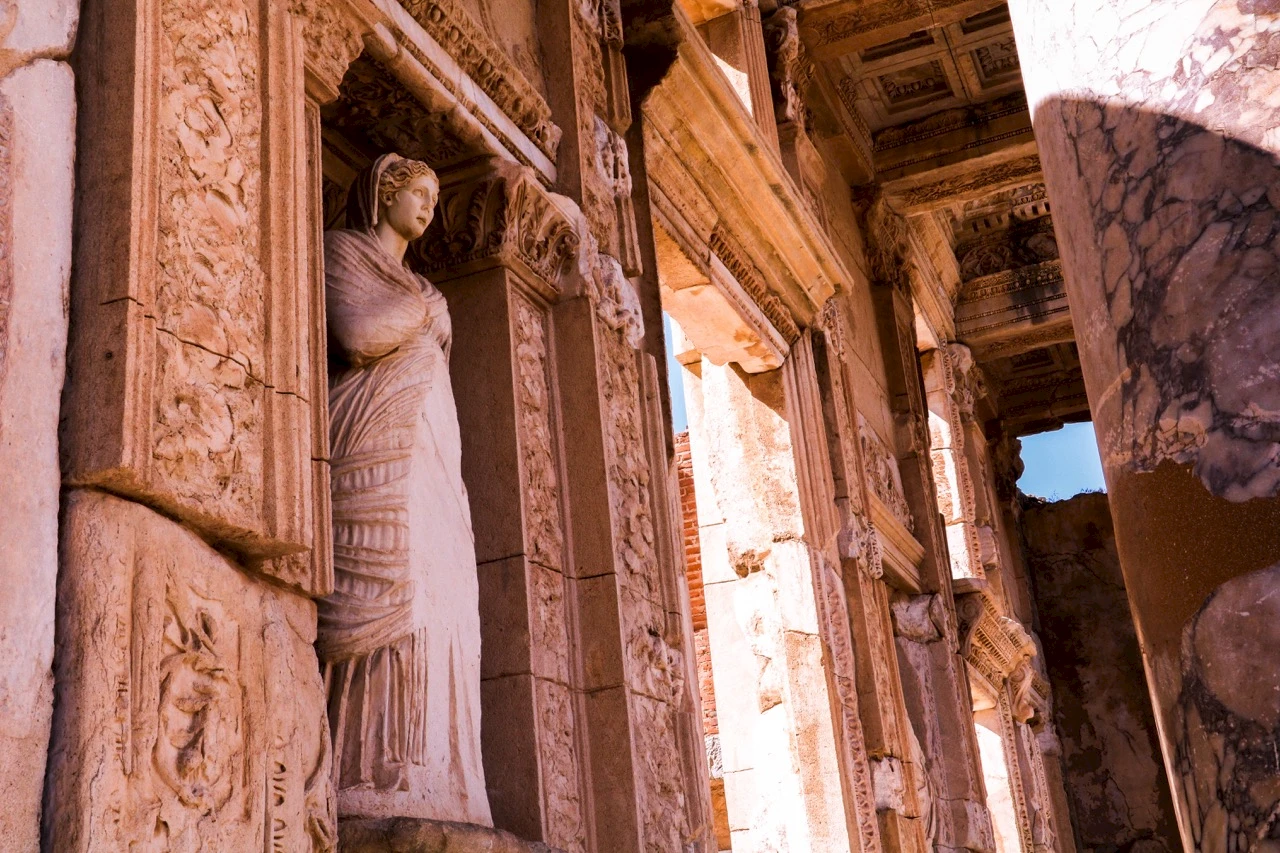
Finally, the journey culminates at Ephesus, a city that encapsulates the grandeur and spiritual significance of ancient Anatolia. With its magnificent ruins, including the Library of Celsus, the Great Theatre, and the Temple of Artemis, Ephesus stands as a testament to the achievements of the ancient world. Travelers who arrive in Ephesus can feel the echoes of those who once lived, worshipped, and celebrated here, experiencing a connection to history that is both profound and unforgettable. These ancient wonders along the road to Ephesus showcase Turkey’s diverse cultural heritage, offering travelers a journey through the centuries. From the temples of Pergamon to the terraces of Pamukkale, each site adds depth to the experience of exploring one of the world’s most remarkable regions. For more information on the history of these sites, visit the Wikipedia page on Ephesus. To plan a comprehensive tour of Ephesus and its surrounding landmarks, consider Ephesus Tours, where you can explore Turkey’s ancient wonders in a journey that brings the past to life.
Introduction
Discover the fascinating world of Exploring Turkey’s Ancient Wonders on the Road to Ephesus in ancient Ephesus. This comprehensive guide explores the historical significance, archaeological findings, and cultural impact of this remarkable aspect of Ephesian heritage.
Historical Background
The history of Exploring Turkey’s Ancient Wonders on the Road to Ephesus dates back to the early days of Ephesus. Archaeological evidence suggests that this aspect of Ephesian life played a crucial role in shaping the city's development and cultural identity.
Archaeological Discoveries
Recent excavations have unveiled remarkable findings related to Exploring Turkey’s Ancient Wonders on the Road to Ephesus. These discoveries provide valuable insights into how this aspect of Ephesian life evolved over time.
Cultural Significance
Understanding Exploring Turkey’s Ancient Wonders on the Road to Ephesus is crucial for appreciating the broader cultural context of ancient Ephesus. Its influence extended beyond the city walls, impacting trade, religion, and daily life.
Visitor Information
Today, visitors to Ephesus can explore the remnants of Exploring Turkey’s Ancient Wonders on the Road to Ephesus firsthand. This section provides practical information for making the most of your visit.
Preservation and Future
Ongoing conservation efforts ensure that Exploring Turkey’s Ancient Wonders on the Road to Ephesus remains preserved for future generations. Learn about the challenges and successes in maintaining this important historical site.
Frequently Asked Questions
What is the historical significance of Exploring Turkey’s Ancient Wonders on the Road to Ephesus?
The Exploring Turkey’s Ancient Wonders on the Road to Ephesus holds great historical importance in ancient Ephesus, providing valuable insights into the city's cultural and social development.
What can visitors see related to Exploring Turkey’s Ancient Wonders on the Road to Ephesus today?
Visitors to Ephesus can explore well-preserved remains and artifacts related to Exploring Turkey’s Ancient Wonders on the Road to Ephesus, offering a glimpse into the ancient world.
When is the best time to visit Exploring Turkey’s Ancient Wonders on the Road to Ephesus?
The best time to visit is during the spring (April-May) or autumn (September-October) when the weather is mild and crowds are smaller.
Frequently Asked Questions
What is the historical significance of Exploring Turkey’s Ancient Wonders on the Road to Ephesus?
The Exploring Turkey’s Ancient Wonders on the Road to Ephesus holds great historical importance in ancient Ephesus, providing valuable insights into the city's cultural and social development.
What can visitors see related to Exploring Turkey’s Ancient Wonders on the Road to Ephesus today?
Visitors to Ephesus can explore well-preserved remains and artifacts related to Exploring Turkey’s Ancient Wonders on the Road to Ephesus, offering a glimpse into the ancient world.
When is the best time to visit Exploring Turkey’s Ancient Wonders on the Road to Ephesus?
The best time to visit is during the spring (April-May) or autumn (September-October) when the weather is mild and crowds are smaller.
Frequently Asked Questions
What is the historical significance of Exploring Turkey’s Ancient Wonders on the Road to Ephesus?
The Exploring Turkey’s Ancient Wonders on the Road to Ephesus holds great historical importance in ancient Ephesus, providing valuable insights into the city's cultural and social development.
What can visitors see related to Exploring Turkey’s Ancient Wonders on the Road to Ephesus today?
Visitors to Ephesus can explore well-preserved remains and artifacts related to Exploring Turkey’s Ancient Wonders on the Road to Ephesus, offering a glimpse into the ancient world.
When is the best time to visit Exploring Turkey’s Ancient Wonders on the Road to Ephesus?
The best time to visit is during the spring (April-May) or autumn (September-October) when the weather is mild and crowds are smaller.