

The Role of Ephesus in the Spread of Early Christianity
Ephesus, one of the most prominent cities of the ancient world, played a vital role in the spread of early Christianity. As a bustling port and cultural hub on the Aegean coast, Ephesus attracted people from across the Mediterranean, making it an ideal location for the dissemination of new ideas and beliefs. Early Christian leaders, including the Apostle Paul and John the Apostle, found Ephesus to be fertile ground for their teachings. The city’s influence on the growth of Christianity can still be seen today, with sites like the Basilica of St. John and the House of the Virgin Mary attracting pilgrims from around the world.
Paul’s Missionary Work in Ephesus
The Apostle Paul spent several years in Ephesus, where he established a Christian community and spread the teachings of Jesus. His efforts are documented in the New Testament, particularly in the Acts of the Apostles and his Epistle to the Ephesians. Paul’s time in Ephesus was marked by both success and conflict; he converted many to Christianity, but also faced opposition from those who worshipped Artemis, the city’s patron goddess. Paul’s presence in Ephesus helped establish the city as a center for early Christian thought. His teachings challenged traditional beliefs and encouraged Ephesians to embrace a new faith. His letters to the Ephesian community continue to be a significant part of Christian scripture, reflecting his influence on the city and its role in the early church.
The Influence of John the Apostle
According to tradition, John the Apostle also lived in Ephesus during the latter part of his life. It is believed that he wrote the Gospel of John and several other New Testament texts while residing there. John’s connection to Ephesus further cemented the city’s importance as a spiritual center. His tomb is thought to be located at the Basilica of St. John, which became a pilgrimage site in the Byzantine era. John’s presence in Ephesus not only contributed to the city’s religious significance but also attracted early Christian followers who sought to learn from one of Jesus’s closest disciples. The Basilica of St. John stands as a testament to his impact on the city and the Christian faith.
Mary in Ephesus: A Place of Pilgrimage
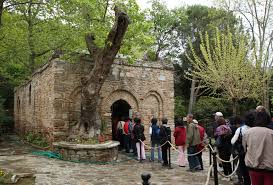
Ephesus is also traditionally associated with the Virgin Mary, who, according to some accounts, spent her final years near the city under the care of John the Apostle. The House of the Virgin Mary, located on Mount Koressos, has become an important pilgrimage site for both Christians and Muslims. The story of Mary’s time in Ephesus adds to the city’s spiritual heritage, highlighting its role as a place of refuge and faith. The presence of Mary in Ephesus connects the city to early Christian devotion, symbolizing its significance as a sanctuary for those who followed Jesus. The House of the Virgin Mary continues to attract pilgrims from around the world, honoring the city’s legacy as a sacred site.
The Seven Churches of Revelation
Ephesus is one of the Seven Churches of Revelation mentioned in the Book of Revelation. Addressed by John, the letter to the church in Ephesus reflects the challenges and successes of the early Christian community. This designation as one of the Seven Churches underscores Ephesus’s importance in the spread of Christianity across Asia Minor and its status as a center of faith during the first century. The city’s inclusion among the Seven Churches highlights its role in the early church and its influence on the development of Christian teachings. Ephesus’s spiritual legacy is intertwined with the stories of these early communities, offering insight into the faith and devotion that marked the spread of Christianity.
Ephesus’s Enduring Christian Heritage
Ephesus played a pivotal role in the growth of early Christianity, shaping the faith’s development and expanding its reach across the ancient world. The city’s association with influential figures like Paul, John, and Mary has made it a place of historical and spiritual significance. Visitors to Ephesus can explore its ancient streets, visiting sites that connect them with the origins of Christianity and the people who helped spread its message. For those interested in learning more about Ephesus and its historical impact on Christianity, visit the Wikipedia page on Ephesus. To experience the sacred sites firsthand, consider a guided tour with Ephesus Tours, where the story of Ephesus as a center of early Christian faith comes alive.
Introduction
Discover the fascinating world of The Role of Ephesus in the Spread of Early Christianity in ancient Ephesus. This comprehensive guide explores the historical significance, archaeological findings, and cultural impact of this remarkable aspect of Ephesian heritage.
Historical Background
The history of The Role of Ephesus in the Spread of Early Christianity dates back to the early days of Ephesus. Archaeological evidence suggests that this aspect of Ephesian life played a crucial role in shaping the city's development and cultural identity.
Archaeological Discoveries
Recent excavations have unveiled remarkable findings related to The Role of Ephesus in the Spread of Early Christianity. These discoveries provide valuable insights into how this aspect of Ephesian life evolved over time.
Cultural Significance
Understanding The Role of Ephesus in the Spread of Early Christianity is crucial for appreciating the broader cultural context of ancient Ephesus. Its influence extended beyond the city walls, impacting trade, religion, and daily life.
Visitor Information
Today, visitors to Ephesus can explore the remnants of The Role of Ephesus in the Spread of Early Christianity firsthand. This section provides practical information for making the most of your visit.
Preservation and Future
Ongoing conservation efforts ensure that The Role of Ephesus in the Spread of Early Christianity remains preserved for future generations. Learn about the challenges and successes in maintaining this important historical site.
Frequently Asked Questions
What is the historical significance of The Role of Ephesus in the Spread of Early Christianity?
The The Role of Ephesus in the Spread of Early Christianity holds great historical importance in ancient Ephesus, providing valuable insights into the city's cultural and social development.
What can visitors see related to The Role of Ephesus in the Spread of Early Christianity today?
Visitors to Ephesus can explore well-preserved remains and artifacts related to The Role of Ephesus in the Spread of Early Christianity, offering a glimpse into the ancient world.
When is the best time to visit The Role of Ephesus in the Spread of Early Christianity?
The best time to visit is during the spring (April-May) or autumn (September-October) when the weather is mild and crowds are smaller.
Frequently Asked Questions
What is the historical significance of The Role of Ephesus in the Spread of Early Christianity?
The The Role of Ephesus in the Spread of Early Christianity holds great historical importance in ancient Ephesus, providing valuable insights into the city's cultural and social development.
What can visitors see related to The Role of Ephesus in the Spread of Early Christianity today?
Visitors to Ephesus can explore well-preserved remains and artifacts related to The Role of Ephesus in the Spread of Early Christianity, offering a glimpse into the ancient world.
When is the best time to visit The Role of Ephesus in the Spread of Early Christianity?
The best time to visit is during the spring (April-May) or autumn (September-October) when the weather is mild and crowds are smaller.
Frequently Asked Questions
What is the historical significance of The Role of Ephesus in the Spread of Early Christianity?
The The Role of Ephesus in the Spread of Early Christianity holds great historical importance in ancient Ephesus, providing valuable insights into the city's cultural and social development.
What can visitors see related to The Role of Ephesus in the Spread of Early Christianity today?
Visitors to Ephesus can explore well-preserved remains and artifacts related to The Role of Ephesus in the Spread of Early Christianity, offering a glimpse into the ancient world.
When is the best time to visit The Role of Ephesus in the Spread of Early Christianity?
The best time to visit is during the spring (April-May) or autumn (September-October) when the weather is mild and crowds are smaller.