

Is 1 day enough for Ephesus? in Ancient Ephesus
Ephesus, located near Selçuk in Turkey’s Izmir Province, is one of the most visited archaeological sites in the world. Known for its incredibly well-preserved ruins and rich historical significance, it attracts millions of visitors each year. With highlights such as the Library of Celsus, the Great Theatre, and the remains of the Temple of Artemis one of the Seven Wonders of the Ancient World—Ephesus offers a fascinating glimpse into ancient history. A common question from first-time visitors is: “Is one day enough to visit Ephesus?” The answer is that yes, one day can be enough, depending on how you plan your trip, but a well-structured day is essential to get the most out of your visit. In this comprehensive guide, we’ll dive into whether a day is sufficient, which landmarks are must-sees, how to make the most of your time, and practical tips for visiting Ephesus. We’ll also cover how to prioritize what you see, provide details on nearby attractions, and ensure you have an enjoyable and informative visit.
Table of Contents:
- Introduction to Ephesus
- Is One Day Enough to Visit Ephesus?
- Key Highlights of Ephesus: What to See in One Day
- How to Structure Your Day at Ephesus
- Nearby Attractions to Visit if You Have Time
- Tips for Making the Most of Your Day
- Best Time of Year to Visit Ephesus
- Frequently Asked Questions
1. Introduction to Ephesus
Ephesus, or Efes in Turkish, is a UNESCO World Heritage Site that was once a major center of commerce, culture, and religion in the ancient Mediterranean world. Founded by Ionian Greeks in the 10th century BC, it flourished under Roman rule and became one of the largest cities in the Roman Empire, with a population of over 250,000 people at its height. The city is famous for its incredibly well-preserved ruins, which include the Library of Celsus, the Great Theatre, and the Temple of Hadrian. Ephesus is also significant in Christian history, as it was mentioned in the New Testament, and is believed to have been visited by key figures like St. Paul and St. John. Today, visitors from all over the world come to Ephesus to marvel at its history and walk the same streets as the ancient Romans, Greeks, and early Christians.
2. Is One Day Enough to Visit Ephesus?
For most visitors, one day is enough to explore Ephesus, especially if your primary goal is to see the main highlights. A full day—approximately 3 to 6 hours—should give you ample time to visit the essential landmarks, including the Library of Celsus, Curetes Street, the Great Theatre, and the Temple of Hadrian. However, if you’re an avid history buff, or if you plan to visit nearby attractions such as the House of the Virgin Mary or the Ephesus Archaeological Museum, you may want to allocate more time or even consider extending your trip to two days.
Factors to Consider:
- Personal Pace: If you prefer to explore sites leisurely, take photos, and read all the available information, one day may feel rushed.
- Time of Year: During peak season, Ephesus can become crowded, which may slow down your exploration. Visiting in the offseason or during the early morning hours can help you cover more ground.
- Interest in Archaeology: If you are deeply interested in archaeology and ancient history, you may want to spend more time soaking in the details of each structure.
3. Key Highlights of Ephesus: What to See in One Day
To make the most of your time in Ephesus, you’ll need to focus on the main highlights. Here’s a breakdown of the must-see landmarks and how long to spend at each:
1. Library of Celsus
The Library of Celsus is one of the most famous and recognizable structures in Ephesus. Built in 117 AD, it once housed over 12,000 scrolls and served as both a library and a monumental tomb for Tiberius Julius Celsus, a Roman governor. The intricately designed façade is incredibly well-preserved and is a prime spot for photos.
- Time to Explore: 15-20 minutes
- Key Tip: Arrive early to capture photos without large crowds.
2. Great Theatre
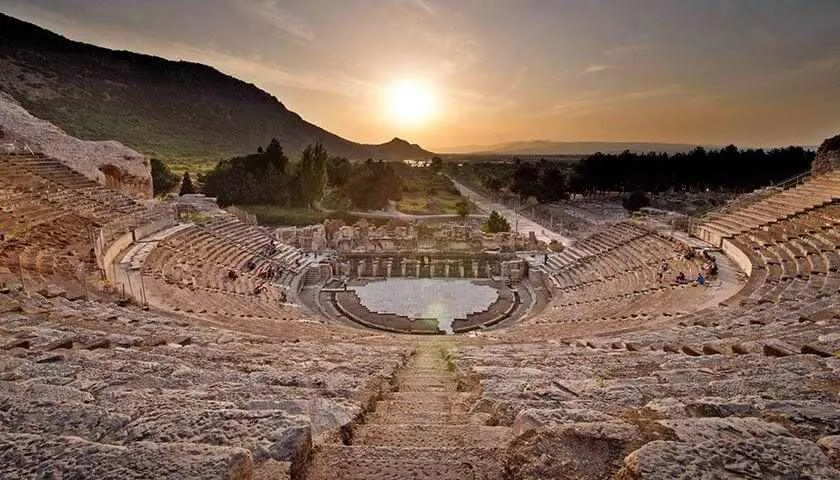
The Great Theatre is another standout structure in Ephesus. Built in the 3rd century BC and later expanded under Roman rule, the theatre could seat up to 25,000 people and was used for dramatic performances, gladiatorial contests, and public assemblies. Climbing to the top offers panoramic views of the ancient city and surrounding landscape.
- Time to Explore: 20-30 minutes
- Key Tip: Climb the steps to the top for a breathtaking view and a sense of the theatre’s grandeur.
3. Curetes Street
Curetes Street is the main thoroughfare that runs through the heart of Ephesus, connecting the Library of Celsus to the Agora and other important sites. Lined with columns, fountains, and remnants of statues, this street offers a fascinating glimpse into daily life in ancient Ephesus.
- Time to Explore: 15-20 minutes
- Key Tip: Keep an eye out for the Hercules Gate and the Trajan Fountain along the street.
4. Temple of Hadrian
The Temple of Hadrian is one of the best-preserved temples in Ephesus. Built in honor of the Roman Emperor Hadrian, it features intricately carved reliefs depicting the mythological foundation of Ephesus.
- Time to Explore: 10-15 minutes
- Key Tip: The reliefs on the temple are especially detailed—take a few minutes to admire their craftsmanship.
5. Terrace Houses (Optional)
The Terrace Houses, also known as the Houses of the Rich, are an additional attraction for those interested in seeing how the wealthy citizens of Ephesus lived. The houses feature beautifully preserved frescoes, mosaics, and an elaborate heating system. Visiting the Terrace Houses requires a separate ticket and about 45 minutes to 1 hour.
- Time to Explore: 45-60 minutes (if you choose to visit)
- Key Tip: This section involves climbing stairs and walking through narrow pathways, so wear comfortable shoes.
4. How to Structure Your Day at Ephesus
Here’s a suggested itinerary for a well-organized day trip to Ephesus, ensuring you cover all the main sites without feeling rushed:
Morning (8:00 AM - 12:00 PM)
- Start at the Upper Gate (Magnesia Gate): Begin your tour at the Upper Gate to walk downhill through the site. This is the best way to cover the site without getting too tired, especially in the summer heat.
- Visit the Great Theatre: This large and impressive structure will give you a sense of the scale and grandeur of Ephesus.
- Walk Down Curetes Street: Explore the main street of Ephesus, stopping at key landmarks like the Temple of Hadrian, the Hercules Gate, and the Trajan Fountain.
- Library of Celsus: Spend time marveling at the stunning façade of the Library of Celsus and capturing photos.
Lunch Break (12:00 PM - 1:00 PM)
- Lunch at a Nearby Café: There are several restaurants and cafes in Selçuk, which is just a short drive from Ephesus. Enjoy some local Turkish food while resting your feet before continuing your exploration.
Afternoon (1:00 PM - 4:00 PM)
- Terrace Houses (Optional): If you’re interested in learning more about the wealthy residents of Ephesus, the Terrace Houses are a must-see. Otherwise, you can skip this and spend more time at other landmarks.
- Explore the Agora: The Agora (marketplace) was the economic heart of Ephesus, and its ruins are worth a visit for a glimpse into ancient commerce.
- Visit the Temple of Artemis (Optional): If time allows, make a quick stop at the Temple of Artemis. Although little remains of this ancient wonder, the site’s significance makes it worth a short visit.
5. Nearby Attractions to Visit if You Have Time
If you find yourself with extra time after exploring the main site of Ephesus, consider visiting one of these nearby attractions:
1. House of the Virgin Mary
Located about 7 kilometers from Ephesus, the House of the Virgin Mary is believed to be the final residence of Mary, the mother of Jesus. This site is a major Christian pilgrimage destination.
- Time to Explore: 30-45 minutes
- Key Tip: The site is small, but its religious significance makes it an important stop for many visitors.
2. Ephesus Archaeological Museum
Located in Selçuk, the Ephesus Archaeological Museum houses artifacts from the archaeological site, including statues, coins, and household items.
- Time to Explore: 1 hour
- Key Tip: This museum is a great way to learn more about the daily life of Ephesus’ inhabitants.
6. Tips for Making the Most of Your Day
To ensure a smooth and enjoyable visit to Ephesus, follow these practical tips:
1. Arrive Early
Ephesus can get crowded, especially during the summer months. Arriving early, ideally when the site opens around 8:00 AM, will allow you to explore before the crowds arrive and the temperatures rise.
2. Wear Comfortable Shoes
Ephesus is a large archaeological site with uneven terrain, so be sure to wear comfortable walking shoes.
3. Stay Hydrated
There is little shade at Ephesus, and the Mediterranean sun can be intense. Bring plenty of water, especially if you’re visiting during the summer months.
4. Bring Sun Protection
In addition to water, bring sunscreen, a hat, and sunglasses to protect yourself from the sun.
5. Consider Hiring a Guide
While you can explore Ephesus on your own, hiring a local guide can greatly enhance your experience. Guides can provide historical context, explain the significance of various landmarks, and answer your questions.
7. Best Time of Year to Visit Ephesus
The best time to visit Ephesus is during the spring (April to June) or fall (September to November), when the weather is mild, and the crowds are smaller. The summer months can be extremely hot, with temperatures often exceeding 35°C (95°F), so it’s best to visit early in the morning or late in the afternoon if you’re traveling during this time.
8. Frequently Asked Questions
Q: Is one day enough to visit Ephesus? A: Yes, one day is generally enough to see the main highlights of Ephesus, such as the Library of Celsus, the Great Theatre, and Curetes Street. However, if you’re a history enthusiast or want to visit nearby attractions like the Terrace Houses or the House of the Virgin Mary, you may want to allocate additional time. Q: How much time should I spend at Ephesus? A: Most visitors spend between 3 to 6 hours exploring Ephesus, depending on their pace and interest in the site’s history. Q: What are the entrance fees for Ephesus? A: The entrance fee to Ephesus is 700 Turkish Lira (TRY) per person for general admission. The Terrace Houses require an additional ticket, priced at 400 TRY per person.
Conclusion
In conclusion, one day is generally enough to explore the key highlights of Ephesus, including the Library of Celsus, Great Theatre, and Curetes Street. With careful planning and a well-structured itinerary, you can make the most of your visit and gain a deep appreciation for this incredible ancient city. Whether you’re a history enthusiast or a casual traveler, Ephesus offers a rich and rewarding experience that can be enjoyed in a single day. For more information on Ephesus, you can visit Wikipedia’s page on Ephesus.
Historical Background
The history of Is 1 day enough for Ephesus? in Ancient Ephesus dates back to the early days of Ephesus. Archaeological evidence suggests that this aspect of Ephesian life played a crucial role in shaping the city's development and cultural identity.
Archaeological Discoveries
Recent excavations have unveiled remarkable findings related to Is 1 day enough for Ephesus? in Ancient Ephesus. These discoveries provide valuable insights into how this aspect of Ephesian life evolved over time.
Cultural Significance
Understanding Is 1 day enough for Ephesus? in Ancient Ephesus is crucial for appreciating the broader cultural context of ancient Ephesus. Its influence extended beyond the city walls, impacting trade, religion, and daily life.
Visitor Information
Today, visitors to Ephesus can explore the remnants of Is 1 day enough for Ephesus? in Ancient Ephesus firsthand. This section provides practical information for making the most of your visit.
Preservation and Future
Ongoing conservation efforts ensure that Is 1 day enough for Ephesus? in Ancient Ephesus remains preserved for future generations. Learn about the challenges and successes in maintaining this important historical site.
Frequently Asked Questions
What is the historical significance of Is 1 day enough for Ephesus? in Ancient Ephesus?
The Is 1 day enough for Ephesus? in Ancient Ephesus holds great historical importance in ancient Ephesus, providing valuable insights into the city's cultural and social development.
What can visitors see related to Is 1 day enough for Ephesus? in Ancient Ephesus today?
Visitors to Ephesus can explore well-preserved remains and artifacts related to Is 1 day enough for Ephesus? in Ancient Ephesus, offering a glimpse into the ancient world.
When is the best time to visit Is 1 day enough for Ephesus? in Ancient Ephesus?
The best time to visit is during the spring (April-May) or autumn (September-October) when the weather is mild and crowds are smaller.
Frequently Asked Questions
What is the historical significance of Is 1 day enough for Ephesus? in Ancient Ephesus?
The Is 1 day enough for Ephesus? in Ancient Ephesus holds great historical importance in ancient Ephesus, providing valuable insights into the city's cultural and social development.
What can visitors see related to Is 1 day enough for Ephesus? in Ancient Ephesus today?
Visitors to Ephesus can explore well-preserved remains and artifacts related to Is 1 day enough for Ephesus? in Ancient Ephesus, offering a glimpse into the ancient world.
When is the best time to visit Is 1 day enough for Ephesus? in Ancient Ephesus?
The best time to visit is during the spring (April-May) or autumn (September-October) when the weather is mild and crowds are smaller.
Frequently Asked Questions
What is the historical significance of Is 1 day enough for Ephesus? in Ancient Ephesus?
The Is 1 day enough for Ephesus? in Ancient Ephesus holds great historical importance in ancient Ephesus, providing valuable insights into the city's cultural and social development.
What can visitors see related to Is 1 day enough for Ephesus? in Ancient Ephesus today?
Visitors to Ephesus can explore well-preserved remains and artifacts related to Is 1 day enough for Ephesus? in Ancient Ephesus, offering a glimpse into the ancient world.
When is the best time to visit Is 1 day enough for Ephesus? in Ancient Ephesus?
The best time to visit is during the spring (April-May) or autumn (September-October) when the weather is mild and crowds are smaller.