

The Library of Celsus: Ephesus' Iconic Knowledge Hub
The Library of Celsus stands as one of the most iconic structures of ancient Ephesus, renowned for its grandeur and architectural beauty. Built in honor of the Roman Senator Tiberius Julius Celsus Polemaeanus, this library was not only a repository of knowledge but also a symbol of the city’s cultural and intellectual prowess. With its impressive façade and storied history, the Library of Celsus remains a captivating site that offers a glimpse into the importance of learning in the ancient world.
1. The History of the Library
Constructed in 110 AD by Celsus’ son, Gaius Julius Aquila, the library was both a tribute to his father and a gift to the people of Ephesus. Celsus, who had served as a Roman consul and governor of Asia, was a highly respected figure, and the library was designed to reflect his legacy. Unlike most ancient libraries, the Library of Celsus also functioned as a mausoleum, with Celsus’ sarcophagus placed within a crypt beneath the building. This dual purpose underscored the reverence held for Celsus and the cultural significance of the library itself.
2. Architectural Brilliance
The Library of Celsus is famous for its beautifully preserved façade, which features a series of Corinthian columns and intricately carved statues. Standing over 16 meters high, the two-story façade is a masterpiece of Roman architecture, with a balanced design that creates a sense of depth and grandeur. The statues that adorn the façade represent the four virtues attributed to Celsus: Wisdom, Knowledge, Intelligence, and Valor. Inside, the library originally contained three stories of niches that held an estimated 12,000 scrolls. To protect these valuable manuscripts from humidity, the walls were double-layered, an ingenious design feature that helped preserve the scrolls. The structure’s sophisticated layout and artistic details reflect the advanced architectural knowledge of the time, and even in its partially restored state, the library’s façade remains a breathtaking sight.
3. A Center of Knowledge and Learning
As one of the largest libraries in the ancient world, the Library of Celsus was a center for learning and intellectual exchange. It served as a gathering place for scholars, philosophers, and students who traveled from across the region to study its texts. The library housed works on philosophy, science, medicine, and literature, reflecting the diverse interests of the Ephesian population. Ephesus itself was a city that celebrated knowledge and cultural pursuits, and the library played a crucial role in supporting these values. The prominence of the library within the city highlighted Ephesus’ commitment to education and intellectual growth, drawing visitors who sought wisdom from its collections.
4. The Restoration and Legacy of the Library
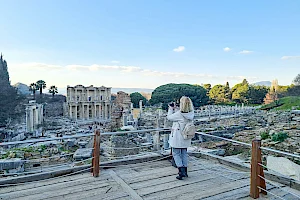
Although the Library of Celsus was destroyed by an earthquake in the 3rd century AD and later damaged by a fire, its façade was restored in the 1970s. Today, the library stands as a testament to the enduring legacy of ancient knowledge and the city’s cultural heritage. The partially reconstructed façade provides a glimpse into the grandeur of the original structure, allowing visitors to imagine the library as it once was. The Library of Celsus remains one of the most photographed monuments in Turkey, symbolizing the city’s historical importance and its role as a hub of learning. The structure continues to inspire awe, reminding us of the value placed on knowledge in ancient Ephesus and the impact that libraries have had throughout history. Conclusion The Library of Celsus is more than just an architectural marvel; it is a symbol of Ephesus’ intellectual and cultural legacy. Its grand design and dedication to knowledge reflect the values of a city that embraced learning and celebrated the wisdom of its leaders. As you stand before its towering columns and intricate statues, you connect with a past where the pursuit of knowledge was both a privilege and a revered tradition.
For more information on the Library of Celsus and Ephesus, visit the Wikipedia page on Ephesus.
Introduction
Discover the fascinating world of The Library of Celsus: Ephesus' Iconic Knowledge Hub in ancient Ephesus. This comprehensive guide explores the historical significance, archaeological findings, and cultural impact of this remarkable aspect of Ephesian heritage.
Historical Background
The history of The Library of Celsus: Ephesus' Iconic Knowledge Hub dates back to the early days of Ephesus. Archaeological evidence suggests that this aspect of Ephesian life played a crucial role in shaping the city's development and cultural identity.
Archaeological Discoveries
Recent excavations have unveiled remarkable findings related to The Library of Celsus: Ephesus' Iconic Knowledge Hub. These discoveries provide valuable insights into how this aspect of Ephesian life evolved over time.
Cultural Significance
Understanding The Library of Celsus: Ephesus' Iconic Knowledge Hub is crucial for appreciating the broader cultural context of ancient Ephesus. Its influence extended beyond the city walls, impacting trade, religion, and daily life.
Visitor Information
Today, visitors to Ephesus can explore the remnants of The Library of Celsus: Ephesus' Iconic Knowledge Hub firsthand. This section provides practical information for making the most of your visit.
Preservation and Future
Ongoing conservation efforts ensure that The Library of Celsus: Ephesus' Iconic Knowledge Hub remains preserved for future generations. Learn about the challenges and successes in maintaining this important historical site.
Frequently Asked Questions
What is the historical significance of The Library of Celsus: Ephesus' Iconic Knowledge Hub?
The The Library of Celsus: Ephesus' Iconic Knowledge Hub holds great historical importance in ancient Ephesus, providing valuable insights into the city's cultural and social development.
What can visitors see related to The Library of Celsus: Ephesus' Iconic Knowledge Hub today?
Visitors to Ephesus can explore well-preserved remains and artifacts related to The Library of Celsus: Ephesus' Iconic Knowledge Hub, offering a glimpse into the ancient world.
When is the best time to visit The Library of Celsus: Ephesus' Iconic Knowledge Hub?
The best time to visit is during the spring (April-May) or autumn (September-October) when the weather is mild and crowds are smaller.
Frequently Asked Questions
What is the historical significance of The Library of Celsus: Ephesus' Iconic Knowledge Hub?
The The Library of Celsus: Ephesus' Iconic Knowledge Hub holds great historical importance in ancient Ephesus, providing valuable insights into the city's cultural and social development.
What can visitors see related to The Library of Celsus: Ephesus' Iconic Knowledge Hub today?
Visitors to Ephesus can explore well-preserved remains and artifacts related to The Library of Celsus: Ephesus' Iconic Knowledge Hub, offering a glimpse into the ancient world.
When is the best time to visit The Library of Celsus: Ephesus' Iconic Knowledge Hub?
The best time to visit is during the spring (April-May) or autumn (September-October) when the weather is mild and crowds are smaller.
Frequently Asked Questions
What is the historical significance of The Library of Celsus: Ephesus' Iconic Knowledge Hub?
The The Library of Celsus: Ephesus' Iconic Knowledge Hub holds great historical importance in ancient Ephesus, providing valuable insights into the city's cultural and social development.
What can visitors see related to The Library of Celsus: Ephesus' Iconic Knowledge Hub today?
Visitors to Ephesus can explore well-preserved remains and artifacts related to The Library of Celsus: Ephesus' Iconic Knowledge Hub, offering a glimpse into the ancient world.
When is the best time to visit The Library of Celsus: Ephesus' Iconic Knowledge Hub?
The best time to visit is during the spring (April-May) or autumn (September-October) when the weather is mild and crowds are smaller.