

Walking the Marble Street: Ephesus’ Pathway to History
Ephesus, a city that once thrived on the western coast of Asia Minor, holds many treasures from the ancient world. Among its most iconic landmarks is the Marble Street, a pathway that has borne the footsteps of countless Ephesians over centuries. This street, which runs between the Great Theatre and the Celsus Library, provides a unique journey into the heart of Ephesus, offering glimpses into the city’s vibrant daily life, architecture, and culture.
1. The Grand Entrance: Starting at the Theatre
The Marble Street begins at the Great Theatre, an impressive structure that could seat up to 24,000 spectators. The theatre was not only a venue for performances but also a gathering place for civic events and political assemblies. As you walk from this grand entrance, you step into the pathway that connected some of Ephesus' most important landmarks, making it one of the main arteries of the city. What to See:
- The Great Theatre: Marvel at the scale of this ancient structure and imagine the lively gatherings that once filled its seats.
- The Agora: Located nearby, this bustling marketplace was the center of commerce, where traders from across the Mediterranean exchanged goods.
2. Exploring Curetes Street and Its Monuments
As you continue along the Marble Street, you’ll reach Curetes Street, named after the priests of Artemis. This was one of the city’s busiest areas, lined with monuments, temples, and fountains. The Fountain of Trajan, with its intricate carvings and statues, is a notable feature, as is the Temple of Hadrian, which still displays beautiful reliefs of mythological scenes. Walking along Curetes Street, you can imagine the bustling life of ancient Ephesus, as citizens went about their daily routines, shopping, socializing, and worshipping. Highlights:
- Temple of Hadrian: A well-preserved monument with ornate reliefs, a testament to Roman influence.
- Fountain of Trajan: Once a symbol of the emperor’s generosity, it provided fresh water to the city.
3. The Celsus Library: A Hub of Knowledge
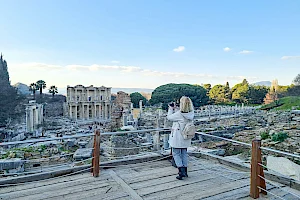
At the end of Curetes Street, you’ll find the Celsus Library, one of Ephesus’ most iconic structures. Built in honor of the Roman Senator Tiberius Julius Celsus, this library once held over 12,000 scrolls. Its grand façade, with towering columns and statues, showcases the architectural prowess of ancient builders and serves as a symbol of the city’s dedication to knowledge and learning. What to See:
- Library Façade: The intricate carvings and columns make this one of the most photographed spots in Ephesus.
- Statues of Wisdom, Virtue, Thought, and Knowledge: Symbolizing the values cherished by the Ephesians, these statues add to the library’s allure.
4. The Infrastructure: Water Systems and Street Lighting
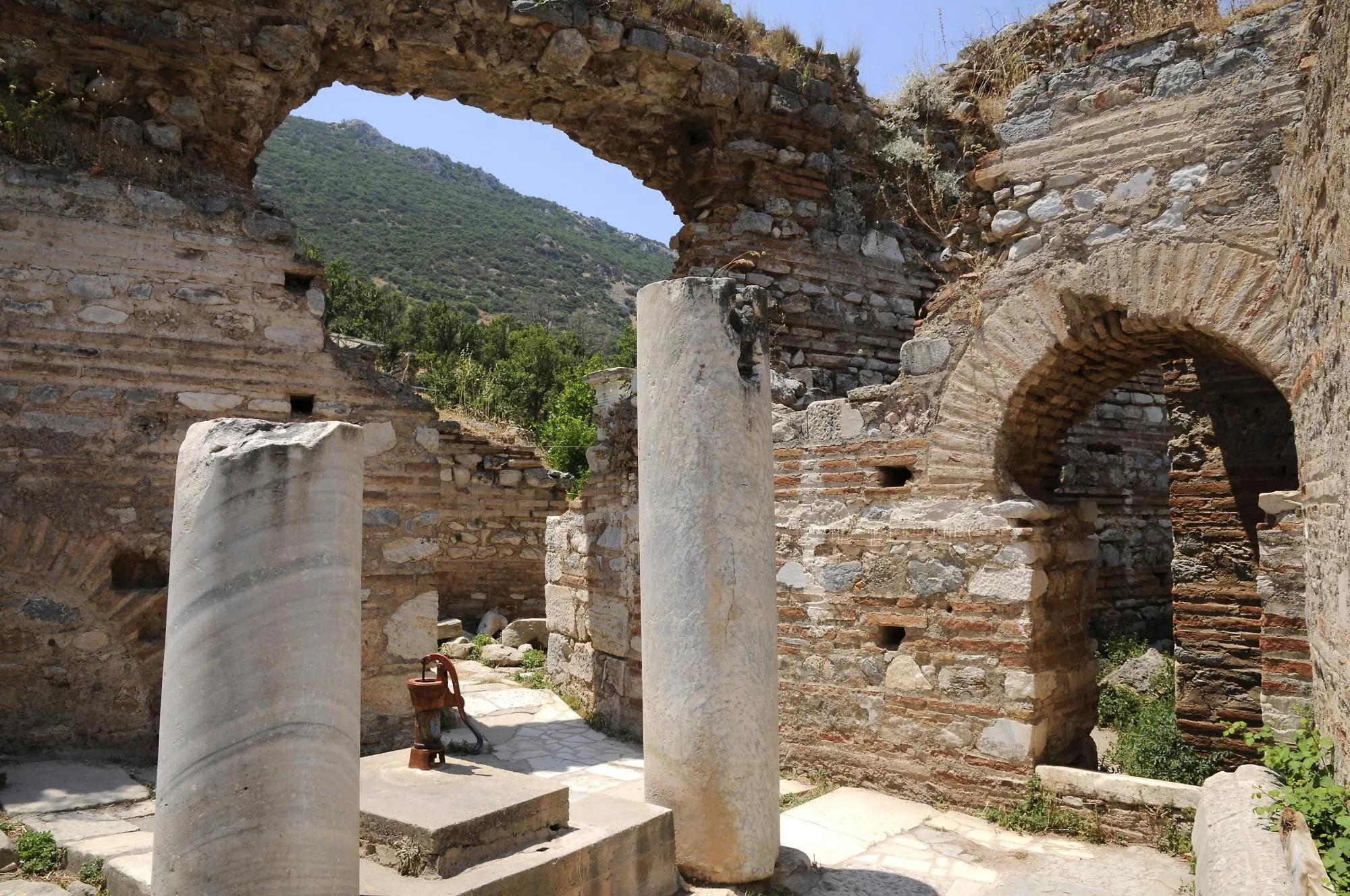
The Marble Street is also a testament to the city’s advanced infrastructure. Ephesus had a complex system of aqueducts, fountains, and public baths that ensured access to fresh water. The street itself was illuminated at night by oil lamps, making Ephesus one of the earliest cities to have street lighting. Walking along the Marble Street, you can see the remnants of these systems, which contributed to the city’s reputation as a sophisticated urban center. Features to Note:
- Grooves in the Marble: Created by chariot wheels, these grooves provide insight into the bustling traffic of ancient Ephesus.
- Street Lamps: Although only traces remain, the street’s lighting system was a remarkable achievement for its time.
5. Ending at the Temple of Artemis
A short walk from the end of the Marble Street takes you to the site of the Temple of Artemis, one of the Seven Wonders of the Ancient World. Although only a few columns remain today, the temple was once a grand structure dedicated to the goddess Artemis. This sacred site was a focal point of Ephesian spirituality and attracted pilgrims from all over the ancient world. Walking from the Marble Street to this iconic temple allows visitors to complete their journey through the cultural heart of Ephesus. Conclusion Walking the Marble Street of Ephesus is more than just a stroll through ancient ruins—it’s a pathway through history, reflecting the city’s social, political, and cultural life. Each step along this street brings you closer to the Ephesians who once walked these same stones, experiencing the bustling marketplace, the impressive monuments, and the spiritual centers that made Ephesus one of the greatest cities of its time.
For further information on Ephesus and its historic pathways, visit the Wikipedia page on Ephesus.
Introduction
Discover the fascinating world of Walking the Marble Street: Ephesus’ Pathway to History in ancient Ephesus. This comprehensive guide explores the historical significance, archaeological findings, and cultural impact of this remarkable aspect of Ephesian heritage.
Historical Background
The history of Walking the Marble Street: Ephesus’ Pathway to History dates back to the early days of Ephesus. Archaeological evidence suggests that this aspect of Ephesian life played a crucial role in shaping the city's development and cultural identity.
Archaeological Discoveries
Recent excavations have unveiled remarkable findings related to Walking the Marble Street: Ephesus’ Pathway to History. These discoveries provide valuable insights into how this aspect of Ephesian life evolved over time.
Cultural Significance
Understanding Walking the Marble Street: Ephesus’ Pathway to History is crucial for appreciating the broader cultural context of ancient Ephesus. Its influence extended beyond the city walls, impacting trade, religion, and daily life.
Visitor Information
Today, visitors to Ephesus can explore the remnants of Walking the Marble Street: Ephesus’ Pathway to History firsthand. This section provides practical information for making the most of your visit.
Preservation and Future
Ongoing conservation efforts ensure that Walking the Marble Street: Ephesus’ Pathway to History remains preserved for future generations. Learn about the challenges and successes in maintaining this important historical site.
Frequently Asked Questions
What is the historical significance of Walking the Marble Street: Ephesus’ Pathway to History?
The Walking the Marble Street: Ephesus’ Pathway to History holds great historical importance in ancient Ephesus, providing valuable insights into the city's cultural and social development.
What can visitors see related to Walking the Marble Street: Ephesus’ Pathway to History today?
Visitors to Ephesus can explore well-preserved remains and artifacts related to Walking the Marble Street: Ephesus’ Pathway to History, offering a glimpse into the ancient world.
When is the best time to visit Walking the Marble Street: Ephesus’ Pathway to History?
The best time to visit is during the spring (April-May) or autumn (September-October) when the weather is mild and crowds are smaller.
Frequently Asked Questions
What is the historical significance of Walking the Marble Street: Ephesus’ Pathway to History?
The Walking the Marble Street: Ephesus’ Pathway to History holds great historical importance in ancient Ephesus, providing valuable insights into the city's cultural and social development.
What can visitors see related to Walking the Marble Street: Ephesus’ Pathway to History today?
Visitors to Ephesus can explore well-preserved remains and artifacts related to Walking the Marble Street: Ephesus’ Pathway to History, offering a glimpse into the ancient world.
When is the best time to visit Walking the Marble Street: Ephesus’ Pathway to History?
The best time to visit is during the spring (April-May) or autumn (September-October) when the weather is mild and crowds are smaller.
Frequently Asked Questions
What is the historical significance of Walking the Marble Street: Ephesus’ Pathway to History?
The Walking the Marble Street: Ephesus’ Pathway to History holds great historical importance in ancient Ephesus, providing valuable insights into the city's cultural and social development.
What can visitors see related to Walking the Marble Street: Ephesus’ Pathway to History today?
Visitors to Ephesus can explore well-preserved remains and artifacts related to Walking the Marble Street: Ephesus’ Pathway to History, offering a glimpse into the ancient world.
When is the best time to visit Walking the Marble Street: Ephesus’ Pathway to History?
The best time to visit is during the spring (April-May) or autumn (September-October) when the weather is mild and crowds are smaller.