
"Ephesus’ Strategic City Gates: The Monumental and Magn...
Ephesus, located on the western coast of Asia Minor (modern-day Turkey), was one of the most significant cities in the Roman Empire. Known for its bustling commerce, rich culture, and grand architecture, Ephesus was also a major religious center. As early Christianity began to spread, Ephesus became a crucial hub for the new faith, attracting apostles, disciples, and Christian communities. But what drew early Christians to settle in Ephesus, a city so deeply rooted in pagan worship? This article explores the key factors that made Ephesus an ideal location for early Christian settlements and the impact of these communities on the growth of Christianity.
1. Strategic Location and Access to Trade Routes
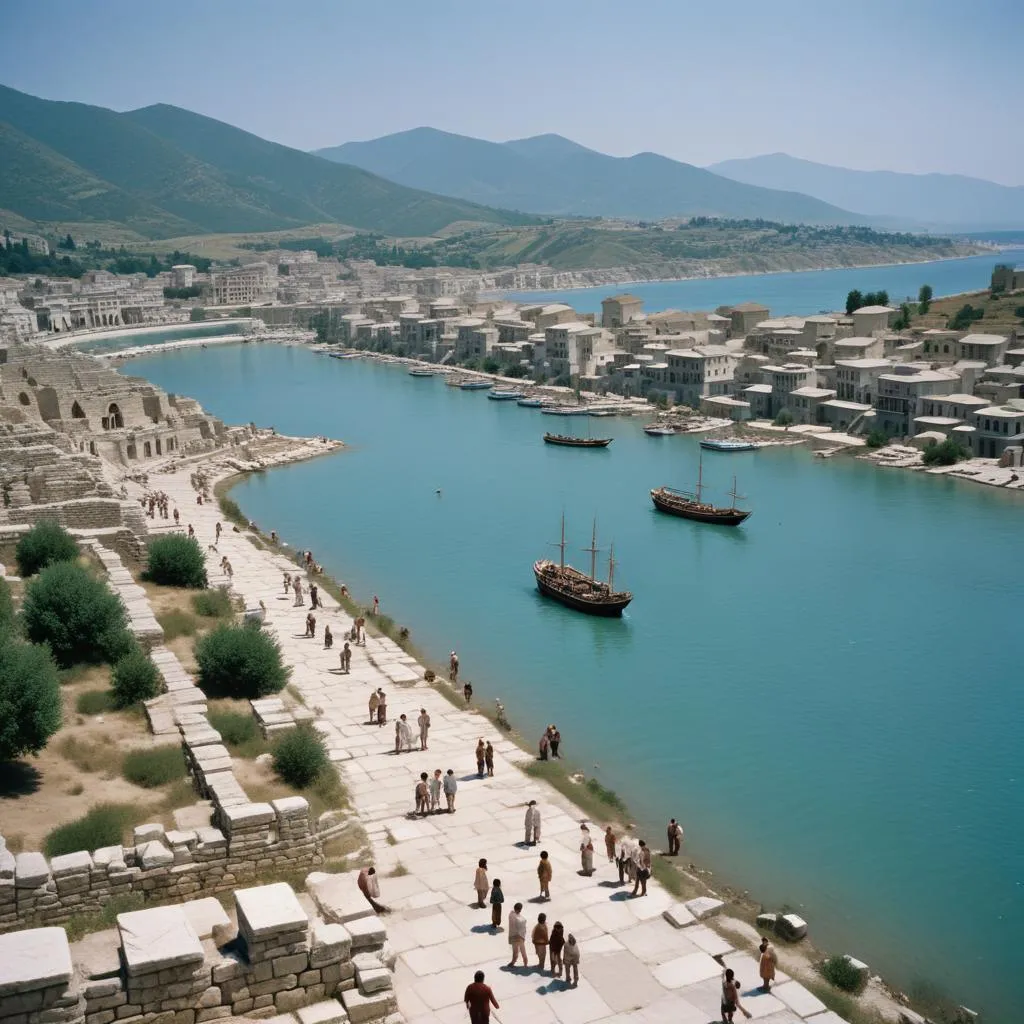
Ephesus was strategically positioned along major trade routes, both by land and by sea. It was located near the Aegean Sea, making it one of the busiest ports in the region and a vital point of connection between Asia Minor, Greece, and Rome. The city’s accessibility enabled people from diverse backgrounds to interact and exchange ideas. For early Christians, this bustling environment provided an excellent opportunity to spread the gospel to travelers, merchants, and visitors from different parts of the world. The trade routes facilitated the movement of Christian missionaries, like Apostle Paul, who could travel to Ephesus and other key cities with relative ease. As a cosmopolitan city with a constant influx of people, Ephesus was a perfect place for the new Christian faith to take root and spread across the empire.
2. Ephesus as a Center of Religious Diversity
Ephesus was known for its religious diversity, which included the worship of various gods and goddesses. The most prominent of these was Artemis, the goddess of fertility and hunting, whose grand temple in Ephesus was one of the Seven Wonders of the Ancient World. The temple drew pilgrims from across the Mediterranean, making Ephesus a center of spiritual activity and a place where various religious beliefs converged. This religious diversity presented early Christians with an opportunity to engage with people of different faiths and share the teachings of Jesus Christ. The Apostle Paul took advantage of Ephesus’s pluralistic environment, using public spaces like the School of Tyrannus to preach and discuss Christian teachings with both Jews and Gentiles. By establishing a presence in Ephesus, early Christians could challenge and contrast their beliefs with the prevailing religious practices, offering an alternative spiritual path in a city that was open to new ideas.
3. The Presence of a Large Jewish Community
Ephesus had a significant Jewish community, which provided a foundation for the early Christian mission. In the Book of Acts, we read that Paul began his ministry in Ephesus by preaching in the synagogue, addressing the Jewish population. As a Jew himself, Paul often started his work in cities by speaking to Jewish communities, who were already familiar with the Scriptures and the concept of a coming Messiah. The Jewish community in Ephesus was receptive to discussions about prophecy and theology, providing an initial audience for Paul’s teachings about Jesus as the promised Messiah. As Paul preached, some members of the Jewish community converted to Christianity, forming the core of the first Christian community in Ephesus. From this base, the Christian faith began to attract Gentile followers as well, expanding the reach of the new faith.
4. Influence of the Apostle Paul’s Mission
The Apostle Paul played a crucial role in establishing Christianity in Ephesus. During his third missionary journey, Paul spent approximately three years in the city, teaching, performing miracles, and building a strong community of believers. His ministry in Ephesus is one of the most documented in the New Testament, particularly in Acts 19, which describes how Paul engaged with the people, healed the sick, and cast out evil spirits. Paul’s presence in Ephesus solidified the city’s importance as a center for Christianity. He trained and mentored new leaders, such as Timothy, who would go on to oversee the Ephesian church. Paul’s influence helped establish a lasting Christian presence in Ephesus, and his Epistle to the Ephesians later reinforced his teachings and encouraged the believers to live in unity and faith. Paul’s time in Ephesus created a solid foundation for the growth of Christianity, attracting more settlers and converting locals who continued his work after he left.
5. The Ephesian Church and Its Role in Early Christian Growth
As a major Christian community, the church in Ephesus became a focal point for the early Church’s mission in Asia Minor. The Christian community in Ephesus quickly became influential, as the city’s strategic location allowed believers to spread the faith to neighboring regions. Ephesus was also close to other important cities, like Smyrna, Pergamum, and Laodicea, which are mentioned as the Seven Churches of Asia in the Book of Revelation. The Ephesian church played a key role in supporting the spread of Christianity across the Roman Empire. The church became known for its dedication to the teachings of Christ, as reflected in the Book of Revelation, where the church in Ephesus is commended for its hard work and perseverance but is reminded to rekindle its love for Christ (Revelation 2:1-7). This commendation and admonition illustrate the church’s enduring influence and its challenges, showing that Ephesus was not only a center for growth but also a community with a strong spiritual legacy.
6. A Base for Early Christian Leaders and Writings
Beyond the Apostle Paul, other key figures in early Christianity were associated with Ephesus, further enhancing its status as a Christian center. John the Apostle is believed to have spent his later years in Ephesus, where he likely wrote the Gospel of John and the Book of Revelation. According to tradition, John also took care of Mary, the mother of Jesus, in Ephesus, where a site known as the House of the Virgin Mary has become a place of pilgrimage. The presence of these early Christian leaders attracted more believers and strengthened the Ephesian church’s influence. Their teachings and writings shaped the theological foundation of Christianity and contributed to the city’s reputation as a center of spiritual and intellectual activity. Ephesus became a place where early Christian doctrine was discussed, debated, and disseminated, helping to unify and strengthen the growing Christian movement.
7. The Impact of the Council of Ephesus
The influence of Ephesus continued well beyond the early days of Christianity. In 431 CE, the Council of Ephesus was held in the city, addressing critical theological debates and affirming Mary as the Theotokos, or “Mother of God.” This ecumenical council further established Ephesus as a significant center for Christian doctrine and helped solidify its role in the history of the Church. The council’s decisions had a lasting impact on the development of Christian beliefs, shaping the doctrines that are still upheld by many Christian denominations today. Ephesus’s association with the council and its early Christian roots reinforced the city’s importance in the history of the Church and left a legacy that continues to influence Christian thought and practice.
Conclusion
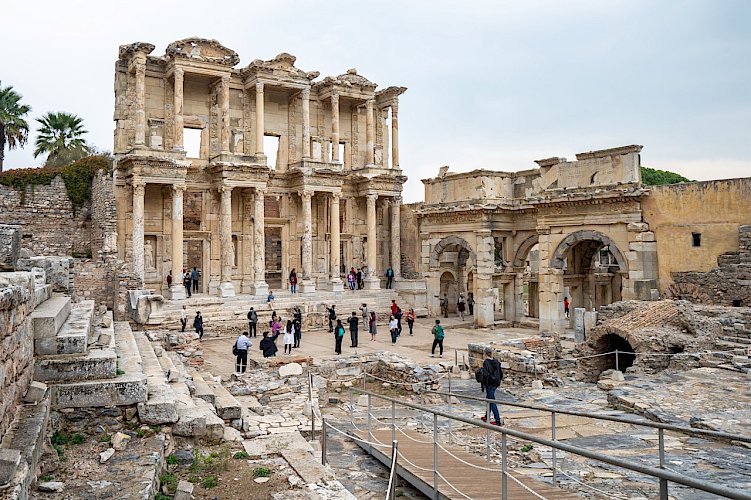
Early Christians settled in Ephesus because of its strategic location, religious diversity, and the opportunities it provided for evangelism. The Apostle Paul’s ministry in the city, combined with the presence of influential Christian leaders, helped establish Ephesus as a major center for early Christianity. The city’s importance grew as it became a hub for theological discussion and the spread of Christian teachings, leaving a legacy that has shaped the Christian faith for centuries. Today, the ruins of Ephesus serve as a reminder of its rich spiritual heritage. Visitors to the site can explore the remains of ancient temples, churches, and homes that once formed the heart of a thriving Christian community. For those interested in early Christianity, Ephesus offers a window into a world where faith, culture, and history intersected, laying the foundations for a movement that would change the course of history.
Introduction
Discover the fascinating world of "Ephesus’ Strategic City Gates: The Monumental and Magn... in ancient Ephesus. This comprehensive guide explores the historical significance, archaeological findings, and cultural impact of this remarkable aspect of Ephesian heritage.
Historical Background
The history of "Ephesus’ Strategic City Gates: The Monumental and Magn... dates back to the early days of Ephesus. Archaeological evidence suggests that this aspect of Ephesian life played a crucial role in shaping the city's development and cultural identity.
Archaeological Discoveries
Recent excavations have unveiled remarkable findings related to "Ephesus’ Strategic City Gates: The Monumental and Magn.... These discoveries provide valuable insights into how this aspect of Ephesian life evolved over time.
Cultural Significance
Understanding "Ephesus’ Strategic City Gates: The Monumental and Magn... is crucial for appreciating the broader cultural context of ancient Ephesus. Its influence extended beyond the city walls, impacting trade, religion, and daily life.
Visitor Information
Today, visitors to Ephesus can explore the remnants of "Ephesus’ Strategic City Gates: The Monumental and Magn... firsthand. This section provides practical information for making the most of your visit.
Preservation and Future
Ongoing conservation efforts ensure that "Ephesus’ Strategic City Gates: The Monumental and Magn... remains preserved for future generations. Learn about the challenges and successes in maintaining this important historical site.
Frequently Asked Questions
What is the historical significance of "Ephesus’ Strategic City Gates: The Monumental and Magn...?
The "Ephesus’ Strategic City Gates: The Monumental and Magn... holds great historical importance in ancient Ephesus, providing valuable insights into the city's cultural and social development.
What can visitors see related to "Ephesus’ Strategic City Gates: The Monumental and Magn... today?
Visitors to Ephesus can explore well-preserved remains and artifacts related to "Ephesus’ Strategic City Gates: The Monumental and Magn..., offering a glimpse into the ancient world.
When is the best time to visit "Ephesus’ Strategic City Gates: The Monumental and Magn...?
The best time to visit is during the spring (April-May) or autumn (September-October) when the weather is mild and crowds are smaller.
Frequently Asked Questions
What is the historical significance of "Ephesus’ Strategic City Gates: The Monumental and Magn...?
The "Ephesus’ Strategic City Gates: The Monumental and Magn... holds great historical importance in ancient Ephesus, providing valuable insights into the city's cultural and social development.
What can visitors see related to "Ephesus’ Strategic City Gates: The Monumental and Magn... today?
Visitors to Ephesus can explore well-preserved remains and artifacts related to "Ephesus’ Strategic City Gates: The Monumental and Magn..., offering a glimpse into the ancient world.
When is the best time to visit "Ephesus’ Strategic City Gates: The Monumental and Magn...?
The best time to visit is during the spring (April-May) or autumn (September-October) when the weather is mild and crowds are smaller.
Frequently Asked Questions
What is the historical significance of "Ephesus’ Strategic City Gates: The Monumental and Magn...?
The "Ephesus’ Strategic City Gates: The Monumental and Magn... holds great historical importance in ancient Ephesus, providing valuable insights into the city's cultural and social development.
What can visitors see related to "Ephesus’ Strategic City Gates: The Monumental and Magn... today?
Visitors to Ephesus can explore well-preserved remains and artifacts related to "Ephesus’ Strategic City Gates: The Monumental and Magn..., offering a glimpse into the ancient world.
When is the best time to visit "Ephesus’ Strategic City Gates: The Monumental and Magn...?
The best time to visit is during the spring (April-May) or autumn (September-October) when the weather is mild and crowds are smaller.