
The Journey from Jerusalem to Ephesus: Mary’s Last Home"
Introduction
Introduce the story of Mary’s journey from Jerusalem to Ephesus, where she is believed to have spent her final years under the care of the Apostle John. Explain that this tradition is cherished by many Christians, adding spiritual significance to Ephesus as Mary’s last home and a place of prayer and reflection.
The Biblical Basis for Mary’s Journey
Describe the tradition based on the biblical account where Jesus, during his crucifixion, entrusted Mary to the Apostle John’s care. Explain that, according to this account, John brought Mary to Ephesus, fulfilling Jesus’ request to care for her after his death.
- The Entrustment of Mary to John: Summarize the scene from the Gospel of John, where Jesus asks John to take Mary as his mother, underscoring the bond between them.
- A New Chapter in Ephesus: Reflect on how John may have chosen Ephesus as a peaceful place for Mary to continue her spiritual journey, far from Jerusalem.
The Journey from Jerusalem to Ephesus
Explore the journey that Mary and John likely took to reach Ephesus, a bustling port city of the Roman Empire. Explain that, according to tradition, this journey provided Mary with a place where she could continue her life of prayer and contemplation.
- Seeking a Place of Peace: Describe the possible route and motivations for choosing Ephesus, a city known for its openness and religious diversity, where Mary could live quietly.
- Life in Ephesus: Highlight what life may have been like for Mary in Ephesus, where she lived away from the conflicts in Jerusalem and continued to inspire early believers.
The House of the Virgin Mary: Mary’s Final Home
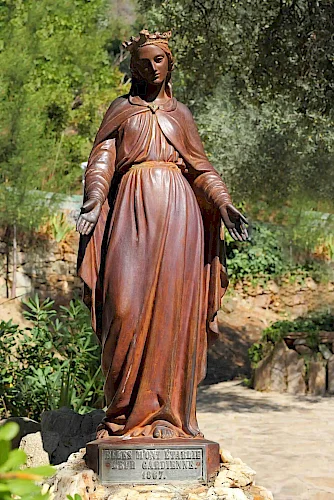
Provide an overview of the House of the Virgin Mary, a small stone house near Ephesus that is believed to be where Mary spent her last years. Explain that this site was rediscovered in the 19th century based on the visions of Sister Anne Catherine Emmerich and is now a place of pilgrimage.
- Discovery of the House: Summarize how Anne Catherine Emmerich’s visions guided explorers to the site, leading to its recognition by the Catholic Church.
- A Sacred Site for Pilgrimage: Describe the significance of the house as a place of prayer, where visitors honor Mary’s memory and connect with her legacy.
Ephesus: A City of Spiritual Significance
Analyze the importance of Ephesus as a center of early Christianity, where Mary’s presence influenced the growth of the Christian community. Explain that Ephesus is also known for being the location of the Third Ecumenical Council, which affirmed Mary’s title as Theotokos.
- Mary’s Influence on the Early Church: Discuss how Mary’s life and example strengthened the faith of early Christians in Ephesus, contributing to the city’s spiritual heritage.
- The Council of Ephesus: Briefly mention the role of the council in shaping Christian doctrine and affirming Mary’s significance as the Mother of God.
Pilgrimage to Ephesus: Honoring Mary’s Legacy
Describe the experience of making a pilgrimage to Ephesus, where visitors can connect with Mary’s final home and reflect on her life. Explain that Ephesus offers a unique spiritual journey for those seeking to honor Mary and understand her role in early Christianity.
- Visiting the House of the Virgin Mary: Provide tips for visiting the house, where pilgrims can participate in traditional practices like lighting candles, praying at the Wishing Wall, and drawing water from the holy spring.
- Connecting with Christian History: Highlight other significant sites in Ephesus, such as the Basilica of St. John, which contribute to the city’s rich Christian heritage.
Conclusion
Conclude by reflecting on the significance of Mary’s journey to Ephesus and her lasting impact on the Christian faith. Encourage readers to visit this sacred city to experience the peace and inspiration associated with Mary’s final home and to connect with the early church’s history.
External Link Suggestion:
Link to the Wikipedia page on the House of the Virgin Mary for further information about its history and spiritual significance.
Historical Background
The history of The Journey from Jerusalem to Ephesus: Mary’s Last Home" dates back to the early days of Ephesus. Archaeological evidence suggests that this aspect of Ephesian life played a crucial role in shaping the city's development and cultural identity.
Archaeological Discoveries
Recent excavations have unveiled remarkable findings related to The Journey from Jerusalem to Ephesus: Mary’s Last Home". These discoveries provide valuable insights into how this aspect of Ephesian life evolved over time.
Cultural Significance
Understanding The Journey from Jerusalem to Ephesus: Mary’s Last Home" is crucial for appreciating the broader cultural context of ancient Ephesus. Its influence extended beyond the city walls, impacting trade, religion, and daily life.
Visitor Information
Today, visitors to Ephesus can explore the remnants of The Journey from Jerusalem to Ephesus: Mary’s Last Home" firsthand. This section provides practical information for making the most of your visit.
Preservation and Future
Ongoing conservation efforts ensure that The Journey from Jerusalem to Ephesus: Mary’s Last Home" remains preserved for future generations. Learn about the challenges and successes in maintaining this important historical site.
Frequently Asked Questions
What is the historical significance of The Journey from Jerusalem to Ephesus: Mary’s Last Home"?
The The Journey from Jerusalem to Ephesus: Mary’s Last Home" holds great historical importance in ancient Ephesus, providing valuable insights into the city's cultural and social development.
What can visitors see related to The Journey from Jerusalem to Ephesus: Mary’s Last Home" today?
Visitors to Ephesus can explore well-preserved remains and artifacts related to The Journey from Jerusalem to Ephesus: Mary’s Last Home", offering a glimpse into the ancient world.
When is the best time to visit The Journey from Jerusalem to Ephesus: Mary’s Last Home"?
The best time to visit is during the spring (April-May) or autumn (September-October) when the weather is mild and crowds are smaller.
Frequently Asked Questions
What is the historical significance of The Journey from Jerusalem to Ephesus: Mary’s Last Home"?
The The Journey from Jerusalem to Ephesus: Mary’s Last Home" holds great historical importance in ancient Ephesus, providing valuable insights into the city's cultural and social development.
What can visitors see related to The Journey from Jerusalem to Ephesus: Mary’s Last Home" today?
Visitors to Ephesus can explore well-preserved remains and artifacts related to The Journey from Jerusalem to Ephesus: Mary’s Last Home", offering a glimpse into the ancient world.
When is the best time to visit The Journey from Jerusalem to Ephesus: Mary’s Last Home"?
The best time to visit is during the spring (April-May) or autumn (September-October) when the weather is mild and crowds are smaller.
Frequently Asked Questions
What is the historical significance of The Journey from Jerusalem to Ephesus: Mary’s Last Home"?
The The Journey from Jerusalem to Ephesus: Mary’s Last Home" holds great historical importance in ancient Ephesus, providing valuable insights into the city's cultural and social development.
What can visitors see related to The Journey from Jerusalem to Ephesus: Mary’s Last Home" today?
Visitors to Ephesus can explore well-preserved remains and artifacts related to The Journey from Jerusalem to Ephesus: Mary’s Last Home", offering a glimpse into the ancient world.
When is the best time to visit The Journey from Jerusalem to Ephesus: Mary’s Last Home"?
The best time to visit is during the spring (April-May) or autumn (September-October) when the weather is mild and crowds are smaller.