
Ephesus Through British Eyes: A 17th Century Travel Tale
In the 17th century, Ephesus attracted a number of British travelers who sought to explore the remnants of the once-great city. These accounts offer a fascinating glimpse into how British explorers viewed Ephesus and its ancient landmarks, illustrating the mix of reverence, adventure, and curiosity that characterized early travel writing.
Early Impressions and Challenges
The British travelers often faced unexpected challenges on their journeys. Accounts reveal that misdirection and difficult terrain were common obstacles. The rocky and steep hills, combined with the heat, made navigation difficult, and travelers occasionally lost their way. Despite these hardships, the allure of Ephesus’s ruins, its temple, and its natural beauty compelled explorers to press on (file-yzVOQr3mRDBWvxAQWQAHh0Gi). One particular account from 1699 describes a detour to a village that was believed to be connected to the church of Ephesus. Here, the travelers encountered a Greek Orthodox priest who showed them an ancient manuscript purportedly written by Prochorus, a deacon mentioned in the Acts of the Apostles. This experience not only underscores the religious significance of Ephesus but also reflects the locals' pride in their historical connections to early Christianity (file-8cR09g6k6kpbPg5kM3gvWOgO).
The Temple of Artemis
The Temple of Artemis, one of the Seven Wonders of the Ancient World, was a focal point of British exploration in Ephesus. British travelers were struck by the remnants of this once-grand structure, despite its dilapidated state. The immense scale of the temple, even in ruins, was awe-inspiring, and British accounts often described the experience of standing among its fallen columns with a sense of historical reverence (file-VDjbWjknq6tpmsYj1w0BySx3). This reverence was occasionally coupled with a sense of loss, as travelers realized the extent of looting and destruction that had taken place over the centuries. The British explorers of the 17th century, as well as those in the centuries that followed, lamented the removal of precious artifacts, many of which were taken back to England or other European countries. These artifacts eventually found homes in museums, such as the British Museum, where they remain today as symbols of both ancient Greek culture and the legacy of colonial-era archaeology (file-C8OPsVYdxOUXqJAPD5qo9Kda).
British Encounters with Local Culture
While exploring Ephesus, British travelers were often intrigued by the customs and daily lives of the local inhabitants. The British visitors noted the stark contrasts between the Western and Eastern worlds, as well as the blend of ancient and contemporary cultures in the region. British accounts from this period often include descriptions of encounters with Turkish locals and the hospitality—or lack thereof—that they received. In one account, the British noted their encounter with the Turkish inhabitants of Smyrna, near Ephesus, where they were guided by a local man who provided them insight into regional traditions and superstitions. The British writers were fascinated by the ways in which these customs had preserved aspects of ancient heritage, while also evolving to reflect the Ottoman influence of the time (file-qeBvWQxfdgR6d2BkPXg66OlW).
Reflections on Ephesus’s Historical Legacy
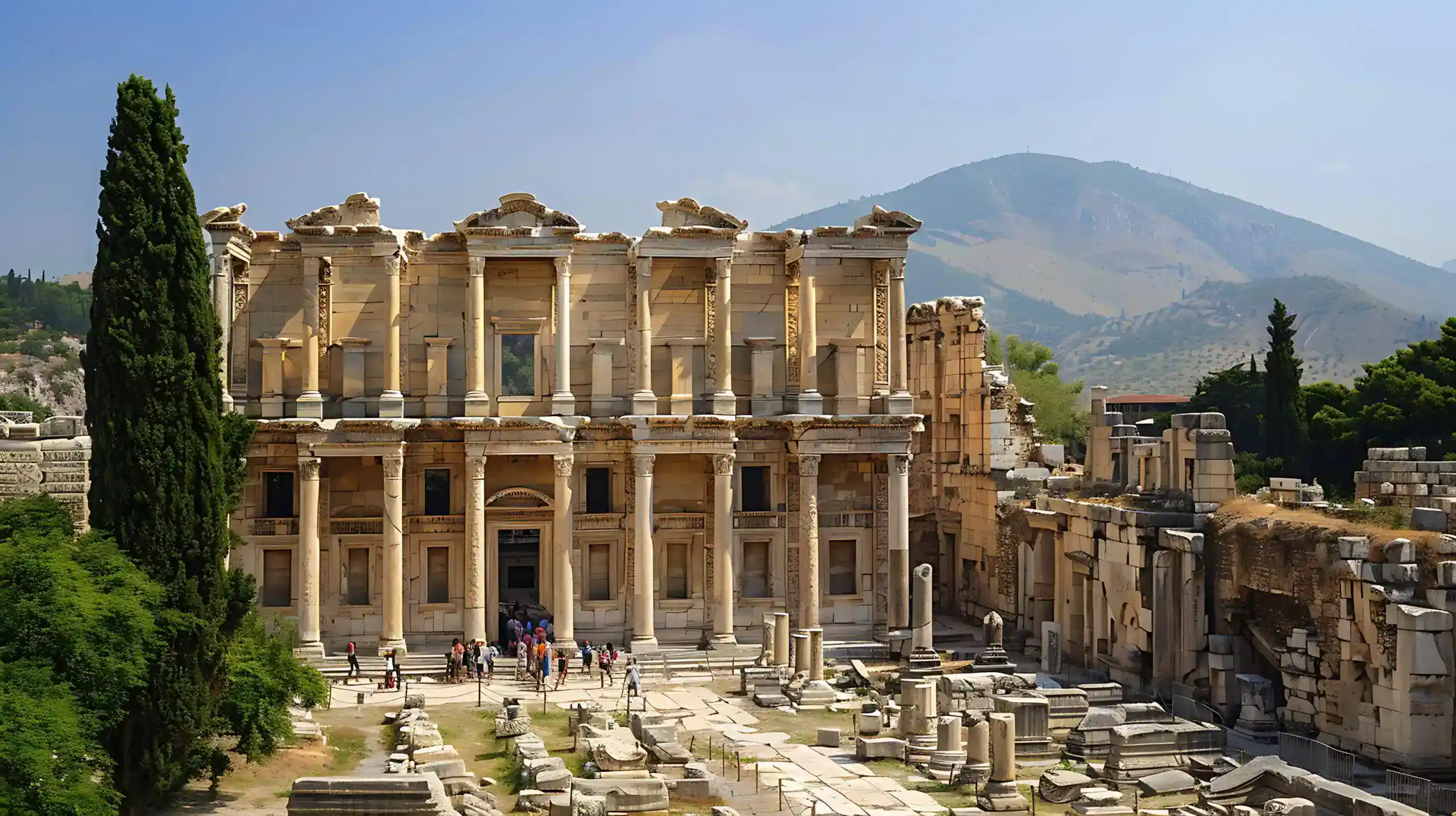
For many British travelers, the ruins of Ephesus offered a tangible connection to the ancient world. The city’s layered history—from its Hellenistic origins through Roman grandeur and eventual Christian transformation—served as a reminder of the transient nature of human civilization. British explorers in the 17th century documented the state of Ephesus with a sense of melancholy, noting the gradual decline and encroachment of nature on once-thriving public spaces, like the Celsus Library and the Great Theatre (file-frjNIAbnizyBkV2x8puy2Bg9). These travelers reflected on how Ephesus's history paralleled the rise and fall of empires. The British accounts often drew comparisons between the architectural achievements of the ancients and the ruins they saw before them, which seemed to stand as cautionary tales about the impermanence of human accomplishments. Their writings reveal a blend of admiration for the ancient culture and a poignant awareness of the fragility of even the mightiest civilizations.
Conclusion
The British exploration of Ephesus in the 17th century offers a unique perspective on the ancient city’s enduring allure. Through their detailed accounts, these travelers documented not only the physical ruins but also the cultural encounters and personal reflections that defined their journeys. Ephesus, through British eyes, emerged as a place of historical wonder and mystery, a testament to the past that continues to inspire those who walk among its ruins. For additional historical information on Ephesus, visit the Wikipedia page on Ephesus.
Introduction
Discover the fascinating world of Ephesus Through British Eyes: A 17th Century Travel Tale in ancient Ephesus. This comprehensive guide explores the historical significance, archaeological findings, and cultural impact of this remarkable aspect of Ephesian heritage.
Historical Background
The history of Ephesus Through British Eyes: A 17th Century Travel Tale dates back to the early days of Ephesus. Archaeological evidence suggests that this aspect of Ephesian life played a crucial role in shaping the city's development and cultural identity.
Archaeological Discoveries
Recent excavations have unveiled remarkable findings related to Ephesus Through British Eyes: A 17th Century Travel Tale. These discoveries provide valuable insights into how this aspect of Ephesian life evolved over time.
Cultural Significance
Understanding Ephesus Through British Eyes: A 17th Century Travel Tale is crucial for appreciating the broader cultural context of ancient Ephesus. Its influence extended beyond the city walls, impacting trade, religion, and daily life.
Visitor Information
Today, visitors to Ephesus can explore the remnants of Ephesus Through British Eyes: A 17th Century Travel Tale firsthand. This section provides practical information for making the most of your visit.
Preservation and Future
Ongoing conservation efforts ensure that Ephesus Through British Eyes: A 17th Century Travel Tale remains preserved for future generations. Learn about the challenges and successes in maintaining this important historical site.
Frequently Asked Questions
What is the historical significance of Ephesus Through British Eyes: A 17th Century Travel Tale?
The Ephesus Through British Eyes: A 17th Century Travel Tale holds great historical importance in ancient Ephesus, providing valuable insights into the city's cultural and social development.
What can visitors see related to Ephesus Through British Eyes: A 17th Century Travel Tale today?
Visitors to Ephesus can explore well-preserved remains and artifacts related to Ephesus Through British Eyes: A 17th Century Travel Tale, offering a glimpse into the ancient world.
When is the best time to visit Ephesus Through British Eyes: A 17th Century Travel Tale?
The best time to visit is during the spring (April-May) or autumn (September-October) when the weather is mild and crowds are smaller.
Frequently Asked Questions
What is the historical significance of Ephesus Through British Eyes: A 17th Century Travel Tale?
The Ephesus Through British Eyes: A 17th Century Travel Tale holds great historical importance in ancient Ephesus, providing valuable insights into the city's cultural and social development.
What can visitors see related to Ephesus Through British Eyes: A 17th Century Travel Tale today?
Visitors to Ephesus can explore well-preserved remains and artifacts related to Ephesus Through British Eyes: A 17th Century Travel Tale, offering a glimpse into the ancient world.
When is the best time to visit Ephesus Through British Eyes: A 17th Century Travel Tale?
The best time to visit is during the spring (April-May) or autumn (September-October) when the weather is mild and crowds are smaller.
Frequently Asked Questions
What is the historical significance of Ephesus Through British Eyes: A 17th Century Travel Tale?
The Ephesus Through British Eyes: A 17th Century Travel Tale holds great historical importance in ancient Ephesus, providing valuable insights into the city's cultural and social development.
What can visitors see related to Ephesus Through British Eyes: A 17th Century Travel Tale today?
Visitors to Ephesus can explore well-preserved remains and artifacts related to Ephesus Through British Eyes: A 17th Century Travel Tale, offering a glimpse into the ancient world.
When is the best time to visit Ephesus Through British Eyes: A 17th Century Travel Tale?
The best time to visit is during the spring (April-May) or autumn (September-October) when the weather is mild and crowds are smaller.