

Exploring the Ancient City of Ephesus: Temples, Theatres,...
Ephesus, an ancient city of wonder and a UNESCO World Heritage site, offers a remarkable glimpse into the Hellenistic and Roman eras. With its grand temples, expansive theatres, and impressive public spaces, Ephesus embodies the architectural and cultural legacy of the ancient world. Here, we explore some of its most captivating structures, from temples to theatres, and more.
The Temple of Artemis: A Wonder of the Ancient World
The Temple of Artemis was one of the Seven Wonders of the Ancient World. Built in the 6th century BCE, this temple was dedicated to Artemis, the goddess of fertility, hunting, and nature. The temple not only served as a place of worship but also as a major economic center, with its own treasury and marketplace. In its prime, it featured 127 columns, each 60 feet tall, and covered an area larger than a football field. Today, only a single column remains, standing as a tribute to its past grandeur and architectural excellence.
The Great Theatre of Ephesus: A Hub of Civic Life
The Great Theatre, located on the slopes of Mount Panayir, could accommodate up to 24,000 spectators. This grand structure, initially built during the Hellenistic period, was later expanded by the Romans. The theatre was not only a venue for dramatic performances and gladiatorial contests but also a place for civic gatherings. During the Apostle Paul’s time, it was here that a riot led by Demetrius the silversmith erupted, protesting Paul's teachings that threatened the local trade in Artemis idols. The theatre's three-tiered structure provided excellent acoustics, allowing actors and orators to be heard clearly by the entire audience. The design of the theatre reflects the Roman influence on Ephesus, showcasing their architectural prowess and commitment to public entertainment.
The Odeion: A Small Theatre for Public Assemblies
Adjacent to the State Agora is the Odeion, also known as the Bouleuterion, a smaller theatre built for public assemblies and musical performances. Constructed by Publius Vedius Antonius around 150 CE, the Odeion could seat about 1,400 people. This semi-circular structure consists of the cavea (auditorium), orchestra, and stage, similar to the layout of the larger theatre. It played a vital role in Ephesus’s political and social life, hosting meetings of the city council, the Boule, as well as concerts and recitations.
The Celsus Library: A Monument of Knowledge
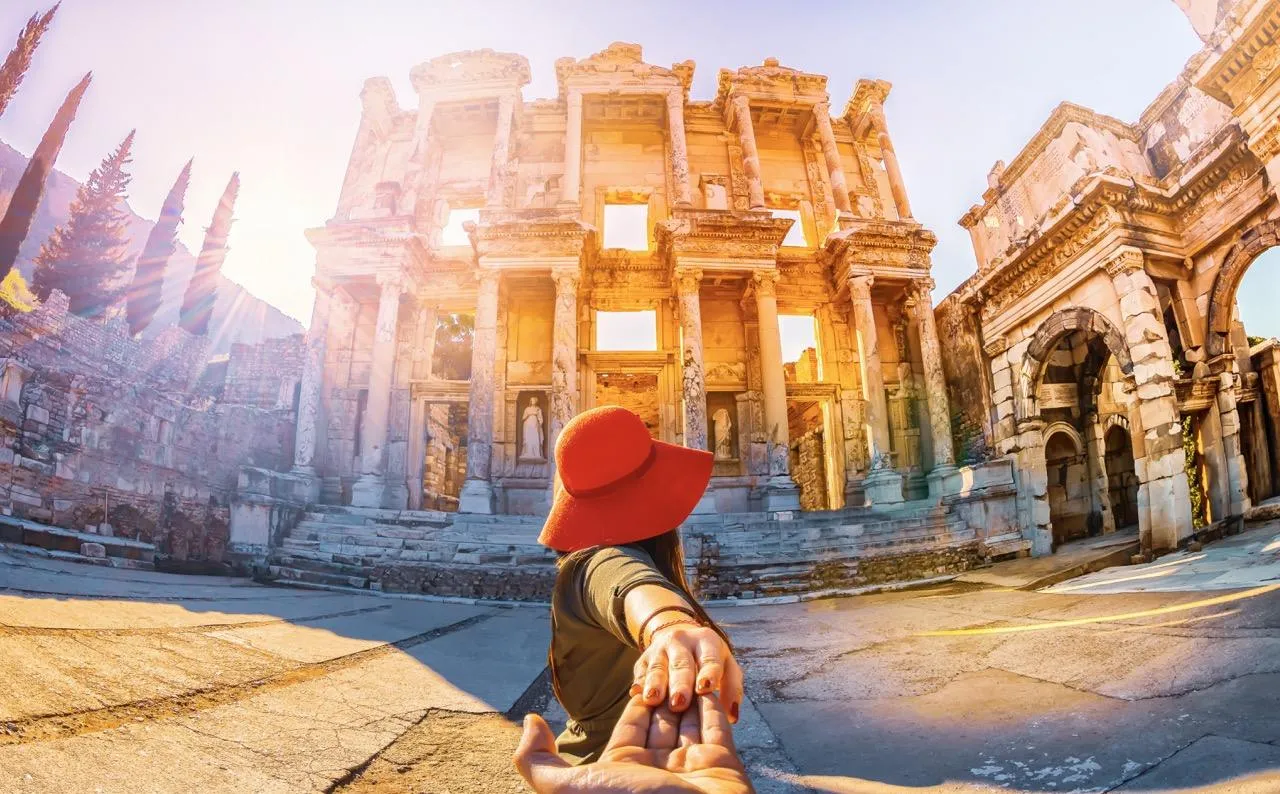
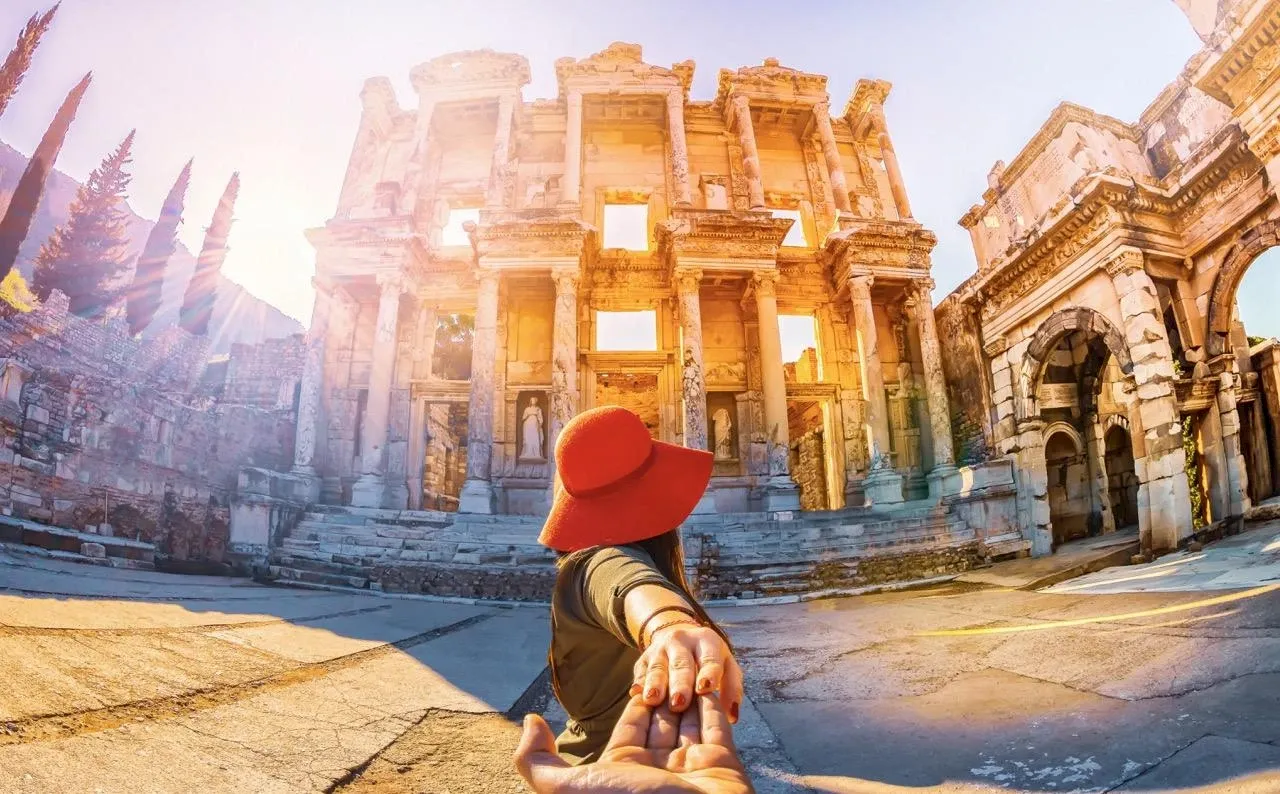
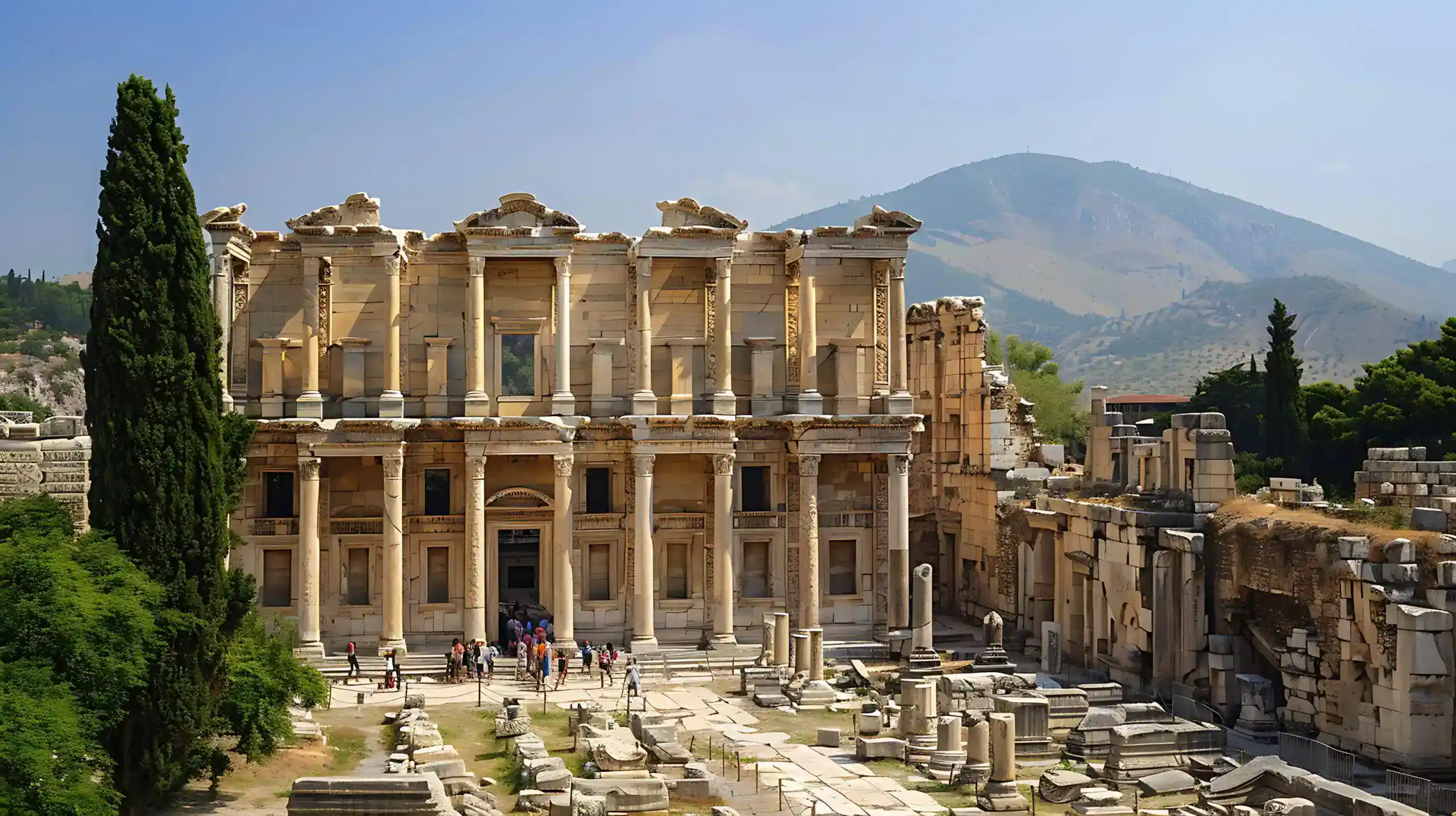
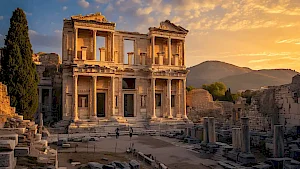
The Celsus Library is one of the most photographed monuments in Ephesus, built in honor of Tiberius Julius Celsus Polemaeanus, a Roman senator. This magnificent building served as a mausoleum for Celsus and a public library housing thousands of scrolls. The library’s impressive facade, with its ornate columns and sculptures, reflects a blend of Greek and Roman architectural styles. The building was designed with a double-wall technique to protect the scrolls from humidity and fluctuating temperatures, showcasing the engineering skills of ancient Ephesians.
The Temple of Hadrian: Honoring the Emperor
Another notable site is the Temple of Hadrian, a tribute to the Roman Emperor Hadrian. This small but beautifully preserved temple on Curetes Street features detailed reliefs depicting various mythological scenes, including the foundation of Ephesus by Androclus, the son of King Codrus of Athens. The Temple of Hadrian represents the Roman practice of emperor worship and serves as a testament to the city’s Roman influence during the height of its power.
Public Baths: The Varius and Scholastikia Baths
Ephesus was known for its elaborate public bathhouses, such as the Varius Baths and the Scholastikia Baths. These bathhouses featured cold, warm, and hot rooms, in accordance with Roman bathing customs. The Varius Baths, dating back to the 2nd century, were once adorned with mosaic floors and statues. The Scholastikia Baths, named after a wealthy Christian woman who restored them, were a social hub where citizens gathered to relax, socialize, and conduct business. These baths were heated through a sophisticated system called the hypocaust, which allowed hot air to circulate beneath the floors.
The Stadium: Center for Sports and Gladiatorial Contests
The Stadium, located near the Vedius Gymnasium, hosted athletic competitions, horse races, and gladiatorial contests. This elongated structure, which could seat around 25,000 spectators, was modeled after Greek stadia but later adapted for Roman-style entertainment. By the 3rd century, the Stadium was primarily used for gladiatorial games, including battles between wild animals and condemned criminals, a testament to the city’s adoption of Roman customs.
The Prytaneion: Heart of Civic Rituals
The Prytaneion served as the city’s town hall, where the sacred flame of Hestia burned, symbolizing the eternal life of Ephesus. The building also housed statues of Artemis and other deities, and it was the place where official ceremonies and receptions were held. Here, citizens could participate in civic rituals, emphasizing the strong connection between public life and religious observance in Ephesus. The Prytaneion is a reminder of the importance of civic duty and religious devotion in the ancient city.
Conclusion
Ephesus is a city of monumental architecture and rich history, offering insights into the religious, cultural, and social dynamics of ancient civilizations. Walking through its ruins, visitors can witness the remnants of a once-thriving metropolis that served as a crossroads for diverse cultures and faiths. From the grandeur of the Great Theatre to the intricate details of the Celsus Library, Ephesus continues to captivate and inspire, reflecting the enduring legacy of the ancient world. For more detailed information on the history of Ephesus, visit the Wikipedia page on Ephesus.
Introduction
Discover the fascinating world of Exploring the Ancient City of Ephesus: Temples, Theatres,... in ancient Ephesus. This comprehensive guide explores the historical significance, archaeological findings, and cultural impact of this remarkable aspect of Ephesian heritage.
Historical Background
The history of Exploring the Ancient City of Ephesus: Temples, Theatres,... dates back to the early days of Ephesus. Archaeological evidence suggests that this aspect of Ephesian life played a crucial role in shaping the city's development and cultural identity.
Archaeological Discoveries
Recent excavations have unveiled remarkable findings related to Exploring the Ancient City of Ephesus: Temples, Theatres,.... These discoveries provide valuable insights into how this aspect of Ephesian life evolved over time.
Cultural Significance
Understanding Exploring the Ancient City of Ephesus: Temples, Theatres,... is crucial for appreciating the broader cultural context of ancient Ephesus. Its influence extended beyond the city walls, impacting trade, religion, and daily life.
Visitor Information
Today, visitors to Ephesus can explore the remnants of Exploring the Ancient City of Ephesus: Temples, Theatres,... firsthand. This section provides practical information for making the most of your visit.
Preservation and Future
Ongoing conservation efforts ensure that Exploring the Ancient City of Ephesus: Temples, Theatres,... remains preserved for future generations. Learn about the challenges and successes in maintaining this important historical site.
Frequently Asked Questions
What is the historical significance of Exploring the Ancient City of Ephesus: Temples, Theatres,...?
The Exploring the Ancient City of Ephesus: Temples, Theatres,... holds great historical importance in ancient Ephesus, providing valuable insights into the city's cultural and social development.
What can visitors see related to Exploring the Ancient City of Ephesus: Temples, Theatres,... today?
Visitors to Ephesus can explore well-preserved remains and artifacts related to Exploring the Ancient City of Ephesus: Temples, Theatres,..., offering a glimpse into the ancient world.
When is the best time to visit Exploring the Ancient City of Ephesus: Temples, Theatres,...?
The best time to visit is during the spring (April-May) or autumn (September-October) when the weather is mild and crowds are smaller.
Frequently Asked Questions
What is the historical significance of Exploring the Ancient City of Ephesus: Temples, Theatres,...?
The Exploring the Ancient City of Ephesus: Temples, Theatres,... holds great historical importance in ancient Ephesus, providing valuable insights into the city's cultural and social development.
What can visitors see related to Exploring the Ancient City of Ephesus: Temples, Theatres,... today?
Visitors to Ephesus can explore well-preserved remains and artifacts related to Exploring the Ancient City of Ephesus: Temples, Theatres,..., offering a glimpse into the ancient world.
When is the best time to visit Exploring the Ancient City of Ephesus: Temples, Theatres,...?
The best time to visit is during the spring (April-May) or autumn (September-October) when the weather is mild and crowds are smaller.
Frequently Asked Questions
What is the historical significance of Exploring the Ancient City of Ephesus: Temples, Theatres,...?
The Exploring the Ancient City of Ephesus: Temples, Theatres,... holds great historical importance in ancient Ephesus, providing valuable insights into the city's cultural and social development.
What can visitors see related to Exploring the Ancient City of Ephesus: Temples, Theatres,... today?
Visitors to Ephesus can explore well-preserved remains and artifacts related to Exploring the Ancient City of Ephesus: Temples, Theatres,..., offering a glimpse into the ancient world.
When is the best time to visit Exploring the Ancient City of Ephesus: Temples, Theatres,...?
The best time to visit is during the spring (April-May) or autumn (September-October) when the weather is mild and crowds are smaller.