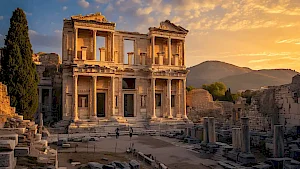


Exploring the Temple of Domitian: Power and Religion in E...
The Temple of Domitian stands as a monument to the complex relationship between power and religion in the ancient city of Ephesus. Built to honor the Roman Emperor Domitian, this temple symbolizes the loyalty of Ephesus to Rome and its role as a prominent center within the empire. This post explores the architectural significance and historical context of the Temple of Domitian, revealing how the structure reflects both the city’s devotion to its rulers and its role as a melting pot of spiritual traditions.
1. The Rise of Ephesus as a Neokoros City
Ephesus achieved the prestigious title of neokoros under Roman rule, allowing the city to construct temples dedicated to the emperors. This designation elevated Ephesus among its peers, as it became a recognized center for the imperial cult. The Temple of Domitian was one of the first temples in Ephesus built to honor an emperor and stands as a testament to the city’s political importance and loyalty to Rome. The temple’s construction signified the beginning of Ephesus’ role as a guardian of the imperial faith, blending civic pride with religious reverence.
2. Architectural Grandeur and Design
The Temple of Domitian was constructed on an elevated terrace in what is now known as Domitian Square, giving the structure a commanding view over the city. The temple was built in a prostyle design, with a grand staircase leading up to a platform surrounded by tall columns. The temple’s elevated position emphasized its importance and created a sense of awe for those approaching. The massive statue of Domitian that once stood within the temple, fragments of which have been found, underscored the emperor’s power and divine status. Key Architectural Features:
- Columned Terrace: A large platform with columns surrounding the main structure, providing an impressive and imposing entrance.
- Temple Altar: Decorated with reliefs depicting weapons and armor, symbolizing Domitian’s military power and Rome’s strength.
3. Political and Religious Significance
The Temple of Domitian played a dual role in Ephesus as both a religious site and a political statement. By honoring the emperor as a god, Ephesus displayed its allegiance to the Roman Empire and strengthened its ties with the ruling elite. The imperial cult, which promoted the worship of the emperor, allowed Ephesus to integrate Roman authority with local customs, merging religious devotion with civic duty. For the Ephesians, worshiping the emperor was a way of participating in the Roman world, securing their status as loyal subjects and benefactors of the empire. This temple also hosted public ceremonies and celebrations, which reinforced the power dynamics between Ephesus and Rome. The people of Ephesus would gather to honor the emperor, linking their prosperity to his favor and the security provided by Roman rule.
4. The Transformation of the Temple Post-Domitian
After Domitian’s assassination, the emperor was declared a tyrant, leading to the eventual removal of his name and likeness from monuments across the empire. The people of Ephesus, however, found a way to preserve their temple by rededicating it to Domitian’s father, Emperor Vespasian. This rededication allowed Ephesus to maintain its neokoros status and continue its role as a center for the imperial cult. The adaptability of the temple’s function reflects the pragmatism of the Ephesians, who used the site to reinforce their political connections and retain their civic privileges.
5. Legacy of the Temple of Domitian
Today, the Temple of Domitian stands in ruins, yet it remains a powerful reminder of Ephesus’ relationship with the Roman Empire. The remnants of the temple, including its massive foundation and the remaining columns, offer a glimpse into the architectural prowess of its builders. Visitors to Ephesus can imagine the grand ceremonies that once took place here, honoring the emperor and celebrating the city’s status within the Roman world. The Temple of Domitian also serves as a symbol of the intersection between politics and religion in ancient Ephesus. By embracing the imperial cult, the city demonstrated its loyalty to Rome while fostering a sense of unity among its citizens. The temple’s history reflects the ways in which Ephesus navigated the complex dynamics of power and faith, blending local traditions with the influence of one of history’s greatest empires. Conclusion The Temple of Domitian is more than an ancient ruin; it is a testament to Ephesus’ role as a center of power and devotion. From its architectural grandeur to its political significance, the temple embodies the city’s deep connection to the Roman Empire. As we explore its remains, we are reminded of the enduring legacy of Ephesus and the ways in which its people navigated the currents of religion and authority, leaving behind a legacy that continues to inspire and intrigue.
Introduction
Discover the fascinating world of Exploring the Temple of Domitian: Power and Religion in E... in ancient Ephesus. This comprehensive guide explores the historical significance, archaeological findings, and cultural impact of this remarkable aspect of Ephesian heritage.
Historical Background
The history of Exploring the Temple of Domitian: Power and Religion in E... dates back to the early days of Ephesus. Archaeological evidence suggests that this aspect of Ephesian life played a crucial role in shaping the city's development and cultural identity.
Archaeological Discoveries
Recent excavations have unveiled remarkable findings related to Exploring the Temple of Domitian: Power and Religion in E.... These discoveries provide valuable insights into how this aspect of Ephesian life evolved over time.
Cultural Significance
Understanding Exploring the Temple of Domitian: Power and Religion in E... is crucial for appreciating the broader cultural context of ancient Ephesus. Its influence extended beyond the city walls, impacting trade, religion, and daily life.
Visitor Information
Today, visitors to Ephesus can explore the remnants of Exploring the Temple of Domitian: Power and Religion in E... firsthand. This section provides practical information for making the most of your visit.
Preservation and Future
Ongoing conservation efforts ensure that Exploring the Temple of Domitian: Power and Religion in E... remains preserved for future generations. Learn about the challenges and successes in maintaining this important historical site.
Frequently Asked Questions
What is the historical significance of Exploring the Temple of Domitian: Power and Religion in E...?
The Exploring the Temple of Domitian: Power and Religion in E... holds great historical importance in ancient Ephesus, providing valuable insights into the city's cultural and social development.
What can visitors see related to Exploring the Temple of Domitian: Power and Religion in E... today?
Visitors to Ephesus can explore well-preserved remains and artifacts related to Exploring the Temple of Domitian: Power and Religion in E..., offering a glimpse into the ancient world.
When is the best time to visit Exploring the Temple of Domitian: Power and Religion in E...?
The best time to visit is during the spring (April-May) or autumn (September-October) when the weather is mild and crowds are smaller.
Frequently Asked Questions
What is the historical significance of Exploring the Temple of Domitian: Power and Religion in E...?
The Exploring the Temple of Domitian: Power and Religion in E... holds great historical importance in ancient Ephesus, providing valuable insights into the city's cultural and social development.
What can visitors see related to Exploring the Temple of Domitian: Power and Religion in E... today?
Visitors to Ephesus can explore well-preserved remains and artifacts related to Exploring the Temple of Domitian: Power and Religion in E..., offering a glimpse into the ancient world.
When is the best time to visit Exploring the Temple of Domitian: Power and Religion in E...?
The best time to visit is during the spring (April-May) or autumn (September-October) when the weather is mild and crowds are smaller.
Frequently Asked Questions
What is the historical significance of Exploring the Temple of Domitian: Power and Religion in E...?
The Exploring the Temple of Domitian: Power and Religion in E... holds great historical importance in ancient Ephesus, providing valuable insights into the city's cultural and social development.
What can visitors see related to Exploring the Temple of Domitian: Power and Religion in E... today?
Visitors to Ephesus can explore well-preserved remains and artifacts related to Exploring the Temple of Domitian: Power and Religion in E..., offering a glimpse into the ancient world.
When is the best time to visit Exploring the Temple of Domitian: Power and Religion in E...?
The best time to visit is during the spring (April-May) or autumn (September-October) when the weather is mild and crowds are smaller.