

Exploring the Temple of Hadrian: Ephesus’ Monument to R...
The Temple of Hadrian in Ephesus is a stunning example of Roman architecture and a testament to the city’s connection with the Roman Empire. Built in honor of Emperor Hadrian, this temple reflects the influence and legacy of Roman rule in one of the ancient world’s most important cities. Although smaller than some of the other structures in Ephesus, the Temple of Hadrian is renowned for its beautifully preserved reliefs and its significance as a symbol of Roman power. This post explores the history, architecture, and cultural importance of this impressive monument.
1. A Temple in Honor of Emperor Hadrian
The Temple of Hadrian was built in the 2nd century AD by the citizens of Ephesus, who wanted to honor Hadrian, the Roman emperor known for his travels and his efforts to unify the empire. Hadrian visited Ephesus around 129 AD, and the temple was constructed shortly afterward to commemorate his influence. Ephesus, as a prominent Roman city, embraced the construction of temples to Roman emperors, highlighting the city’s loyalty to Rome and its role within the empire. The temple was dedicated not only to Hadrian but also to Artemis and the people of Ephesus, emphasizing the city’s unique blend of local and Roman religious practices. This merging of Roman and Ephesian traditions reflects the cultural diversity of the city during its time under Roman rule.
2. Architectural Beauty and Design
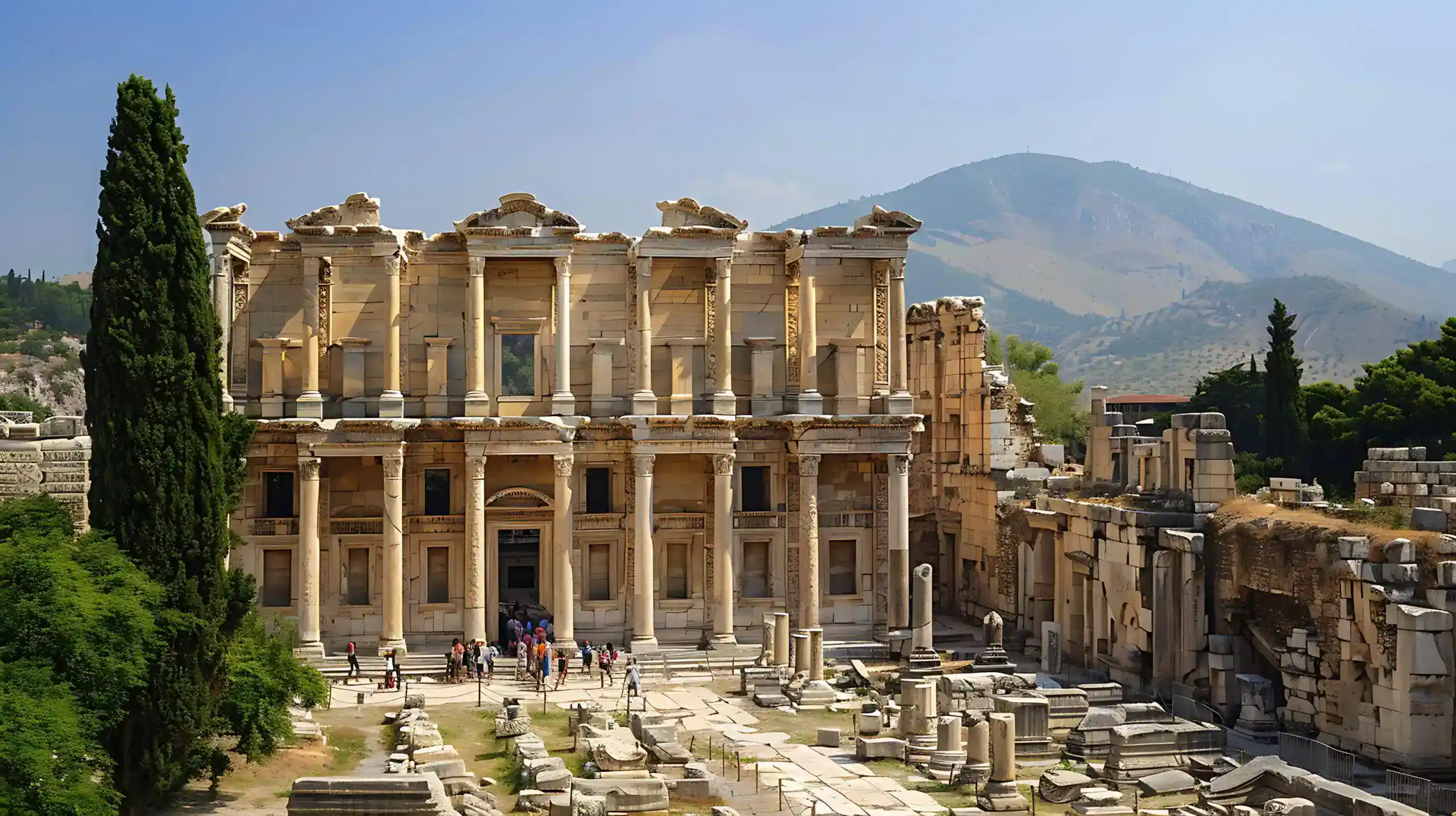
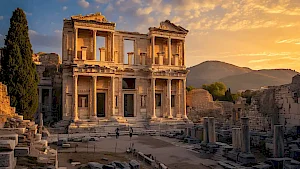
Although modest in size, the Temple of Hadrian is famous for its intricate design and beautiful reliefs. The temple’s façade is adorned with Corinthian columns, supporting an elegant archway that features a relief of Tyche, the goddess of fortune, symbolizing the prosperity of Ephesus. The arch is flanked by two columned niches that may have held statues of Hadrian or other deities. Inside, visitors can view stunning reliefs that depict various mythological scenes, including the city’s legendary founders. One of the most remarkable features of the temple is a frieze depicting gods and heroes, with intricate carvings that highlight the craftsmanship of Ephesian artists. The combination of Greek and Roman architectural elements in the temple’s design reflects Ephesus’ role as a cultural bridge between East and West.
3. The Mythology and Symbolism of the Reliefs
The reliefs on the Temple of Hadrian offer a glimpse into the beliefs and stories that shaped Ephesian culture. One of the most notable reliefs shows Androclus, the legendary founder of Ephesus, hunting a boar. According to mythology, the boar marked the spot where Androclus established the city, and the image serves as a reminder of Ephesus’ origins. Another section of the frieze depicts Amazons, the warrior women who were believed to be associated with Artemis. These figures reflect the city’s devotion to Artemis, as well as its mythological heritage. The inclusion of these scenes alongside Roman imagery underscores the blending of local and imperial influences in Ephesus, making the temple a powerful symbol of the city’s identity.
4. Cultural and Civic Significance
The Temple of Hadrian was more than just a religious site; it was a space where Ephesians could celebrate their connection to the Roman Empire and express civic pride. Temples dedicated to emperors were common in Roman cities, serving as symbols of loyalty and respect for the ruling power. The temple’s prominent location along Curetes Street, one of Ephesus’ main thoroughfares, ensured that it was a visible reminder of Rome’s presence and influence. The temple also played a role in public ceremonies and festivals, where citizens gathered to honor Hadrian and the gods. These gatherings reinforced the sense of community and shared identity among the people of Ephesus, highlighting the temple’s importance as a civic monument as well as a religious one. Conclusion The Temple of Hadrian stands as a beautiful testament to the artistry and architectural achievements of Ephesus under Roman rule. Its elegant design, intricate reliefs, and rich symbolism offer a window into the cultural and religious life of the city. For visitors, exploring the Temple of Hadrian is a chance to connect with the history of a city that was both deeply rooted in its local traditions and closely tied to the broader Roman Empire. As you walk along Curetes Street and admire the temple’s preserved façade, you’ll be transported back to a time when Ephesus was a thriving center of power, culture, and spirituality.
Introduction
Discover the fascinating world of Exploring the Temple of Hadrian: Ephesus’ Monument to R... in ancient Ephesus. This comprehensive guide explores the historical significance, archaeological findings, and cultural impact of this remarkable aspect of Ephesian heritage.
Historical Background
The history of Exploring the Temple of Hadrian: Ephesus’ Monument to R... dates back to the early days of Ephesus. Archaeological evidence suggests that this aspect of Ephesian life played a crucial role in shaping the city's development and cultural identity.
Archaeological Discoveries
Recent excavations have unveiled remarkable findings related to Exploring the Temple of Hadrian: Ephesus’ Monument to R.... These discoveries provide valuable insights into how this aspect of Ephesian life evolved over time.
Cultural Significance
Understanding Exploring the Temple of Hadrian: Ephesus’ Monument to R... is crucial for appreciating the broader cultural context of ancient Ephesus. Its influence extended beyond the city walls, impacting trade, religion, and daily life.
Visitor Information
Today, visitors to Ephesus can explore the remnants of Exploring the Temple of Hadrian: Ephesus’ Monument to R... firsthand. This section provides practical information for making the most of your visit.
Preservation and Future
Ongoing conservation efforts ensure that Exploring the Temple of Hadrian: Ephesus’ Monument to R... remains preserved for future generations. Learn about the challenges and successes in maintaining this important historical site.
Frequently Asked Questions
What is the historical significance of Exploring the Temple of Hadrian: Ephesus’ Monument to R...?
The Exploring the Temple of Hadrian: Ephesus’ Monument to R... holds great historical importance in ancient Ephesus, providing valuable insights into the city's cultural and social development.
What can visitors see related to Exploring the Temple of Hadrian: Ephesus’ Monument to R... today?
Visitors to Ephesus can explore well-preserved remains and artifacts related to Exploring the Temple of Hadrian: Ephesus’ Monument to R..., offering a glimpse into the ancient world.
When is the best time to visit Exploring the Temple of Hadrian: Ephesus’ Monument to R...?
The best time to visit is during the spring (April-May) or autumn (September-October) when the weather is mild and crowds are smaller.
Frequently Asked Questions
What is the historical significance of Exploring the Temple of Hadrian: Ephesus’ Monument to R...?
The Exploring the Temple of Hadrian: Ephesus’ Monument to R... holds great historical importance in ancient Ephesus, providing valuable insights into the city's cultural and social development.
What can visitors see related to Exploring the Temple of Hadrian: Ephesus’ Monument to R... today?
Visitors to Ephesus can explore well-preserved remains and artifacts related to Exploring the Temple of Hadrian: Ephesus’ Monument to R..., offering a glimpse into the ancient world.
When is the best time to visit Exploring the Temple of Hadrian: Ephesus’ Monument to R...?
The best time to visit is during the spring (April-May) or autumn (September-October) when the weather is mild and crowds are smaller.
Frequently Asked Questions
What is the historical significance of Exploring the Temple of Hadrian: Ephesus’ Monument to R...?
The Exploring the Temple of Hadrian: Ephesus’ Monument to R... holds great historical importance in ancient Ephesus, providing valuable insights into the city's cultural and social development.
What can visitors see related to Exploring the Temple of Hadrian: Ephesus’ Monument to R... today?
Visitors to Ephesus can explore well-preserved remains and artifacts related to Exploring the Temple of Hadrian: Ephesus’ Monument to R..., offering a glimpse into the ancient world.
When is the best time to visit Exploring the Temple of Hadrian: Ephesus’ Monument to R...?
The best time to visit is during the spring (April-May) or autumn (September-October) when the weather is mild and crowds are smaller.