

How much of Ephesus is uncovered?
The ancient city of Ephesus is one of the most important and well-preserved archaeological sites in the world. Nestled in modern-day Turkey, near the town of Selçuk, Ephesus has a rich history that spans thousands of years, from its origins as a Greek city to its status as one of the most significant cities of the Roman Empire. Millions of visitors are drawn to its grand structures like the Library of Celsus, the Great Theatre, and the remnants of the Temple of Artemis, but one common question persists: How much of Ephesus has been uncovered? The short answer is: Only about 20-25% of Ephesus has been excavated. Despite the breathtaking ruins visible today, the majority of the ancient city still lies buried beneath the earth. In this blog, we’ll explore why such a small portion has been uncovered, what has been revealed so far, what remains hidden, and why Ephesus remains a must-visit destination. We’ll also touch on the ongoing excavations and the future of archaeological discoveries in this incredible city.
Table of Contents:
- A Brief History of Ephesus
- How Much of Ephesus Has Been Uncovered?
- Key Sites That Have Been Excavated
- The Library of Celsus
- The Great Theatre
- Curetes Street
- The Terrace Houses
- Temple of Hadrian
- The Temple of Artemis (Remains)
- What Lies Beneath Ephesus? The Unexplored Areas
- Why Has Only 20-25% of Ephesus Been Excavated?
- Ongoing and Future Excavations: What’s Next for Ephesus?
- Tips for Visiting Ephesus in 2024
- Frequently Asked Questions
1. A Brief History of Ephesus
Ephesus was founded in the 10th century BC by Greek colonists and quickly grew into a bustling city thanks to its strategic location near the Aegean Sea. It became one of the most important cities in the ancient Mediterranean world, flourishing under both Greek and Roman rule. Ephesus was renowned for its Temple of Artemis, one of the Seven Wonders of the Ancient World, as well as its position as a major trade hub. At its peak, Ephesus was home to more than 250,000 people, making it one of the largest cities of the Roman Empire. It was a center for commerce, politics, and religion, particularly during the reign of the Roman Emperor Augustus. The city also played a pivotal role in early Christianity, as both St. Paul and St. John the Apostle spent time in Ephesus spreading the Christian faith. Despite its grandeur, Ephesus eventually declined due to a combination of natural disasters, such as earthquakes, and the silting up of its harbor, which cut off access to the sea. The city was abandoned and left buried for centuries until modern excavations began in the 19th century.
2. How Much of Ephesus Has Been Uncovered?
As of 2024, approximately 20-25% of Ephesus has been uncovered through archaeological excavations. This may come as a surprise to many visitors, given the impressive scale of the ruins visible today. However, Ephesus was a massive city, covering roughly 8 square kilometers (3 square miles). What you see today is just a small fraction of the ancient city’s total area. The excavated portions include some of the most significant public and religious structures, such as the Library of Celsus, The Great Theatre, and Curetes Street. These areas represent only a portion of what was once a thriving metropolis, with much of the city’s residential and commercial areas still buried beneath layers of earth.
3. Key Sites That Have Been Excavated
While only a portion of Ephesus has been excavated, what has been uncovered provides a fascinating glimpse into the grandeur of this ancient city. Here are some of the most important and well-preserved sites you can explore today:
1. The Library of Celsus
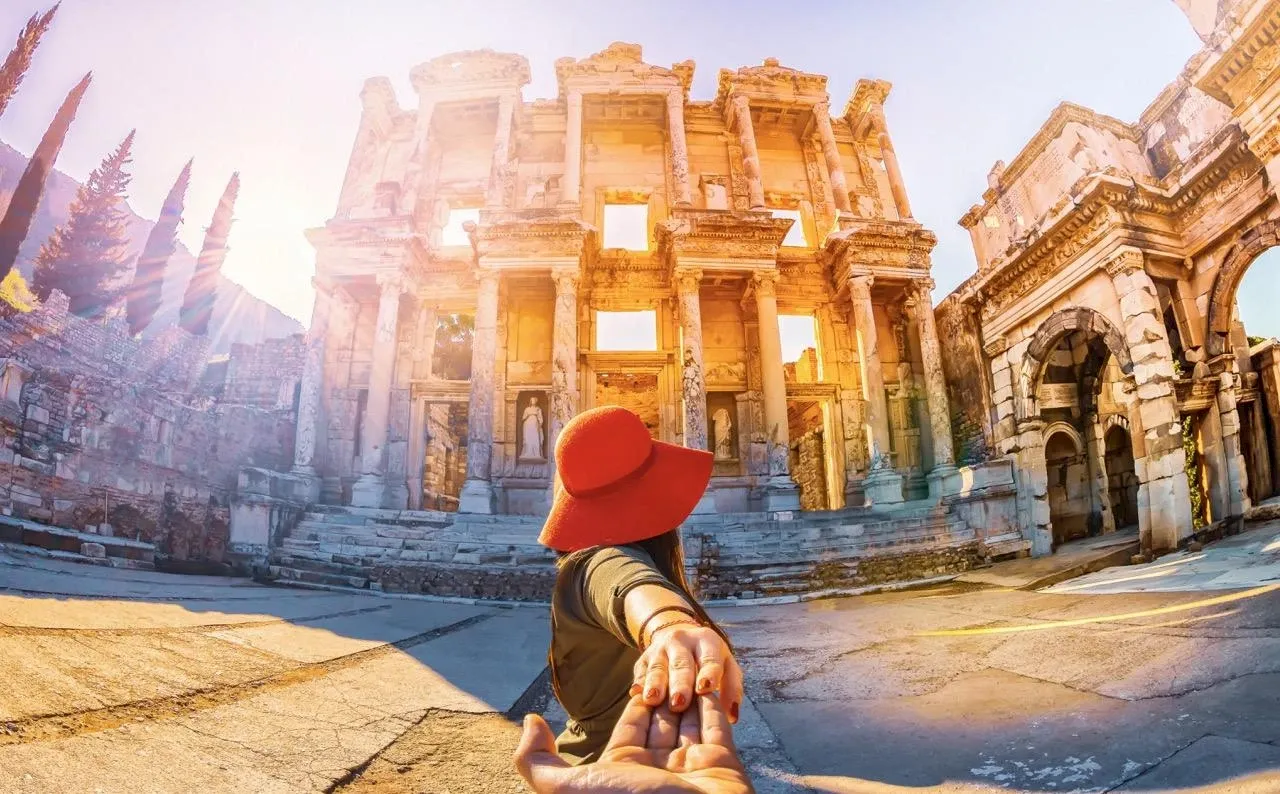
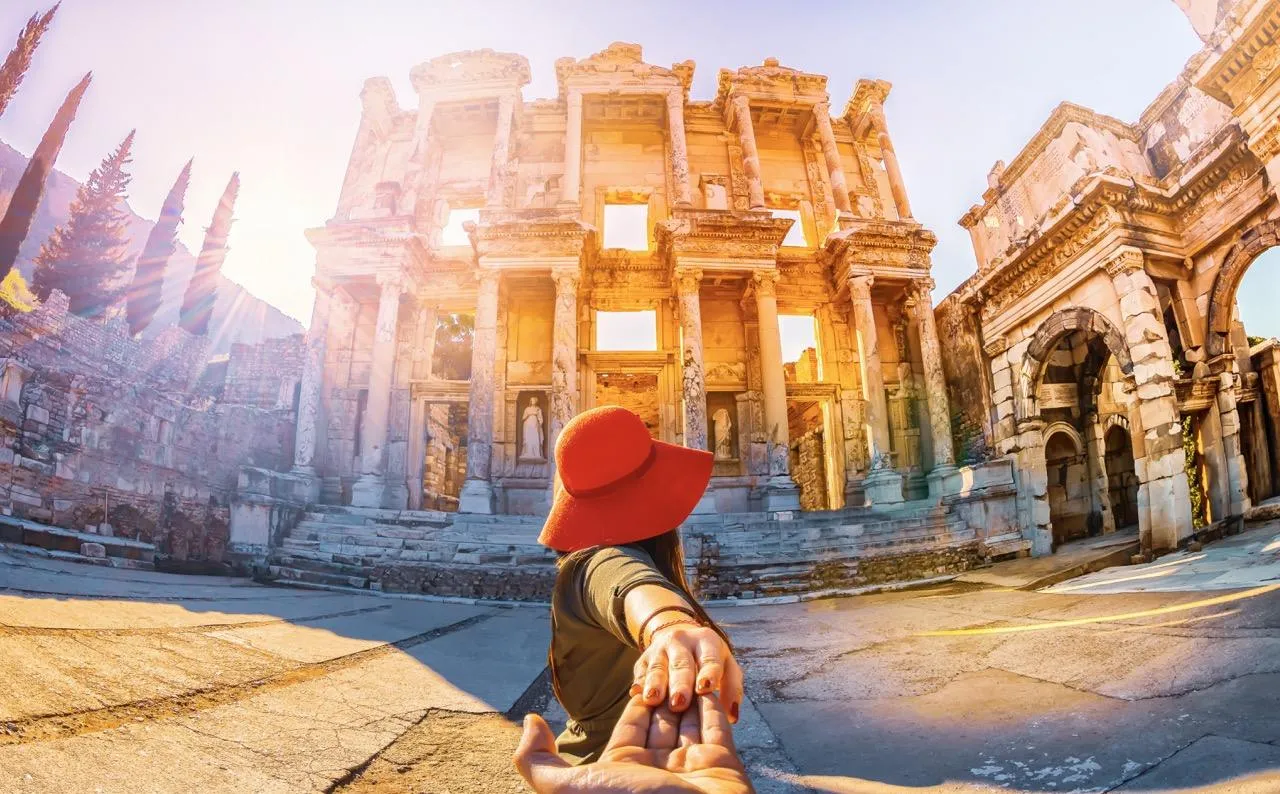
The Library of Celsus is one of the most iconic and best-preserved structures in Ephesus. Built in 117 AD, it served as a library and a monumental tomb for Tiberius Julius Celsus, a Roman governor. The library once housed over 12,000 scrolls, making it one of the largest libraries of the ancient world. Its grand façade, with its intricately carved columns and statues, is one of the most photographed sites in Ephesus.
- Fun Fact: The library’s design was meant to reflect the intellectual and cultural prowess of the city during the Roman Empire.
2. The Great Theatre
The Great Theatre is another impressive structure, capable of seating up to 25,000 people. Originally built in the 3rd century BC and later expanded under Roman rule, the theatre was used for dramatic performances, gladiatorial contests, and public assemblies. Today, visitors can still climb the steps of the theatre and take in panoramic views of the surrounding area.
3. Curetes Street
Curetes Street is the main thoroughfare that runs through the heart of Ephesus. Lined with columns, statues, and ancient buildings, including the Temple of Hadrian and the Fountain of Trajan, walking down Curetes Street gives visitors a sense of the grandeur of ancient Ephesus.
4. The Terrace Houses
The Terrace Houses are one of the most fascinating parts of Ephesus. Located on a hillside, these homes were once inhabited by the city’s wealthiest citizens. The houses feature intricate mosaics, frescoes, and advanced architectural designs such as private baths and heating systems. A separate ticket is required to visit the Terrace Houses, but they are well worth it for anyone interested in seeing how the elite lived in Roman times.
5. Temple of Hadrian
The Temple of Hadrian, located along Curetes Street, is one of the most well-preserved temples in Ephesus. Built in honor of Emperor Hadrian, the temple features beautiful reliefs depicting mythological scenes.
6. The Temple of Artemis (Remains)
The Temple of Artemis, one of the Seven Wonders of the Ancient World, was a massive structure dedicated to the goddess Artemis, the protector of Ephesus. Although only a few columns remain today, visiting the site is still an essential part of any Ephesus tour due to its historical significance.
4. What Lies Beneath Ephesus? The Unexplored Areas
While much of the city’s public and religious buildings have been uncovered, large portions of Ephesus remain buried. Archaeologists believe that there are still entire neighborhoods, temples, and portions of the harbor district waiting to be unearthed. The unexplored areas likely include residential quarters, marketplaces, and other public buildings that could provide a deeper understanding of the daily life and economy of ancient Ephesus. The city's massive harbor, once the key to its economic success, has yet to be fully excavated. Additionally, many of the smaller, less grandiose structures such as workshops, inns, and warehouses—remain hidden beneath layers of soil.
5. Why Has Only 20-25% of Ephesus Been Excavated?
There are several reasons why only a portion of Ephesus has been uncovered so far:
1. Size of the Site
Ephesus covers a vast area, making it difficult to excavate everything quickly. Archaeologists have prioritized the most significant structures, but there is still much to uncover.
2. Preservation Concerns
Excavating too quickly can lead to the destruction of fragile structures. Archaeologists proceed carefully to ensure that the ruins are preserved for future generations. Excavation methods have also improved over time, and modern techniques prioritize preservation over rapid digging.
3. Funding and Resources
Archaeological digs are costly and time-consuming. Funding often dictates the pace of excavations, and resources are typically allocated to the most important parts of the city.
4. Ongoing Research
Ephesus is an active archaeological site, and excavations are ongoing. Researchers continue to discover new information about the city, and future excavations are planned to uncover more of the city’s hidden secrets.
6. Ongoing and Future Excavations: What’s Next for Ephesus?
As of 2024, excavations at Ephesus are far from over. Archaeologists are using new technologies, such as ground-penetrating radar, to explore areas of the city that have not yet been uncovered. These technologies allow researchers to identify potential excavation sites without disturbing the ground. Future discoveries may include more residential areas, additional temples, and even remnants of the ancient harbor. There is still much to learn about the city’s layout, its population, and the role it played in the wider Roman and Byzantine Empires.
7. Tips for Visiting Ephesus in 2024
When visiting Ephesus, you’ll want to come prepared to explore the site fully. Here are a few tips to make the most of your visit:
- Best Time to Visit: The best times to visit are during the spring (April to June) and fall (September to November), when the weather is mild and the crowds are smaller.
- Wear Comfortable Shoes: Ephesus is a large site with uneven terrain, so be sure to wear comfortable walking shoes.
- Bring Water: There is little shade, and the sun can be intense, especially during the summer months, so bring plenty of water to stay hydrated.
- Consider a Guide: Hiring a local guide can greatly enhance your experience, as they can provide in-depth historical information about the site’s ruins.
8. Frequently Asked Questions
Q: Can I visit all the uncovered areas of Ephesus? A: Yes, visitors can explore the major excavated sites, including the Library of Celsus, the Great Theatre, and Curetes Street. However, some areas, such as the Terrace Houses, require a separate ticket. Q: How long does it take to explore Ephesus? A: Most visitors spend about 2 to 4 hours exploring the main highlights of Ephesus. If you plan to visit the Terrace Houses or take a guided tour, you may want to allow more time.
Conclusion: Why Ephesus Is Worth Visiting Despite Only 25% Uncovered
Even though only 20-25% of Ephesus has been excavated, the portions that have been uncovered are among the most impressive archaeological sites in the world. From the grandeur of the Library of Celsus to the fascinating daily life glimpses offered by the Terrace Houses, Ephesus provides a window into ancient history that few other sites can match. As excavations continue, there’s no doubt that even more incredible discoveries await. For more information on Ephesus, you can visit Wikipedia’s page on Ephesus
Introduction
Discover the fascinating world of How much of Ephesus is uncovered? in ancient Ephesus. This comprehensive guide explores the historical significance, archaeological findings, and cultural impact of this remarkable aspect of Ephesian heritage.
Historical Background
The history of How much of Ephesus is uncovered? dates back to the early days of Ephesus. Archaeological evidence suggests that this aspect of Ephesian life played a crucial role in shaping the city's development and cultural identity.
Archaeological Discoveries
Recent excavations have unveiled remarkable findings related to How much of Ephesus is uncovered?. These discoveries provide valuable insights into how this aspect of Ephesian life evolved over time.
Cultural Significance
Understanding How much of Ephesus is uncovered? is crucial for appreciating the broader cultural context of ancient Ephesus. Its influence extended beyond the city walls, impacting trade, religion, and daily life.
Visitor Information
Today, visitors to Ephesus can explore the remnants of How much of Ephesus is uncovered? firsthand. This section provides practical information for making the most of your visit.
Preservation and Future
Ongoing conservation efforts ensure that How much of Ephesus is uncovered? remains preserved for future generations. Learn about the challenges and successes in maintaining this important historical site.
Frequently Asked Questions
What is the historical significance of How much of Ephesus is uncovered??
The How much of Ephesus is uncovered? holds great historical importance in ancient Ephesus, providing valuable insights into the city's cultural and social development.
What can visitors see related to How much of Ephesus is uncovered? today?
Visitors to Ephesus can explore well-preserved remains and artifacts related to How much of Ephesus is uncovered?, offering a glimpse into the ancient world.
When is the best time to visit How much of Ephesus is uncovered??
The best time to visit is during the spring (April-May) or autumn (September-October) when the weather is mild and crowds are smaller.
Frequently Asked Questions
What is the historical significance of How much of Ephesus is uncovered??
The How much of Ephesus is uncovered? holds great historical importance in ancient Ephesus, providing valuable insights into the city's cultural and social development.
What can visitors see related to How much of Ephesus is uncovered? today?
Visitors to Ephesus can explore well-preserved remains and artifacts related to How much of Ephesus is uncovered?, offering a glimpse into the ancient world.
When is the best time to visit How much of Ephesus is uncovered??
The best time to visit is during the spring (April-May) or autumn (September-October) when the weather is mild and crowds are smaller.
Frequently Asked Questions
What is the historical significance of How much of Ephesus is uncovered??
The How much of Ephesus is uncovered? holds great historical importance in ancient Ephesus, providing valuable insights into the city's cultural and social development.
What can visitors see related to How much of Ephesus is uncovered? today?
Visitors to Ephesus can explore well-preserved remains and artifacts related to How much of Ephesus is uncovered?, offering a glimpse into the ancient world.
When is the best time to visit How much of Ephesus is uncovered??
The best time to visit is during the spring (April-May) or autumn (September-October) when the weather is mild and crowds are smaller.