
What are 3 facts about the city of Ephesus?
Ephesus, located near the modern day town of Selçuk in Turkey’s Izmir Province, is one of the most famous and well-preserved archaeological sites in the world. As a major city in both the Greek and Roman eras, Ephesus played an important role in commerce, culture, and religion. Its ruins attract millions of visitors each year, all of whom come to marvel at the ancient wonders that have withstood the test of time. From the stunning Library of Celsus to the Great Theatre, Ephesus offers a unique glimpse into ancient life. But what makes Ephesus so significant, and what can we learn from its history? In this blog, we’ll dive deep into three fascinating facts about the city of Ephesus, exploring its history, architecture, and cultural importance. We’ll also provide tips for visiting Ephesus in 2024, ensuring that you make the most of your experience.
Table of Contents:
- Introduction to Ephesus
- Three Fascinating Facts About Ephesus
- Ephesus Was Home to One of the Seven Wonders of the Ancient World
- The Library of Celsus Was One of the Largest Libraries in the Ancient World
- Ephesus Played a Crucial Role in Early Christianity
- Key Highlights to Explore During Your Visit
- Practical Tips for Visiting Ephesus in 2024
- Frequently Asked Questions
1. Introduction to Ephesus
Ephesus, or Efes in Turkish, was founded by Ionian Greeks in the 10th century BC and became a significant city during both the Greek and Roman periods. It was known for its strategic location near the coast, which allowed it to flourish as a center of trade and commerce. Over time, Ephesus grew into one of the largest cities in the Mediterranean, boasting a population of over 250,000 at its peak. The city’s well-preserved ruins offer a glimpse into ancient life, with notable landmarks including the Library of Celsus, the Great Theatre, and the Temple of Hadrian. Ephesus was also home to the Temple of Artemis, one of the Seven Wonders of the Ancient World, and played a pivotal role in early Christianity, being mentioned multiple times in the New Testament.
2. Three Fascinating Facts About Ephesus
1. Ephesus Was Home to One of the Seven Wonders of the Ancient World
One of the most fascinating facts about Ephesus is that it was home to the Temple of Artemis, one of the Seven Wonders of the Ancient World. The Temple of Artemis, also known as the Artemision, was an enormous temple dedicated to the Greek goddess Artemis, the goddess of the hunt, fertility, and childbirth. The construction of the temple began around 550 BC, funded by the wealthy Lydian king Croesus, and it became one of the largest and most important religious structures of its time. The temple measured over 110 meters (360 feet) in length and was supported by 127 columns, each standing at approximately 20 meters (60 feet) tall. Its architectural grandeur and religious significance made it a major pilgrimage site for people from across the ancient world. However, the temple was destroyed multiple times—first by a fire set by Herostratus in 356 BC, and later by invading Goths in 262 AD. Today, only a few columns and remnants of the foundation remain at the site of the temple, but its legacy as one of the Seven Wonders lives on.
Why Is This Important?
The Temple of Artemis was not only a religious center but also a testament to the architectural and engineering achievements of the ancient world. Visitors to Ephesus today can still visit the site where the temple once stood, imagining the grandeur of what was once one of the most magnificent buildings on Earth.
2. The Library of Celsus Was One of the Largest Libraries in the Ancient World
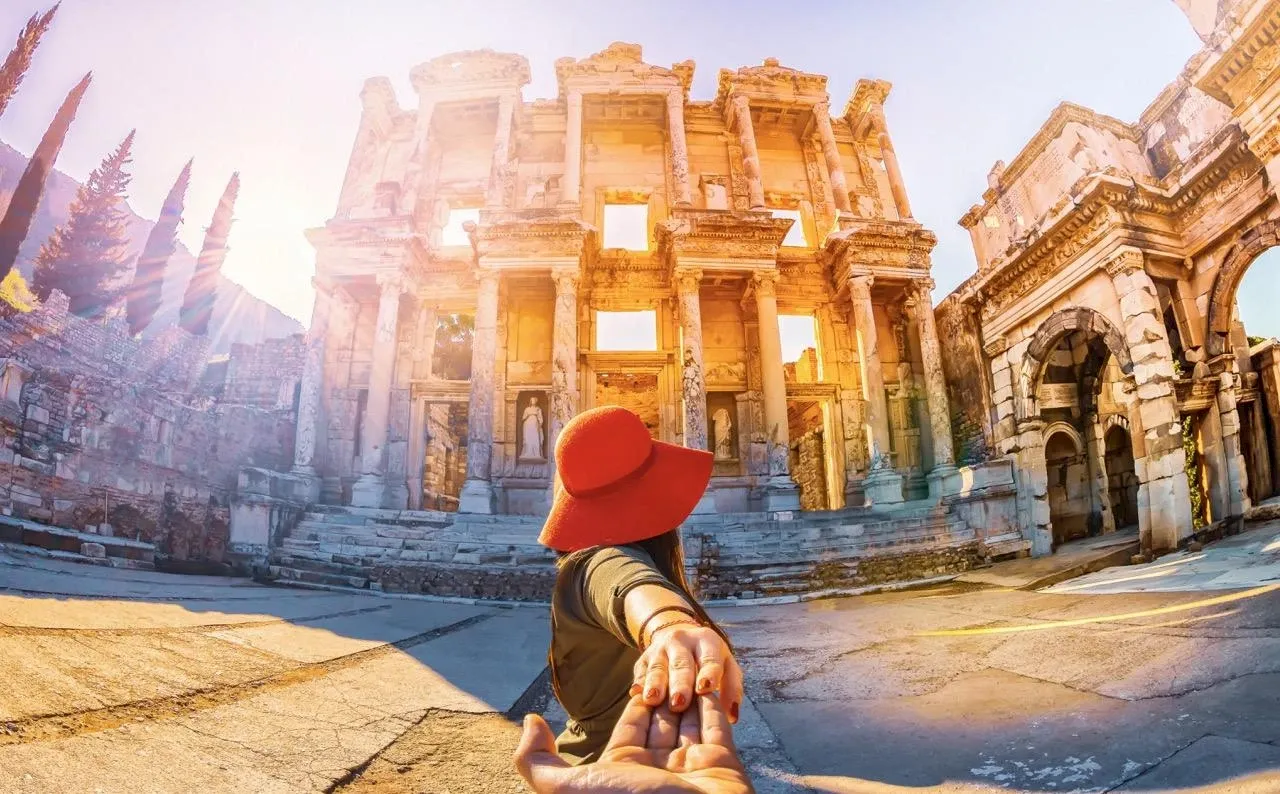
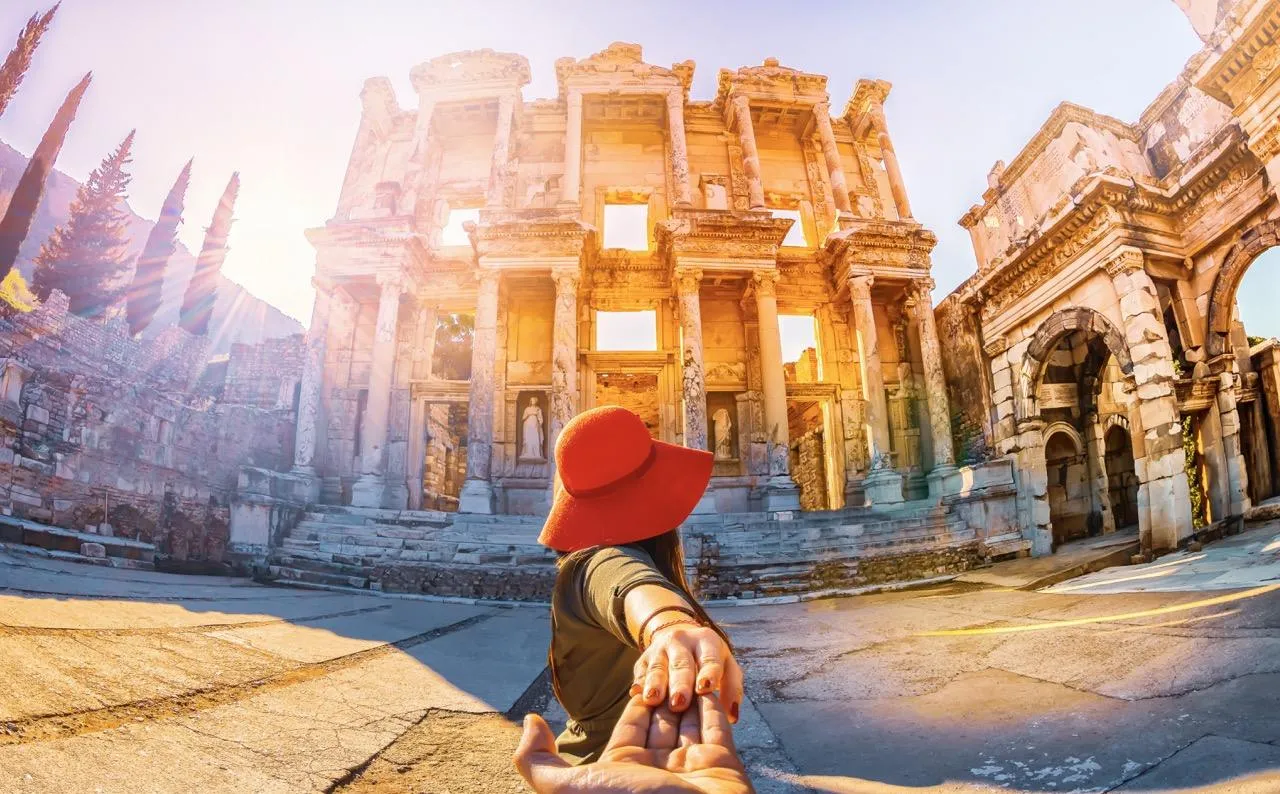
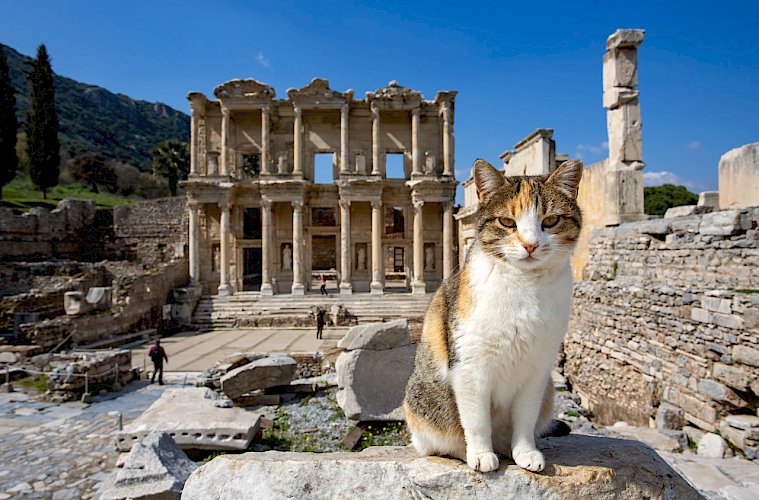
Another fascinating fact about Ephesus is that it was home to the Library of Celsus, one of the largest libraries of the ancient world. Built in 117 AD by Tiberius Julius Celsus, a Roman governor, the library was designed to house over 12,000 scrolls and served as both a library and a monumental tomb for Celsus himself. The library’s façade, which has been remarkably well-preserved, is one of the most iconic structures in Ephesus. The two-story façade features intricately carved columns and statues representing the four virtues: Wisdom, Knowledge, Intelligence, and Valor. The library was not only a center for learning but also a symbol of the city’s intellectual and cultural significance. The Library of Celsus was considered one of the most impressive libraries of the Roman Empire, rivaling other famous libraries such as the Library of Alexandria. It attracted scholars and philosophers from across the Mediterranean, who came to study the vast collection of scrolls and manuscripts housed within its walls.
Why Is This Important?
The Library of Celsus is a testament to the importance of knowledge and learning in ancient Ephesus. It also highlights the city’s role as an intellectual center of the ancient world. Today, visitors can marvel at the beautifully preserved façade and imagine what it must have been like to study in such a grand and opulent setting.
3. Ephesus Played a Crucial Role in Early Christianity
Ephesus is also significant for its role in early Christianity. The city is mentioned several times in the New Testament, and it is believed that both St. Paul and St. John spent time in Ephesus, spreading the message of Christianity. The Epistle to the Ephesians, a letter in the New Testament, is addressed to the Christian community in Ephesus. According to tradition, St. John the Apostle moved to Ephesus with Mary, the mother of Jesus, after the crucifixion. The House of the Virgin Mary, located a few kilometers from the main archaeological site, is believed to be the final residence of Mary and is a significant pilgrimage site for Christians. Ephesus was also home to one of the Seven Churches of Asia, mentioned in the Book of Revelation. The early Christian community in Ephesus played a key role in the spread of the religion throughout the Roman Empire, making the city an important center for early Christian history.
Why Is This Important?
Ephesus’ role in early Christianity adds another layer of historical significance to the city. It was a place where early Christians gathered, and where key figures such as St. Paul and St. John preached and lived. For visitors interested in religious history, Ephesus offers a unique opportunity to explore sites connected to the origins of Christianity.
3. Key Highlights to Explore During Your Visit
While the three facts mentioned above are fascinating on their own, there are several key highlights in Ephesus that you should explore to gain a deeper understanding of the city’s history:
1. Library of Celsus
The Library of Celsus is a must-see for any visitor to Ephesus. Take your time to admire the stunning façade and learn about the library’s importance as a center of knowledge in the ancient world.
2. Great Theatre
The Great Theatre of Ephesus is another highlight. With a seating capacity of 25,000, it is one of the largest theatres in the ancient world. Climb to the top for a panoramic view of the city and the surrounding landscape.
3. Curetes Street
Curetes Street is the main thoroughfare that runs through the heart of Ephesus. It’s lined with columns, statues, and the remains of temples and shops, giving visitors a glimpse into what daily life was like in the city.
4. House of the Virgin Mary
For those interested in religious history, the House of the Virgin Mary is a significant pilgrimage site. Located on a hill near Ephesus, it is believed to be the final home of Mary, the mother of Jesus.
4. Practical Tips for Visiting Ephesus in 2024
To make the most of your visit to Ephesus, here are some practical tips:
1. Best Time to Visit
The best times to visit Ephesus are during the spring (April to June) and fall (September to November), when the weather is mild and the crowds are smaller. Summers can be extremely hot, with temperatures exceeding 35°C (95°F).
2. Entrance Fees
The entrance fee for Ephesus in 2024 is 700 Turkish Lira (TRY) for general admission. There is an additional fee for the Terrace Houses, which requires a separate ticket (400 TRY).
3. Wear Comfortable Shoes
Ephesus is a large site with uneven terrain, so be sure to wear comfortable shoes for walking.
4. Bring Sun Protection
There is little shade at Ephesus, so be sure to bring sunscreen, a hat, and sunglasses to protect yourself from the sun.
5. Frequently Asked Questions
Q: What are the most important landmarks to see in Ephesus? A: The most important landmarks include the Library of Celsus, the Great Theatre, Curetes Street, and the Temple of Hadrian. Visitors should also consider visiting the Terrace Houses for a glimpse into how the wealthy lived in ancient Ephesus. Q: Is Ephesus home to one of the Seven Wonders of the Ancient World? A: Yes, Ephesus was home to the Temple of Artemis, one of the Seven Wonders of the Ancient World. Although little remains of the temple today, its historical significance continues to draw visitors.
Conclusion
Ephesus is an incredible destination that offers a rich blend of history, culture, and religion. From its role as the home of the Temple of Artemis one of the Seven Wonders of the Ancient World to the intellectual importance of the Library of Celsus, and its significance in early Christianity, the city holds countless stories waiting to be discovered. A visit to Ephesus provides not only a journey through ancient history but also an opportunity to explore one of the most important archaeological sites in the world. For more detailed information about Ephesus, visit Wikipedia’s page on Ephesus.
Historical Background
The history of What are 3 facts about the city of Ephesus? dates back to the early days of Ephesus. Archaeological evidence suggests that this aspect of Ephesian life played a crucial role in shaping the city's development and cultural identity.
Archaeological Discoveries
Recent excavations have unveiled remarkable findings related to What are 3 facts about the city of Ephesus?. These discoveries provide valuable insights into how this aspect of Ephesian life evolved over time.
Cultural Significance
Understanding What are 3 facts about the city of Ephesus? is crucial for appreciating the broader cultural context of ancient Ephesus. Its influence extended beyond the city walls, impacting trade, religion, and daily life.
Visitor Information
Today, visitors to Ephesus can explore the remnants of What are 3 facts about the city of Ephesus? firsthand. This section provides practical information for making the most of your visit.
Preservation and Future
Ongoing conservation efforts ensure that What are 3 facts about the city of Ephesus? remains preserved for future generations. Learn about the challenges and successes in maintaining this important historical site.
Frequently Asked Questions
What is the historical significance of What are 3 facts about the city of Ephesus??
The What are 3 facts about the city of Ephesus? holds great historical importance in ancient Ephesus, providing valuable insights into the city's cultural and social development.
What can visitors see related to What are 3 facts about the city of Ephesus? today?
Visitors to Ephesus can explore well-preserved remains and artifacts related to What are 3 facts about the city of Ephesus?, offering a glimpse into the ancient world.
When is the best time to visit What are 3 facts about the city of Ephesus??
The best time to visit is during the spring (April-May) or autumn (September-October) when the weather is mild and crowds are smaller.
Frequently Asked Questions
What is the historical significance of What are 3 facts about the city of Ephesus??
The What are 3 facts about the city of Ephesus? holds great historical importance in ancient Ephesus, providing valuable insights into the city's cultural and social development.
What can visitors see related to What are 3 facts about the city of Ephesus? today?
Visitors to Ephesus can explore well-preserved remains and artifacts related to What are 3 facts about the city of Ephesus?, offering a glimpse into the ancient world.
When is the best time to visit What are 3 facts about the city of Ephesus??
The best time to visit is during the spring (April-May) or autumn (September-October) when the weather is mild and crowds are smaller.
Frequently Asked Questions
What is the historical significance of What are 3 facts about the city of Ephesus??
The What are 3 facts about the city of Ephesus? holds great historical importance in ancient Ephesus, providing valuable insights into the city's cultural and social development.
What can visitors see related to What are 3 facts about the city of Ephesus? today?
Visitors to Ephesus can explore well-preserved remains and artifacts related to What are 3 facts about the city of Ephesus?, offering a glimpse into the ancient world.
When is the best time to visit What are 3 facts about the city of Ephesus??
The best time to visit is during the spring (April-May) or autumn (September-October) when the weather is mild and crowds are smaller.