
The Impact of Earthquakes on Ephesus' Architectural Heritage
Ephesus, with its magnificent temples, theaters, and public buildings, endured numerous earthquakes throughout its history. These seismic events significantly influenced the city’s architectural evolution, as structures were destroyed, rebuilt, and modified over time. Understanding the impact of these earthquakes sheds light on the resilience of ancient Ephesus and its adaptation to natural disasters.
Major Earthquakes in Ephesus
One of the earliest recorded earthquakes that affected Ephesus occurred in 17 AD, during the reign of Emperor Tiberius. This earthquake caused widespread destruction across Asia Minor, impacting major cities, including Ephesus. Tiberius allocated funds for the reconstruction of damaged areas, allowing Ephesus to rebuild and continue flourishing as a prominent center in the Roman Empire (file-8cR09g6k6kpbPg5kM3gvWOgO). Another significant earthquake struck in 262 AD, during which the Temple of Artemis suffered severe damage. This earthquake, coupled with a raid by the Goths shortly afterward, led to the temple’s gradual decline. While efforts were made to restore parts of the temple, it never regained its former glory. The loss of this wonder contributed to Ephesus's shift away from its status as a leading religious center (file-frjNIAbnizyBkV2x8puy2Bg9). In the 4th century AD, Ephesus faced additional seismic events, including a major earthquake in 350 AD, which prompted significant repairs across the city. Structures such as the Great Theatre and the Celsus Library required restoration, reflecting the city’s commitment to maintaining its public buildings despite frequent natural setbacks. These reconstructions sometimes incorporated materials from damaged structures, showcasing a practical approach to rebuilding (file-CKVeTba5JsHi6TRIjaupCXNT).
Architectural Responses to Earthquakes
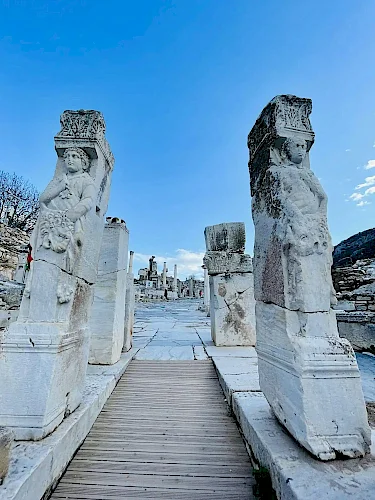
To mitigate the impact of earthquakes, the people of Ephesus adapted their construction techniques over time. The rebuilding efforts following each quake often involved reinforcing structures with new architectural elements. For example, columns were re-erected, and foundations were strengthened, especially in areas like the Curetes Street, which was regularly rebuilt after sustaining damage. Different building materials, such as locally available stone, were used for repairs, illustrating how ancient builders adapted to both the availability of resources and the structural needs of Ephesus (file-wwg2KR25gu482J8aNUWs96cG). Another example of adaptive architecture is seen in the Terraced Houses, which were rebuilt to include stronger walls and foundations following the earthquakes in the 4th century. Excavations of these homes reveal layers of restoration, with newer construction added atop damaged portions. This layering provides archaeologists with a visible record of the city’s resilience and its citizens' commitment to preserving their cultural heritage (file-CKVeTba5JsHi6TRIjaupCXNT).
Cultural and Economic Effects
Earthquakes not only shaped the physical landscape of Ephesus but also affected its social and economic structure. As buildings were destroyed and rebuilt, the city's layout evolved, with new public spaces and forums arising in response to the changing needs of its inhabitants. The loss of key structures like the Temple of Artemis led to a decline in pilgrimage-based commerce, while the repeated destruction of infrastructure like the harbor further hindered Ephesus's role as a commercial hub (file-frjNIAbnizyBkV2x8puy2Bg9). In the Byzantine period, following continued seismic activity, Ephesus saw a gradual decline as its population relocated to the more defensible Ayasuluk Hill. This shift marked the beginning of the city’s transformation from a bustling metropolis to a smaller, fortified settlement. The city's adaptation to natural disasters illustrates its resilience, but the cumulative effects of earthquakes ultimately contributed to its decline as a major urban center in the region (file-yzVOQr3mRDBWvxAQWQAHh0Gi).
The Legacy of Ephesus’s Earthquakes
Today, the ruins of Ephesus offer a testament to the city's endurance through centuries of seismic challenges. Sites such as the Celsus Library and the Great Theatre, with their layered repairs and restored sections, bear witness to the city’s resilience. These structures stand as a reminder of the innovative spirit of ancient architects and builders who adapted their techniques to withstand the forces of nature. For additional information on Ephesus and its history, including the effects of earthquakes on its architecture, you can explore the Wikipedia page on Ephesus.
Introduction
Discover the fascinating world of The Impact of Earthquakes on Ephesus' Architectural Heritage in ancient Ephesus. This comprehensive guide explores the historical significance, archaeological findings, and cultural impact of this remarkable aspect of Ephesian heritage.
Historical Background
The history of The Impact of Earthquakes on Ephesus' Architectural Heritage dates back to the early days of Ephesus. Archaeological evidence suggests that this aspect of Ephesian life played a crucial role in shaping the city's development and cultural identity.
Archaeological Discoveries
Recent excavations have unveiled remarkable findings related to The Impact of Earthquakes on Ephesus' Architectural Heritage. These discoveries provide valuable insights into how this aspect of Ephesian life evolved over time.
Cultural Significance
Understanding The Impact of Earthquakes on Ephesus' Architectural Heritage is crucial for appreciating the broader cultural context of ancient Ephesus. Its influence extended beyond the city walls, impacting trade, religion, and daily life.
Visitor Information
Today, visitors to Ephesus can explore the remnants of The Impact of Earthquakes on Ephesus' Architectural Heritage firsthand. This section provides practical information for making the most of your visit.
Preservation and Future
Ongoing conservation efforts ensure that The Impact of Earthquakes on Ephesus' Architectural Heritage remains preserved for future generations. Learn about the challenges and successes in maintaining this important historical site.
Frequently Asked Questions
What is the historical significance of The Impact of Earthquakes on Ephesus' Architectural Heritage?
The The Impact of Earthquakes on Ephesus' Architectural Heritage holds great historical importance in ancient Ephesus, providing valuable insights into the city's cultural and social development.
What can visitors see related to The Impact of Earthquakes on Ephesus' Architectural Heritage today?
Visitors to Ephesus can explore well-preserved remains and artifacts related to The Impact of Earthquakes on Ephesus' Architectural Heritage, offering a glimpse into the ancient world.
When is the best time to visit The Impact of Earthquakes on Ephesus' Architectural Heritage?
The best time to visit is during the spring (April-May) or autumn (September-October) when the weather is mild and crowds are smaller.
Frequently Asked Questions
What is the historical significance of The Impact of Earthquakes on Ephesus' Architectural Heritage?
The The Impact of Earthquakes on Ephesus' Architectural Heritage holds great historical importance in ancient Ephesus, providing valuable insights into the city's cultural and social development.
What can visitors see related to The Impact of Earthquakes on Ephesus' Architectural Heritage today?
Visitors to Ephesus can explore well-preserved remains and artifacts related to The Impact of Earthquakes on Ephesus' Architectural Heritage, offering a glimpse into the ancient world.
When is the best time to visit The Impact of Earthquakes on Ephesus' Architectural Heritage?
The best time to visit is during the spring (April-May) or autumn (September-October) when the weather is mild and crowds are smaller.
Frequently Asked Questions
What is the historical significance of The Impact of Earthquakes on Ephesus' Architectural Heritage?
The The Impact of Earthquakes on Ephesus' Architectural Heritage holds great historical importance in ancient Ephesus, providing valuable insights into the city's cultural and social development.
What can visitors see related to The Impact of Earthquakes on Ephesus' Architectural Heritage today?
Visitors to Ephesus can explore well-preserved remains and artifacts related to The Impact of Earthquakes on Ephesus' Architectural Heritage, offering a glimpse into the ancient world.
When is the best time to visit The Impact of Earthquakes on Ephesus' Architectural Heritage?
The best time to visit is during the spring (April-May) or autumn (September-October) when the weather is mild and crowds are smaller.