
How Ephesus Was Founded: Mythology and History
How Ephesus Was Founded: Mythology and History
Ephesus, a city of great importance in the ancient world, has a fascinating origin story that blends mythology with historical fact. Situated on the western coast of modern-day Turkey, Ephesus was not only a hub of commerce and culture but also a center of religious devotion, particularly to the goddess Artemis. The story of how Ephesus was founded is steeped in legend, yet it is also intertwined with the real-life events that shaped this ancient city into one of the most significant cities of antiquity.

The Mythological Origins of Ephesus
The founding of Ephesus is deeply rooted in Greek mythology, with several legends offering different accounts of how the city came to be. One of the most famous myths involves the Amazons, the legendary race of warrior women, who are said to have founded the city in honor of their goddess Artemis.
According to legend, the Amazons built a sanctuary dedicated to Artemis at Ephesus, establishing the city as a sacred site long before the arrival of Greek colonists. The Amazons were known for their fierce independence and dedication to Artemis, and their association with Ephesus underscored the city’s lasting connection to the goddess. This myth links the city’s origins to a time of matriarchal power and divine favor, elements that would continue to influence the city’s identity throughout its history.
Another myth credits Androclus, a prince of Athens and son of King Codrus, with the founding of Ephesus. Guided by the oracle of Delphi, Androclus was told to establish a new city where he would see a fish and a wild boar together. The story goes that while Androclus was preparing a meal, a fish jumped out of the pan and landed in a bush, startling a wild boar that ran out. Taking this as the sign foretold by the oracle, Androclus founded the city of Ephesus on that spot.

The Temple of Artemis: A Wonder of the Ancient World
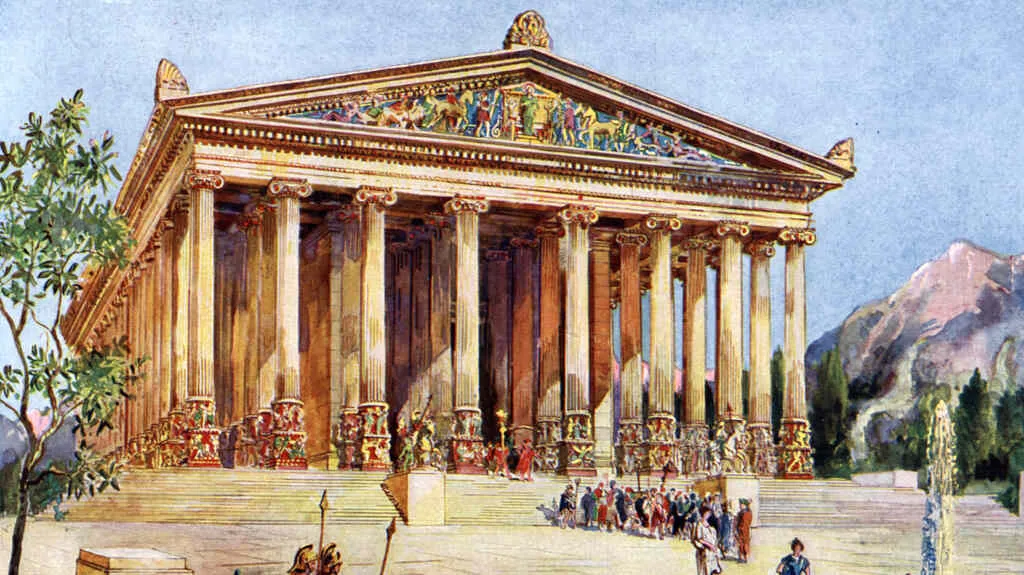
One of the most significant developments in the history of Ephesus was the construction of the Temple of Artemis, also known as the Artemision. Dedicated to the goddess Artemis, this temple became one of the Seven Wonders of the Ancient World and solidified Ephesus’s status as a major religious center.
The Temple of Artemis was originally built around 550 BC by the Lydian king Croesus, with the help of Greek architects Chersiphron and his son Metagenes. The temple was a marvel of engineering, constructed entirely of marble and adorned with intricate sculptures and decorations. It attracted pilgrims from across the Mediterranean, who came to pay homage to Artemis and participate in the religious festivals held in her honor.
The temple not only served as a place of worship but also as a symbol of Ephesus’s wealth and power. Its grandeur reflected the city’s prosperity and its importance in the ancient world. Although the temple was destroyed and rebuilt several times throughout history, its legacy remains a testament to the city’s enduring connection to the goddess Artemis.

The Influence of Ephesus in the Ancient World
Throughout its history, Ephesus played a pivotal role in the political, economic, and cultural life of the ancient world. Its strategic location made it a key player in the conflicts and alliances that shaped the region, from the Persian Wars to the rise of the Roman Empire.
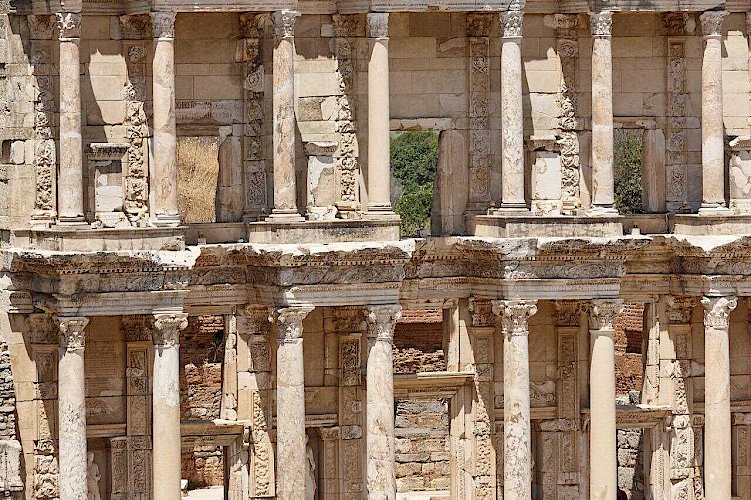
Under Roman rule, Ephesus became the capital of the province of Asia and continued to thrive as a center of trade and culture. The city was known for its monumental architecture, including the Library of Celsus, the Great Theatre, and the agora, which served as the commercial heart of the city.
Ephesus was also a melting pot of different cultures and religions, with Greek, Roman, Persian, and Anatolian influences blending to create a vibrant and diverse society. The city’s reputation as a center of learning and the arts attracted scholars, artists, and philosophers, further cementing its status as one of the most important cities of the ancient world.

The Legacy of Ephesus
Today, the ruins of Ephesus stand as a testament to the city’s rich history and its enduring legacy. The myths and legends surrounding its founding continue to captivate the imagination, while the archaeological remains offer a glimpse into the lives of the people who once called Ephesus home.
The story of Ephesus’s founding, whether viewed through the lens of mythology or history, is a reminder of the city’s significance in the ancient world. From its legendary origins with the Amazons and Androclus to its historical development as a major center of trade and religion, Ephesus remains a symbol of the enduring power of culture, faith, and human achievement.

Introduction
Discover the fascinating world of How Ephesus Was Founded: Mythology and History in ancient Ephesus. This comprehensive guide explores the historical significance, archaeological findings, and cultural impact of this remarkable aspect of Ephesian heritage.
Historical Background
The history of How Ephesus Was Founded: Mythology and History dates back to the early days of Ephesus. Archaeological evidence suggests that this aspect of Ephesian life played a crucial role in shaping the city's development and cultural identity.
Archaeological Discoveries
Recent excavations have unveiled remarkable findings related to How Ephesus Was Founded: Mythology and History. These discoveries provide valuable insights into how this aspect of Ephesian life evolved over time.
Cultural Significance
Understanding How Ephesus Was Founded: Mythology and History is crucial for appreciating the broader cultural context of ancient Ephesus. Its influence extended beyond the city walls, impacting trade, religion, and daily life.
Visitor Information
Today, visitors to Ephesus can explore the remnants of How Ephesus Was Founded: Mythology and History firsthand. This section provides practical information for making the most of your visit.
Preservation and Future
Ongoing conservation efforts ensure that How Ephesus Was Founded: Mythology and History remains preserved for future generations. Learn about the challenges and successes in maintaining this important historical site.
Frequently Asked Questions
What is the historical significance of How Ephesus Was Founded: Mythology and History?
The How Ephesus Was Founded: Mythology and History holds great historical importance in ancient Ephesus, providing valuable insights into the city's cultural and social development.
What can visitors see related to How Ephesus Was Founded: Mythology and History today?
Visitors to Ephesus can explore well-preserved remains and artifacts related to How Ephesus Was Founded: Mythology and History, offering a glimpse into the ancient world.
When is the best time to visit How Ephesus Was Founded: Mythology and History?
The best time to visit is during the spring (April-May) or autumn (September-October) when the weather is mild and crowds are smaller.
Frequently Asked Questions
What is the historical significance of How Ephesus Was Founded: Mythology and History?
The How Ephesus Was Founded: Mythology and History holds great historical importance in ancient Ephesus, providing valuable insights into the city's cultural and social development.
What can visitors see related to How Ephesus Was Founded: Mythology and History today?
Visitors to Ephesus can explore well-preserved remains and artifacts related to How Ephesus Was Founded: Mythology and History, offering a glimpse into the ancient world.
When is the best time to visit How Ephesus Was Founded: Mythology and History?
The best time to visit is during the spring (April-May) or autumn (September-October) when the weather is mild and crowds are smaller.
Frequently Asked Questions
What is the historical significance of How Ephesus Was Founded: Mythology and History?
The How Ephesus Was Founded: Mythology and History holds great historical importance in ancient Ephesus, providing valuable insights into the city's cultural and social development.
What can visitors see related to How Ephesus Was Founded: Mythology and History today?
Visitors to Ephesus can explore well-preserved remains and artifacts related to How Ephesus Was Founded: Mythology and History, offering a glimpse into the ancient world.
When is the best time to visit How Ephesus Was Founded: Mythology and History?
The best time to visit is during the spring (April-May) or autumn (September-October) when the weather is mild and crowds are smaller.