

A Quick Guide to Ephesus: Must-Know Facts for Visitors
Planning a trip to Ephesus? Discover essential facts about Turkey’s famous ancient city, including its history, top attractions, and tips for making the most of your visit. Ephesus is one of the most remarkable archaeological sites in the world, attracting millions of visitors each year. Once a thriving center of trade and culture in the ancient world, Ephesus offers a unique glimpse into history with its stunning ruins, rich heritage, and significant landmarks. Here’s a quick guide with everything you need to know about visiting Ephesus, including its top attractions, historical highlights, and practical travel tips.
1. Brief History of Ephesus
Ephesus has a rich history that spans over 2,000 years, playing a crucial role in ancient Greek, Roman, and early Christian civilizations.
- Greek Origins: The city was founded by Greek colonists in the 10th century BCE. According to legend, Prince Androclus of Athens established Ephesus after following the advice of the Oracle of Delphi.
- Roman Era: Ephesus flourished under Roman rule, becoming one of the largest cities in the empire with a population of over 250,000 people. It was renowned for its grand architecture, including temples, theaters, and public baths.
- Christian Heritage: Ephesus is an important site in Christian history, as it hosted early Christian leaders like the Apostle Paul and St. John. The Council of Ephesus in 431 CE was a landmark event in Christian theology.
- Decline: Over time, Ephesus declined due to earthquakes, invasions, and the silting of its harbor, which cut off access to the sea. By the 7th century CE, the city was largely abandoned.
2. Top Attractions in Ephesus
Ephesus is home to numerous ancient sites, each with its own story and architectural beauty. Here are the must-see attractions for visitors:
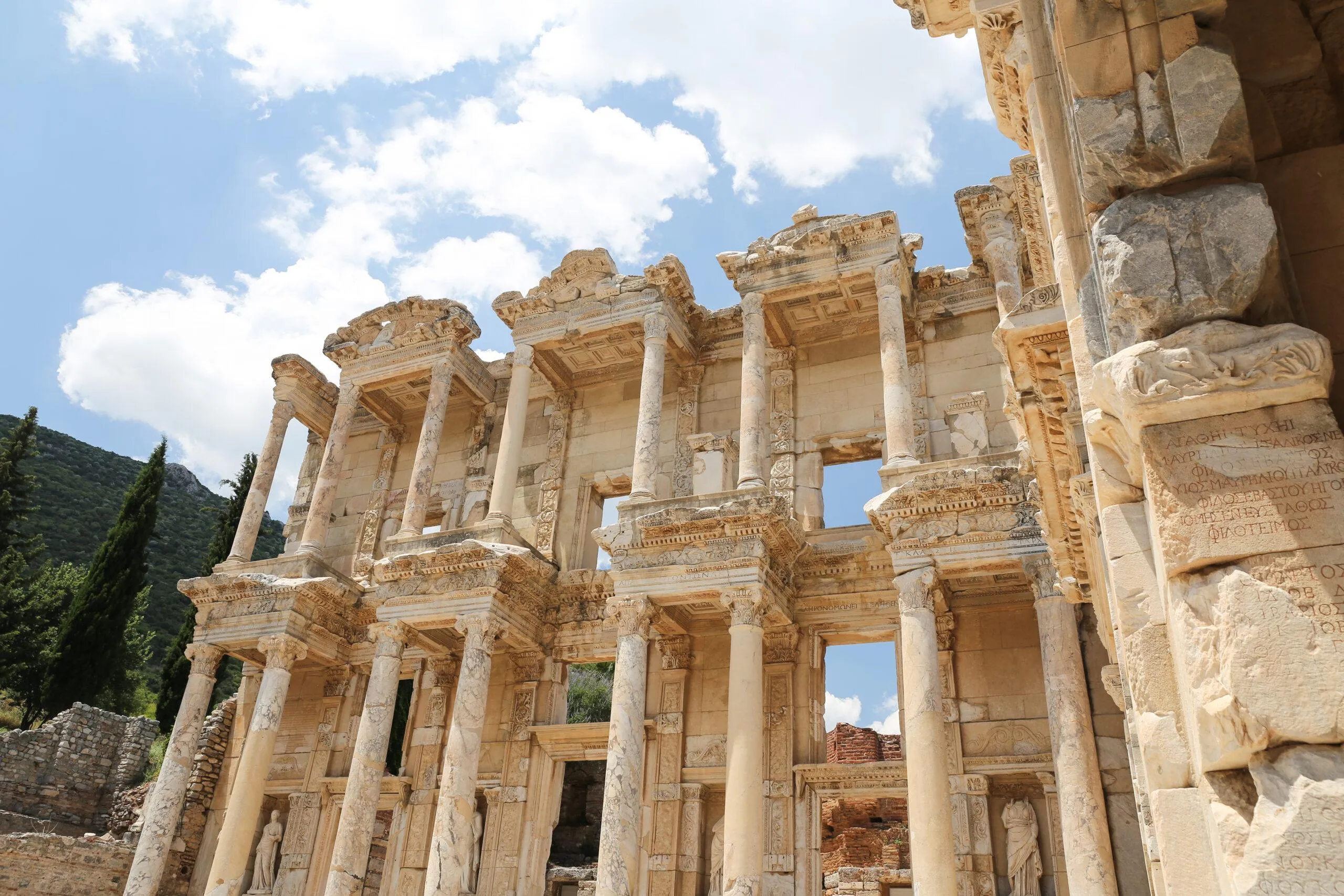
Library of Celsus
- Built in 110 CE, this library was one of the largest in the ancient world, housing over 12,000 scrolls. Its iconic facade features Corinthian columns and statues representing Wisdom, Knowledge, Virtue, and Thought.
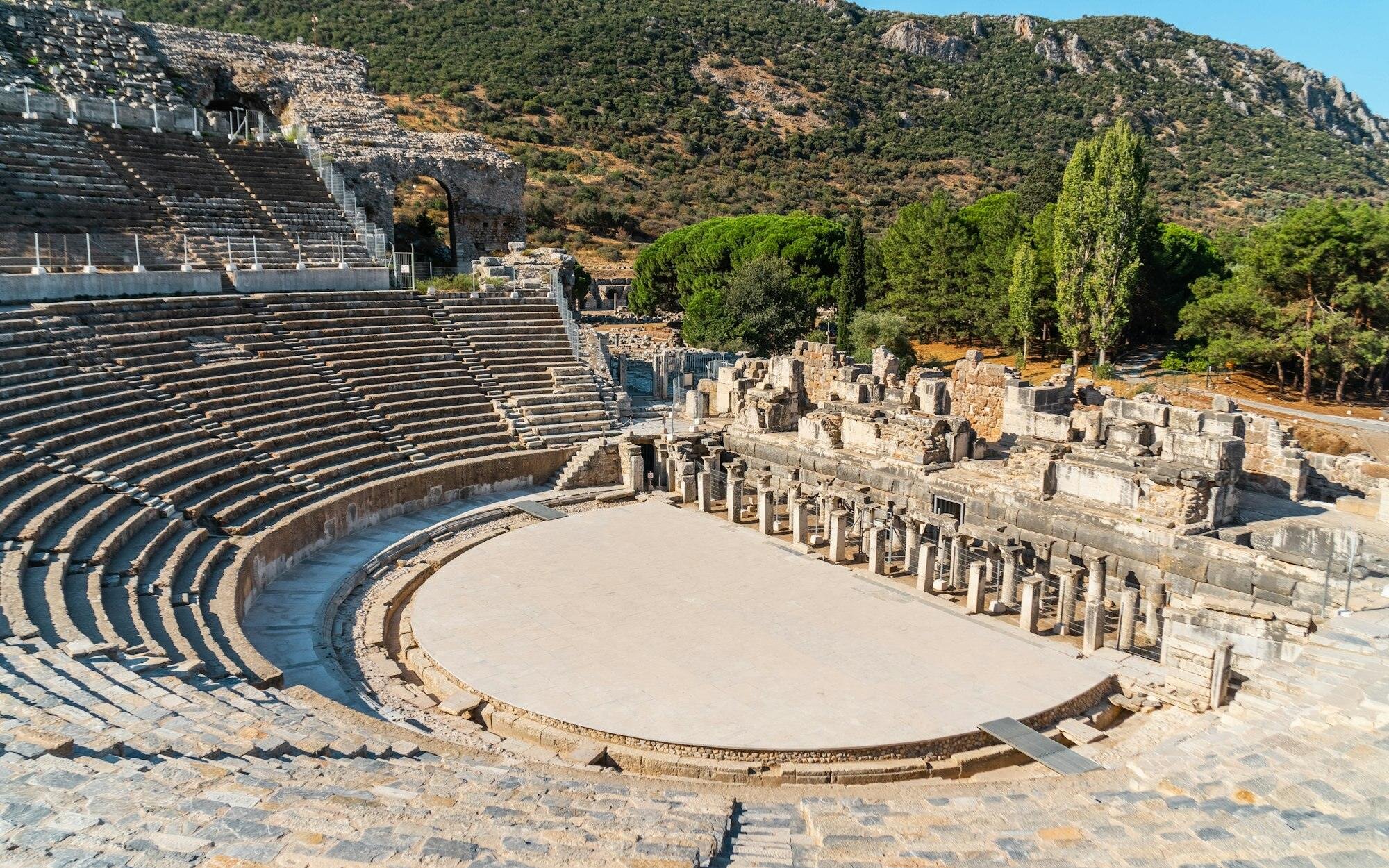
Great Theatre
- This massive theatre could seat up to 25,000 spectators and was used for performances, public meetings, and gladiator contests. It offers fantastic views of the surrounding area and is one of Ephesus’s most impressive structures.
Temple of Artemis
- Once considered one of the Seven Wonders of the Ancient World, the Temple of Artemis was a massive structure dedicated to the goddess of the hunt. Although only a few columns remain, it remains an essential part of Ephesus’s history.
Terrace Houses
- Known as the “houses of the rich,” the Terrace Houses feature mosaics, frescoes, and intricate details that reveal the lifestyles of Ephesus’s wealthiest residents. They are well-preserved and provide a fascinating glimpse into ancient domestic life.
Temple of Hadrian
- This small yet beautifully preserved temple was dedicated to Emperor Hadrian and features intricate carvings and mythological reliefs. It’s one of the best examples of Roman architecture in Ephesus.
3. Practical Tips for Visiting Ephesus
To make the most of your visit, here are some practical tips for exploring Ephesus:
Best Times to Visit
- Early Morning or Late Afternoon: Visiting at these times allows you to avoid the heat and crowds, especially during the peak season (April to October).
- Off-Season: The months from November to March are less crowded, making it a great time for a quieter and more relaxed experience.
What to Wear
- Comfortable Shoes: Ephesus has uneven stone paths, so wear sturdy shoes with good grip. Avoid flip-flops or thin-soled shoes.
- Sun Protection: Bring sunscreen, a hat, and sunglasses. The site is mostly open-air, and shade is limited.
- Lightweight Clothing: In warmer months, lightweight and breathable clothing will keep you comfortable. In winter, layers are recommended as it can get chilly in the morning and evening.
Getting There
- From Izmir: You can take a train from Basmane Station to Selçuk, which is just a short distance from Ephesus. The journey takes about 1.5 hours.
- From Kuşadası: A popular option for cruise ship passengers, Kuşadası is only about 20 kilometers (12 miles) away. Taxis, dolmuş (shared minibuses), and guided tours are available.
- Guided Tours: For a hassle-free experience, consider joining a guided tour from Izmir or Kuşadası. Many tours include transportation, entrance fees, and a knowledgeable guide.
4. Ephesus Etiquette: Do’s and Don’ts
While there is no strict dress code, showing respect for this historical site and its cultural significance is appreciated.
Do’s:
- Stay on Marked Paths: Stick to designated areas to help preserve the ruins.
- Take Photos: Ephesus is a beautiful site with many photo opportunities, but remember to be respectful of others, especially in crowded spots.
- Keep Hydrated: Bring a water bottle, as walking through the site can be tiring, especially in warm weather.
Don’ts:
- Climb on Ruins: Avoid climbing or sitting on ancient structures to help protect them.
- Leave Trash: Use waste bins or carry out any trash you bring in.
- Disturb Other Visitors: Ephesus can get crowded, so be mindful of others and avoid loud conversations, especially around quiet areas.
5. Nearby Attractions to Visit
If you have extra time, consider exploring nearby attractions to enrich your Ephesus experience:
House of the Virgin Mary
- Located on Mount Koressos, this site is believed to be the final residence of Mary, the mother of Jesus. It’s a peaceful and sacred spot, popular among Christian pilgrims.
Ephesus Archaeological Museum
- In the town of Selçuk, the museum houses artifacts from Ephesus, including statues, pottery, and jewelry. It’s a great way to learn more about the city’s history and see items found during excavations.
Temple of Artemis
- Just a short distance from Ephesus, the Temple of Artemis ruins are worth a quick visit. Although only a few columns remain, the site provides insight into the city’s religious importance.
6. Frequently Asked Questions
How much time do you need to see Ephesus?
- A visit to Ephesus typically takes 2-3 hours to see the main sites. However, if you want to visit the nearby attractions or explore at a slower pace, plan for a half-day.
Is Ephesus safe for tourists?
- Yes, Ephesus is safe for tourists. It is a well-maintained and secure site. However, keep an eye on your belongings, especially in crowded areas, and be cautious on uneven paths.
Can you visit Ephesus on your own?
- Absolutely! Ephesus is easy to navigate independently. You can also bring a guidebook or download an audio tour app for historical insights.
Conclusion
Ephesus is a must-visit destination for history lovers, architecture enthusiasts, and anyone fascinated by the ancient world. With its grand structures, rich heritage, and beautiful setting, Ephesus offers an unforgettable journey through time. By following this guide, you’ll be prepared to explore Turkey’s most famous ancient city and make the most of your visit to Ephesus.
Introduction
Discover the fascinating world of A Quick Guide to Ephesus: Must-Know Facts for Visitors in ancient Ephesus. This comprehensive guide explores the historical significance, archaeological findings, and cultural impact of this remarkable aspect of Ephesian heritage.
Historical Background
The history of A Quick Guide to Ephesus: Must-Know Facts for Visitors dates back to the early days of Ephesus. Archaeological evidence suggests that this aspect of Ephesian life played a crucial role in shaping the city's development and cultural identity.
Archaeological Discoveries
Recent excavations have unveiled remarkable findings related to A Quick Guide to Ephesus: Must-Know Facts for Visitors. These discoveries provide valuable insights into how this aspect of Ephesian life evolved over time.
Cultural Significance
Understanding A Quick Guide to Ephesus: Must-Know Facts for Visitors is crucial for appreciating the broader cultural context of ancient Ephesus. Its influence extended beyond the city walls, impacting trade, religion, and daily life.
Visitor Information
Today, visitors to Ephesus can explore the remnants of A Quick Guide to Ephesus: Must-Know Facts for Visitors firsthand. This section provides practical information for making the most of your visit.
Preservation and Future
Ongoing conservation efforts ensure that A Quick Guide to Ephesus: Must-Know Facts for Visitors remains preserved for future generations. Learn about the challenges and successes in maintaining this important historical site.
Frequently Asked Questions
What is the historical significance of A Quick Guide to Ephesus: Must-Know Facts for Visitors?
The A Quick Guide to Ephesus: Must-Know Facts for Visitors holds great historical importance in ancient Ephesus, providing valuable insights into the city's cultural and social development.
What can visitors see related to A Quick Guide to Ephesus: Must-Know Facts for Visitors today?
Visitors to Ephesus can explore well-preserved remains and artifacts related to A Quick Guide to Ephesus: Must-Know Facts for Visitors, offering a glimpse into the ancient world.
When is the best time to visit A Quick Guide to Ephesus: Must-Know Facts for Visitors?
The best time to visit is during the spring (April-May) or autumn (September-October) when the weather is mild and crowds are smaller.
Frequently Asked Questions
What is the historical significance of A Quick Guide to Ephesus: Must-Know Facts for Visitors?
The A Quick Guide to Ephesus: Must-Know Facts for Visitors holds great historical importance in ancient Ephesus, providing valuable insights into the city's cultural and social development.
What can visitors see related to A Quick Guide to Ephesus: Must-Know Facts for Visitors today?
Visitors to Ephesus can explore well-preserved remains and artifacts related to A Quick Guide to Ephesus: Must-Know Facts for Visitors, offering a glimpse into the ancient world.
When is the best time to visit A Quick Guide to Ephesus: Must-Know Facts for Visitors?
The best time to visit is during the spring (April-May) or autumn (September-October) when the weather is mild and crowds are smaller.
Frequently Asked Questions
What is the historical significance of A Quick Guide to Ephesus: Must-Know Facts for Visitors?
The A Quick Guide to Ephesus: Must-Know Facts for Visitors holds great historical importance in ancient Ephesus, providing valuable insights into the city's cultural and social development.
What can visitors see related to A Quick Guide to Ephesus: Must-Know Facts for Visitors today?
Visitors to Ephesus can explore well-preserved remains and artifacts related to A Quick Guide to Ephesus: Must-Know Facts for Visitors, offering a glimpse into the ancient world.
When is the best time to visit A Quick Guide to Ephesus: Must-Know Facts for Visitors?
The best time to visit is during the spring (April-May) or autumn (September-October) when the weather is mild and crowds are smaller.