

Ephesus for History Buffs: Key Sites to Visit
Are you a history enthusiast visiting Ephesus? Discover the must-see sites in this ancient city, including the Library of Celsus, Great Theatre, and the Temple of Hadrian. For history buffs, Ephesus offers an unparalleled journey through ancient civilizations, blending Greek, Roman, and early Christian heritage into one of the most impressive archaeological sites in the world. This guide covers the key sites in Ephesus that every history enthusiast should visit, each with its own fascinating story and historical significance.
1. The Library of Celsus
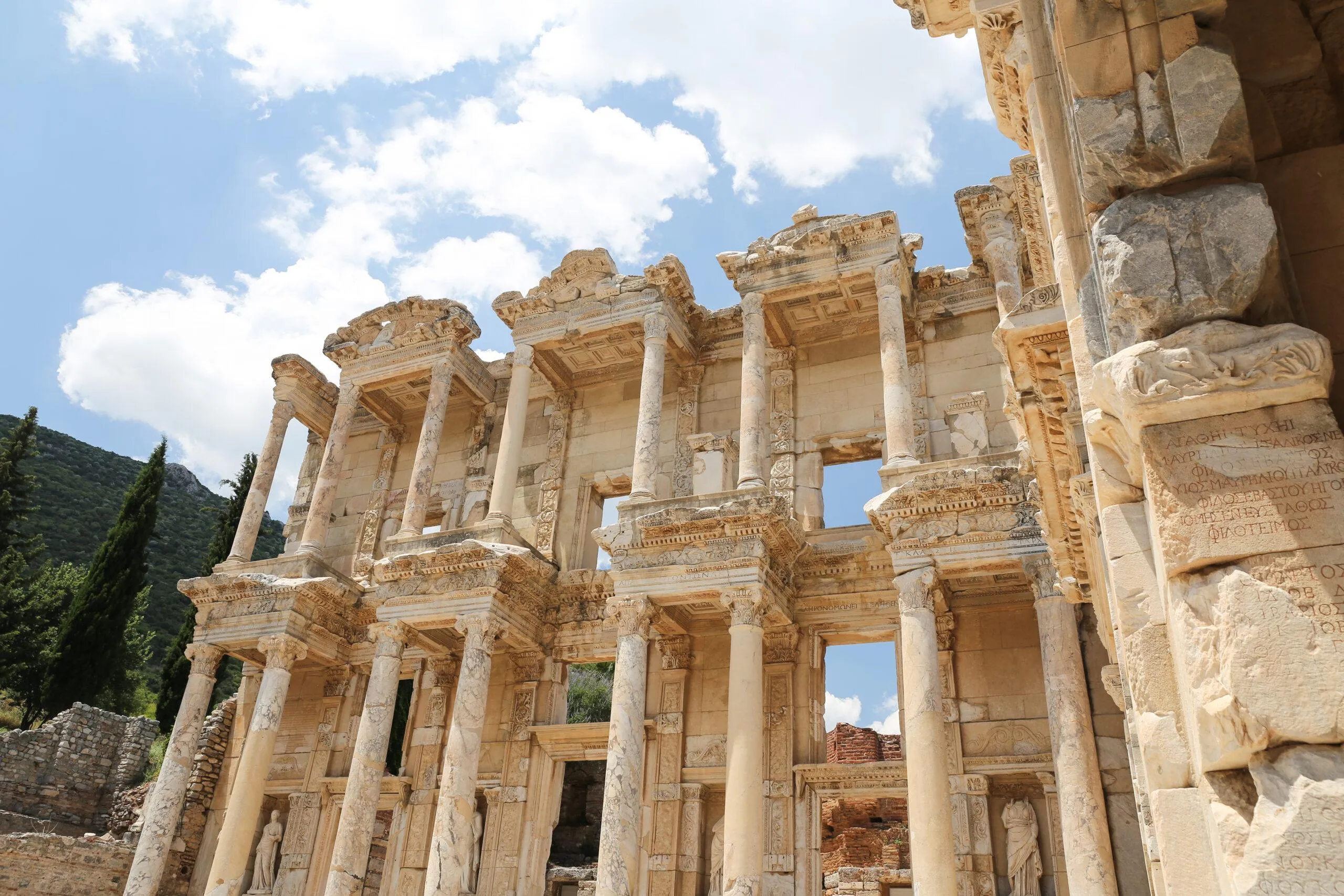
One of the most iconic structures in Ephesus, the Library of Celsus was built in 110 CE to honor Tiberius Julius Celsus, a Roman senator and governor of Asia. It once housed over 12,000 scrolls, making it one of the largest libraries in the ancient world.
Highlights:
- Facade Architecture: The library’s ornate facade, with its Corinthian columns and statues symbolizing Wisdom, Knowledge, Virtue, and Thought, showcases the architectural grandeur of the Roman Empire.
- Historical Significance: The Library of Celsus served not only as a place of learning but also as a tomb for Celsus himself, whose sarcophagus lies beneath the structure.
- Photography Tip: Visit the library in the early morning for the best lighting and fewer crowds, allowing you to capture the beauty of this remarkable structure.
2. The Great Theatre
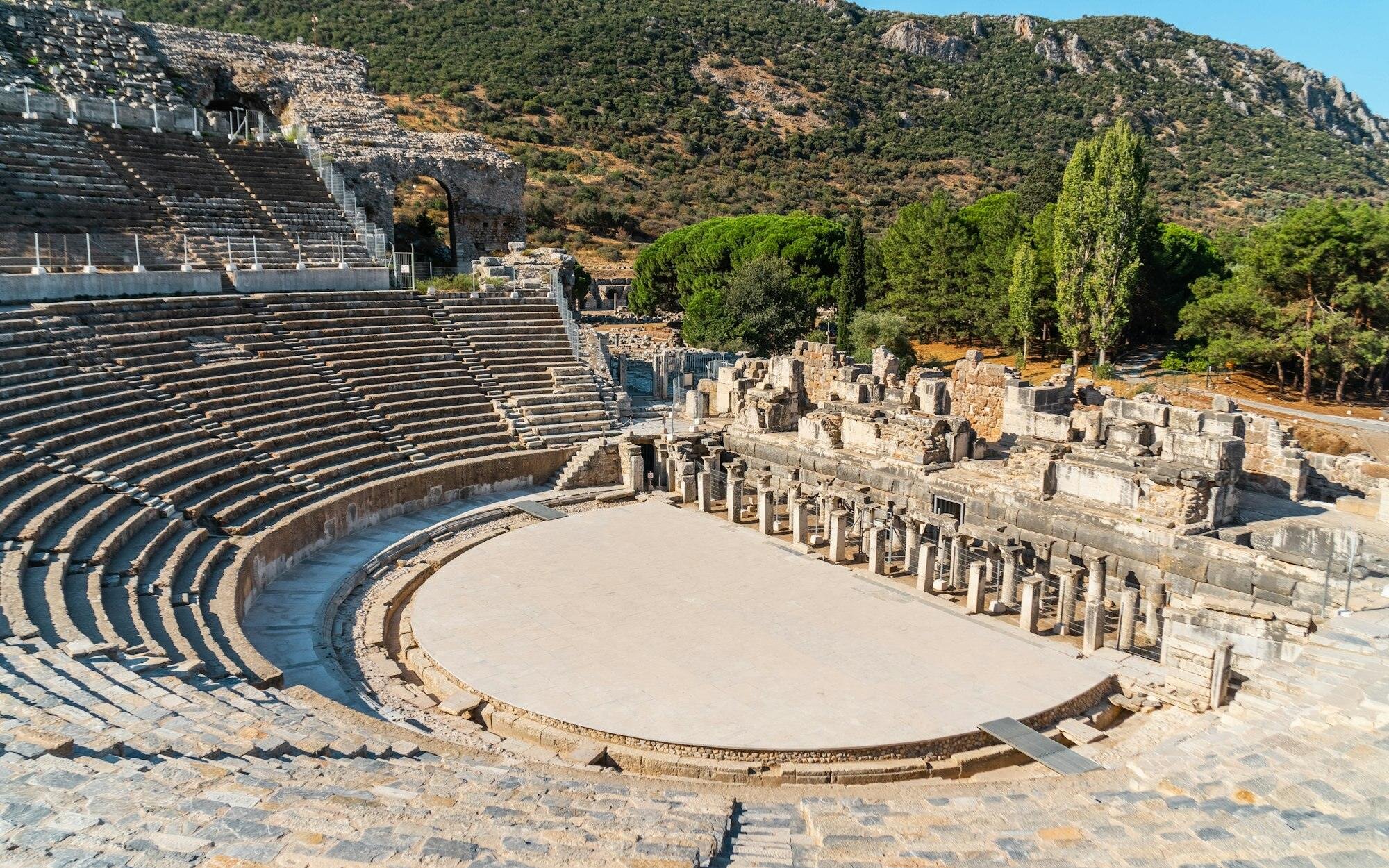
The Great Theatre is another must-visit site for history buffs, showcasing the scale and grandeur of Roman architecture. This massive theatre could seat up to 25,000 people and was used for dramatic performances, gladiatorial contests, and public assemblies.
Highlights:
- Roman Engineering: Climb the seating tiers to marvel at the theatre’s advanced acoustics, which allowed audiences to hear speakers or actors clearly from any seat.
- Biblical Connection: The theatre is also famous for the Ephesian Riot, as mentioned in the Book of Acts, where the Apostle Paul’s teachings sparked a city-wide protest.
- Panoramic Views: The upper tiers provide a stunning view of the surrounding area, giving you a sense of the city’s layout and its connection to the ancient harbor.
3. The Temple of Artemis
The Temple of Artemis, also known as the Artemision, was one of the Seven Wonders of the Ancient World. Although only a few columns remain today, the temple’s ruins offer a glimpse into the grandeur of ancient Greek architecture.
Highlights:
- Historical Legacy: Dedicated to the goddess Artemis, the temple attracted pilgrims from across the ancient world and played a crucial role in Ephesus’s economy and religious life.
- Architectural Significance: Originally constructed in the 6th century BCE, the temple was rebuilt several times due to destruction by fire and invasions. Its original scale and design were awe-inspiring, with 127 marble columns, each 18 meters high.
- Nearby Museum: To learn more about the temple and view artifacts, visit the Ephesus Archaeological Museum in nearby Selçuk, which houses statues, reliefs, and other relics from the site.
4. The Terrace Houses
The Terrace Houses offer a fascinating glimpse into the daily lives of Ephesus’s wealthiest residents. Located on the slopes of Bülbül Hill, these luxury homes feature beautifully preserved frescoes, mosaics, and architectural details.
Highlights:
- Residential Life: The houses contain intricate mosaic floors and wall paintings that depict mythological scenes, giving insight into the tastes and lifestyle of the ancient elite.
- Advanced Amenities: The Terrace Houses had amenities such as underfloor heating, running water, and private courtyards, reflecting the sophistication of Roman domestic architecture.
- Ongoing Excavations: The site is still being excavated, and each new discovery provides additional insights into the private lives of the residents of Ephesus.
5. The Temple of Hadrian
The Temple of Hadrian, built in the 2nd century CE, is a small yet architecturally rich temple dedicated to Emperor Hadrian. Its intricate reliefs and decorative elements make it one of the most beautiful structures in Ephesus.
Highlights:
- Mythological Reliefs: The temple’s frieze features depictions of gods, goddesses, and mythological figures, as well as scenes of the city’s legendary founders.
- Restoration: Although only a portion of the temple remains today, careful restoration work allows visitors to appreciate its original beauty and architectural details.
- Symbol of Imperial Worship: The temple reflects the practice of emperor worship in the Roman Empire, showcasing the blending of civic and religious life in Ephesus.
6. Curetes Street
Curetes Street was one of the main streets in ancient Ephesus, connecting key sites such as the Library of Celsus, the Temple of Hadrian, and the Great Theatre. Walking along this marble-paved street offers a sense of the city’s grandeur and bustling daily life.
Highlights:
- Sculptures and Fountains: Lined with statues, fountains, and decorative reliefs, Curetes Street was an important thoroughfare in Ephesus, where citizens gathered, traded, and worshipped.
- Monuments and Shrines: Many monuments and small shrines line the street, dedicated to gods, goddesses, and local benefactors who contributed to the city’s prosperity.
- Baths of Scholastica: Just off Curetes Street, the Baths of Scholastica are worth a visit. This bath complex reflects the social and recreational aspects of Roman life and includes areas for hot, warm, and cold baths.
7. The Basilica of St. John
The Basilica of St. John, located just outside the main archaeological site, is believed to be the burial place of John the Apostle. Built in the 6th century CE by Emperor Justinian, the basilica was once a grand structure that attracted pilgrims from across the Christian world.
Highlights:
- Architectural Layout: The basilica’s cross-shaped layout and marble columns are examples of early Byzantine architecture, blending Roman and Christian influences.
- St. John’s Tomb: The basilica contains a tomb believed to be that of St. John, who is thought to have lived in Ephesus in his later years.
- Panoramic Views: The hilltop location provides beautiful views of the surrounding countryside and the modern town of Selçuk, adding to the serene atmosphere of the site.
8. The Prytaneion
The Prytaneion was the town hall of Ephesus, where official ceremonies and religious rituals took place. It housed the eternal flame of Hestia, the goddess of the hearth, symbolizing the unity of the city.
Highlights:
- Statues of Artemis: Several statues of the goddess Artemis were found in the Prytaneion, showcasing her importance in Ephesian culture.
- Civic Role: The Prytaneion served as the administrative heart of Ephesus, where city officials gathered to discuss civic matters and honor the city’s gods.
- Eternal Flame: The flame of Hestia was kept alight to signify the continuity of the community, a practice observed in many ancient Greek cities.
9. The Odeon
The Odeon, or small theatre, was used for musical performances, council meetings, and other civic events. This smaller structure seated around 1,500 people and provided a more intimate setting compared to the Great Theatre.
Highlights:
- Acoustics: The Odeon was designed with excellent acoustics, making it ideal for musical and theatrical performances.
- Architectural Details: The columns and stage area are well-preserved, offering a glimpse into the layout of ancient performance spaces.
- Political Use: In addition to entertainment, the Odeon served as a meeting place for the city’s council, reflecting the political life of Ephesus.
Conclusion
Ephesus is a paradise for history buffs, with its wealth of architectural wonders, fascinating relics, and historical sites that bring ancient civilizations to life. From the grandeur of the Library of Celsus to the serene Basilica of St. John, Ephesus offers a captivating journey through the past. Each site tells a story, connecting you to the lives of those who once walked these streets and lived in this incredible city. Prepare to immerse yourself in history and experience the timeless legacy of Ephesus with this complete guide to its most significant landmarks.
Introduction
Discover the fascinating world of Ephesus for History Buffs: Key Sites to Visit in ancient Ephesus. This comprehensive guide explores the historical significance, archaeological findings, and cultural impact of this remarkable aspect of Ephesian heritage.
Historical Background
The history of Ephesus for History Buffs: Key Sites to Visit dates back to the early days of Ephesus. Archaeological evidence suggests that this aspect of Ephesian life played a crucial role in shaping the city's development and cultural identity.
Archaeological Discoveries
Recent excavations have unveiled remarkable findings related to Ephesus for History Buffs: Key Sites to Visit. These discoveries provide valuable insights into how this aspect of Ephesian life evolved over time.
Cultural Significance
Understanding Ephesus for History Buffs: Key Sites to Visit is crucial for appreciating the broader cultural context of ancient Ephesus. Its influence extended beyond the city walls, impacting trade, religion, and daily life.
Visitor Information
Today, visitors to Ephesus can explore the remnants of Ephesus for History Buffs: Key Sites to Visit firsthand. This section provides practical information for making the most of your visit.
Preservation and Future
Ongoing conservation efforts ensure that Ephesus for History Buffs: Key Sites to Visit remains preserved for future generations. Learn about the challenges and successes in maintaining this important historical site.
Frequently Asked Questions
What is the historical significance of Ephesus for History Buffs: Key Sites to Visit?
The Ephesus for History Buffs: Key Sites to Visit holds great historical importance in ancient Ephesus, providing valuable insights into the city's cultural and social development.
What can visitors see related to Ephesus for History Buffs: Key Sites to Visit today?
Visitors to Ephesus can explore well-preserved remains and artifacts related to Ephesus for History Buffs: Key Sites to Visit, offering a glimpse into the ancient world.
When is the best time to visit Ephesus for History Buffs: Key Sites to Visit?
The best time to visit is during the spring (April-May) or autumn (September-October) when the weather is mild and crowds are smaller.
Frequently Asked Questions
What is the historical significance of Ephesus for History Buffs: Key Sites to Visit?
The Ephesus for History Buffs: Key Sites to Visit holds great historical importance in ancient Ephesus, providing valuable insights into the city's cultural and social development.
What can visitors see related to Ephesus for History Buffs: Key Sites to Visit today?
Visitors to Ephesus can explore well-preserved remains and artifacts related to Ephesus for History Buffs: Key Sites to Visit, offering a glimpse into the ancient world.
When is the best time to visit Ephesus for History Buffs: Key Sites to Visit?
The best time to visit is during the spring (April-May) or autumn (September-October) when the weather is mild and crowds are smaller.
Frequently Asked Questions
What is the historical significance of Ephesus for History Buffs: Key Sites to Visit?
The Ephesus for History Buffs: Key Sites to Visit holds great historical importance in ancient Ephesus, providing valuable insights into the city's cultural and social development.
What can visitors see related to Ephesus for History Buffs: Key Sites to Visit today?
Visitors to Ephesus can explore well-preserved remains and artifacts related to Ephesus for History Buffs: Key Sites to Visit, offering a glimpse into the ancient world.
When is the best time to visit Ephesus for History Buffs: Key Sites to Visit?
The best time to visit is during the spring (April-May) or autumn (September-October) when the weather is mild and crowds are smaller.