

Walking the Marble Streets of Ephesus: A Glimpse into Ancient Life
Ephesus, once one of the most vibrant cities of the ancient world, offers visitors a unique chance to experience daily life as it was centuries ago. Walking along its well-preserved marble streets, visitors can imagine the bustling atmosphere, the lively markets, and the majestic public buildings that made Ephesus a center of commerce, culture, and spirituality. This guide takes you through the city’s famous streets, uncovering the stories of the people who once called Ephesus home.
1. The Marble Street
Beginning at the Celsus Library and extending to the Grand Theatre, the Marble Street is one of the most iconic pathways in Ephesus. Its smooth, polished stones have borne the footsteps of countless Ephesians over the centuries. Originally laid during the Roman period, the Marble Street was lined with shops, temples, and public baths. As you walk along this street, you can still see the grooves left by ancient chariot wheels, a reminder of the city’s vibrant daily life. What to See Along Marble Street:
- The Celsus Library: A stunning architectural marvel that once housed thousands of scrolls, serving as a hub of knowledge.
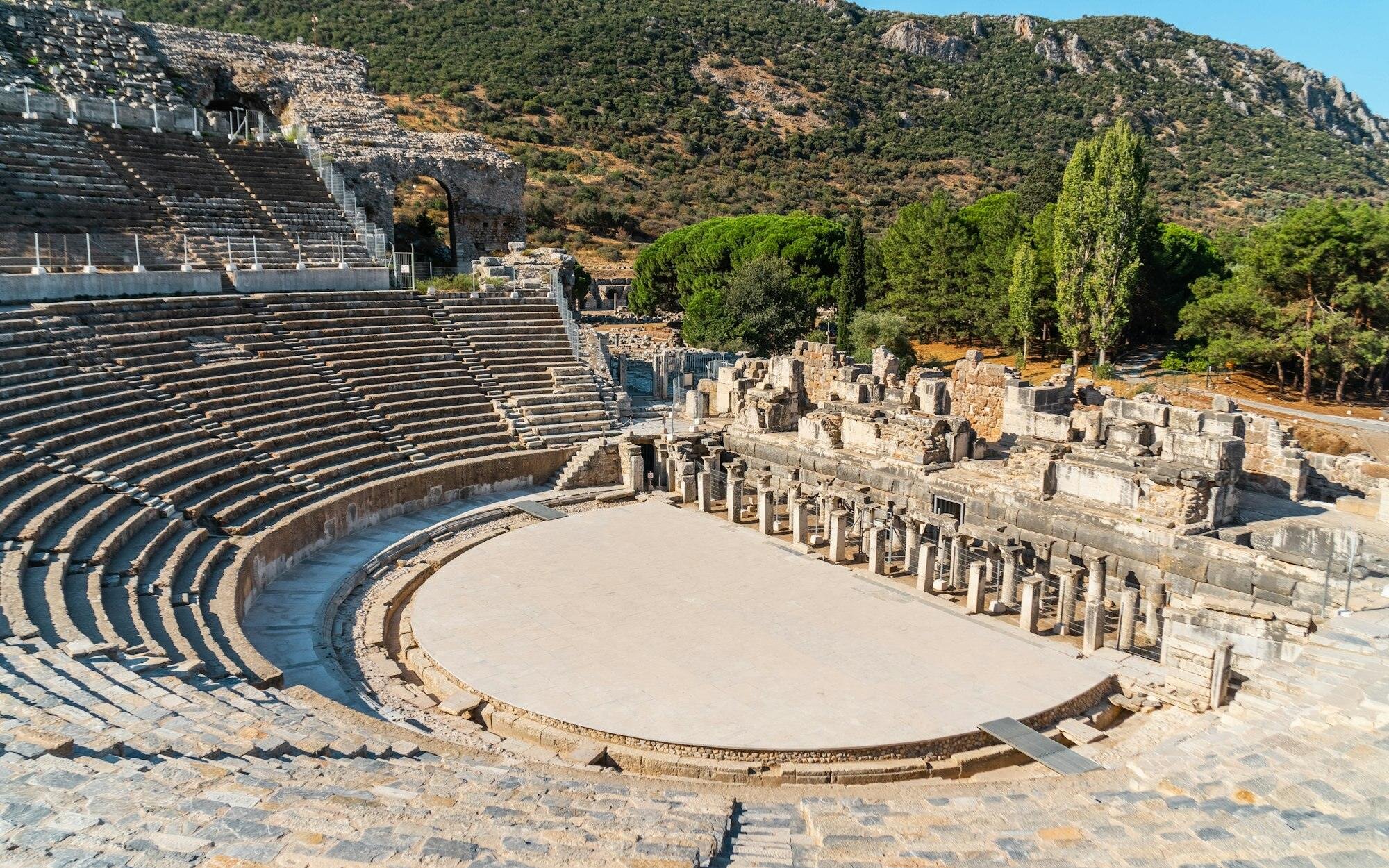
- The Great Theatre: A magnificent structure with seating for 24,000, where citizens gathered for performances, speeches, and gladiatorial games.
2. The Curetes Street
Leading from the Gate of Hercules to the Celsus Library, Curetes Street is a highlight of any visit to Ephesus. Named after the priests of Artemis, the street was adorned with fountains, statues, and monuments dedicated to emperors and local elites. As you walk along Curetes Street, you’ll pass the remains of luxurious Roman homes known as the Terrace Houses. These homes belonged to Ephesus’ wealthiest residents and featured beautiful mosaics, frescoes, and sophisticated heating systems. Highlights of Curetes Street:
- The Temple of Hadrian: A well-preserved structure with detailed reliefs, built to honor Emperor Hadrian.
- The Fountain of Trajan: A grand fountain that once featured a statue of the emperor, symbolizing his importance to the city.
3. The Arcadian Way
This broad street, lined with columns, stretches from the Grand Theatre to the ancient harbor. Known as the Arcadian Way, it was one of the main thoroughfares of Ephesus and served as a ceremonial route for processions, including those honoring Artemis. The street was illuminated at night by oil lamps, making Ephesus one of the first cities in the world to have street lighting. The Arcadian Way reflects the city’s prosperity and its role as a bustling port, welcoming travelers and traders from across the Mediterranean. What to Experience on the Arcadian Way:
- Column-lined Walkway: A beautiful promenade that offers views of the theatre and nearby mountains.
- Monumental Gate: Remains of the grand entrance that welcomed visitors arriving by sea.
4. The Agora: The Heart of Commerce
The Commercial Agora, located near the Marble Street, was the economic center of Ephesus. Surrounded by colonnaded walkways, it was a bustling marketplace where merchants sold goods from around the ancient world. Artisans, traders, and shoppers gathered here, exchanging goods, news, and ideas. The Agora was a place where the diverse cultures of Ephesus intersected, reflecting the city’s openness and its role as a center of trade. Things to See in the Agora:
- Stalls and Shops: Remnants of small shops where merchants sold pottery, textiles, and other goods.
- The Public Latrines: A sophisticated public restroom with a central fountain, showing the city’s advanced infrastructure.
5. The Terrace Houses: A Glimpse into Luxury
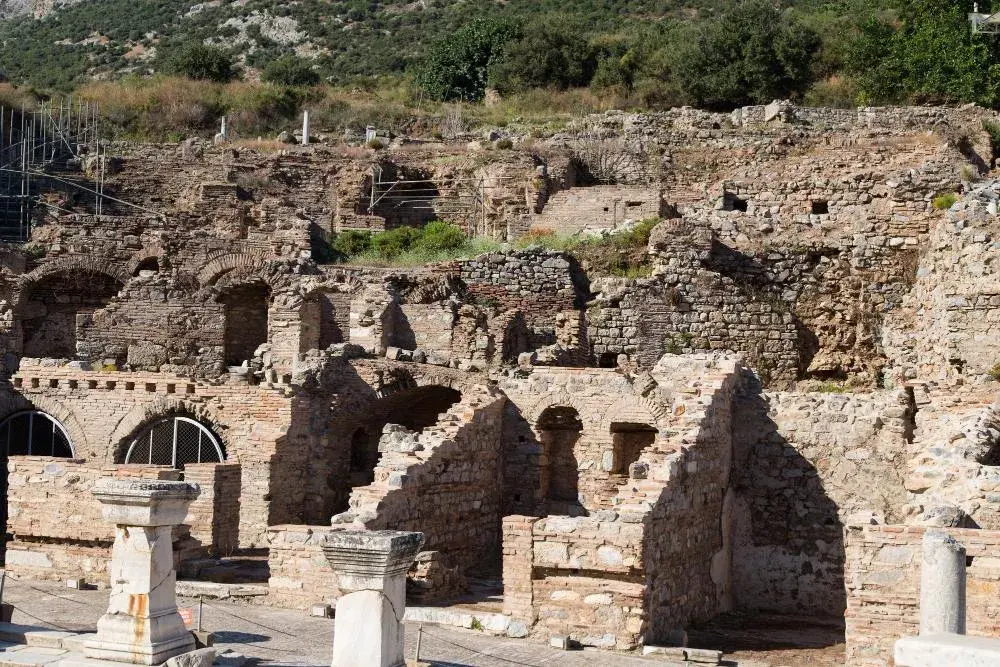
Just off Curetes Street, the Terrace Houses provide a unique look at the private lives of Ephesus’ elite. These multi-story homes featured elegant courtyards, frescoed walls, and mosaic floors depicting scenes from mythology and daily life. The houses were equipped with advanced heating systems and even had indoor plumbing. Walking through the Terrace Houses, you can imagine the luxurious lifestyle of the city’s wealthiest citizens and gain insight into their tastes and social status. Highlights of the Terrace Houses:
- Mosaic Floors: Intricate designs that showcase the artistry of Ephesian craftsmen.
- Frescoes: Beautiful wall paintings that depict mythological scenes and everyday life.
Conclusion Walking the marble streets of Ephesus is like stepping back in time. Each pathway, building, and monument tells a story of a city that was once at the heart of the ancient world. Whether you’re exploring the bustling Agora, admiring the grand architecture along Curetes Street, or marveling at the Terrace Houses, Ephesus offers a window into a world where culture, commerce, and spirituality flourished side by side. A visit to Ephesus is more than just a journey through ruins; it’s an opportunity to connect with the legacy of a remarkable civilization that continues to inspire wonder.
For more information on Ephesus and its ancient streets, visit the Wikipedia page on Ephesus.
Introduction
Discover the fascinating world of Walking the Marble Streets of Ephesus: A Glimpse into Anc... in ancient Ephesus. This comprehensive guide explores the historical significance, archaeological findings, and cultural impact of this remarkable aspect of Ephesian heritage.
Historical Background
The history of Walking the Marble Streets of Ephesus: A Glimpse into Anc... dates back to the early days of Ephesus. Archaeological evidence suggests that this aspect of Ephesian life played a crucial role in shaping the city's development and cultural identity.
Archaeological Discoveries
Recent excavations have unveiled remarkable findings related to Walking the Marble Streets of Ephesus: A Glimpse into Anc.... These discoveries provide valuable insights into how this aspect of Ephesian life evolved over time.
Cultural Significance
Understanding Walking the Marble Streets of Ephesus: A Glimpse into Anc... is crucial for appreciating the broader cultural context of ancient Ephesus. Its influence extended beyond the city walls, impacting trade, religion, and daily life.
Visitor Information
Today, visitors to Ephesus can explore the remnants of Walking the Marble Streets of Ephesus: A Glimpse into Anc... firsthand. This section provides practical information for making the most of your visit.
Preservation and Future
Ongoing conservation efforts ensure that Walking the Marble Streets of Ephesus: A Glimpse into Anc... remains preserved for future generations. Learn about the challenges and successes in maintaining this important historical site.
Frequently Asked Questions
What is the historical significance of Walking the Marble Streets of Ephesus: A Glimpse into Anc...?
The Walking the Marble Streets of Ephesus: A Glimpse into Anc... holds great historical importance in ancient Ephesus, providing valuable insights into the city's cultural and social development.
What can visitors see related to Walking the Marble Streets of Ephesus: A Glimpse into Anc... today?
Visitors to Ephesus can explore well-preserved remains and artifacts related to Walking the Marble Streets of Ephesus: A Glimpse into Anc..., offering a glimpse into the ancient world.
When is the best time to visit Walking the Marble Streets of Ephesus: A Glimpse into Anc...?
The best time to visit is during the spring (April-May) or autumn (September-October) when the weather is mild and crowds are smaller.
Frequently Asked Questions
What is the historical significance of Walking the Marble Streets of Ephesus: A Glimpse into Anc...?
The Walking the Marble Streets of Ephesus: A Glimpse into Anc... holds great historical importance in ancient Ephesus, providing valuable insights into the city's cultural and social development.
What can visitors see related to Walking the Marble Streets of Ephesus: A Glimpse into Anc... today?
Visitors to Ephesus can explore well-preserved remains and artifacts related to Walking the Marble Streets of Ephesus: A Glimpse into Anc..., offering a glimpse into the ancient world.
When is the best time to visit Walking the Marble Streets of Ephesus: A Glimpse into Anc...?
The best time to visit is during the spring (April-May) or autumn (September-October) when the weather is mild and crowds are smaller.
Frequently Asked Questions
What is the historical significance of Walking the Marble Streets of Ephesus: A Glimpse into Anc...?
The Walking the Marble Streets of Ephesus: A Glimpse into Anc... holds great historical importance in ancient Ephesus, providing valuable insights into the city's cultural and social development.
What can visitors see related to Walking the Marble Streets of Ephesus: A Glimpse into Anc... today?
Visitors to Ephesus can explore well-preserved remains and artifacts related to Walking the Marble Streets of Ephesus: A Glimpse into Anc..., offering a glimpse into the ancient world.
When is the best time to visit Walking the Marble Streets of Ephesus: A Glimpse into Anc...?
The best time to visit is during the spring (April-May) or autumn (September-October) when the weather is mild and crowds are smaller.