

Rediscovering Ephesus: A Journey Through Time
Ephesus, an ancient city on the coast of what is now Turkey, has fascinated travelers, historians, and archaeologists for centuries. Known for its remarkable architecture and its role as a cultural and religious hub, Ephesus offers a journey through time, inviting visitors to explore the remnants of a city that was once one of the most significant in the ancient world. From its beginnings in the Bronze Age to its status as a Roman provincial capital, Ephesus tells a story of resilience, devotion, and grandeur.
The Glory of the Temple of Artemis
At the heart of Ephesus lies the Temple of Artemis, one of the Seven Wonders of the Ancient World. This grand temple was dedicated to the goddess of the hunt and fertility, drawing pilgrims from across the ancient world. Although only fragments remain today, the temple’s former glory continues to captivate visitors, reminding them of the city’s devotion to its patron goddess. The ruins offer a glimpse into the spiritual life of the Ephesians, whose faith shaped much of the city’s identity.
The Hellenistic and Roman Eras: A Flourishing Metropolis
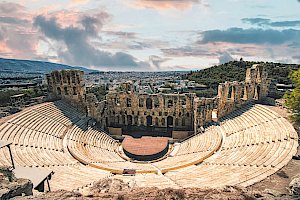
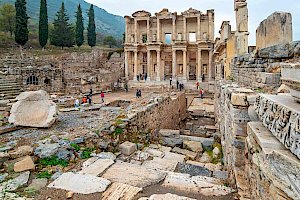
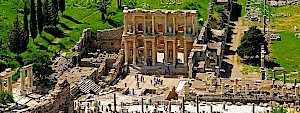
During the Hellenistic period, Ephesus became a major city-state, known for its bustling marketplaces, theaters, and libraries. The city’s architecture, including the famous Library of Celsus, reflected the prosperity and cultural richness of Ephesus. Under Roman rule, the city flourished even further, becoming the capital of the Roman province of Asia. Ephesus attracted merchants, scholars, and visitors from across the empire, its grand streets and public spaces symbolizing the city’s importance. One of the most impressive structures from this era is the Great Theatre, which could hold up to 25,000 spectators. This theater hosted everything from plays to political gatherings, and today, it stands as a testament to the architectural brilliance of ancient Ephesus. Walking through the theater’s massive stone seating, visitors can almost hear the echoes of voices that once filled this vibrant space.
The Early Christian Influence
Ephesus holds a special place in Christian history as well. The Apostle Paul visited the city and preached to its citizens, leaving a lasting legacy. Tradition holds that the Virgin Mary spent her final years near Ephesus, and the House of the Virgin Mary remains a pilgrimage site for Christians worldwide. The Basilica of St. John, located nearby, is said to be the burial place of John the Apostle, adding to the city’s spiritual significance. Ephesus became an important center for early Christian thought, and its influence continued through the Byzantine period.
Rediscovery and Preservation
The ruins of Ephesus were rediscovered in the 19th century, sparking a wave of archaeological interest that has continued to this day. Excavations have revealed intricately decorated homes, elaborate temples, and detailed mosaics, each piece contributing to a deeper understanding of life in the ancient city. These findings allow modern visitors to walk the same streets once traversed by merchants, priests, and philosophers, experiencing Ephesus as a living museum. Today, Ephesus is one of Turkey’s most visited archaeological sites, drawing millions of visitors each year. For those who walk its ancient paths, Ephesus offers more than just ruins—it provides a journey through time, allowing visitors to rediscover a city that once stood as a beacon of faith, culture, and power in the ancient world. To learn more about the history and significance of Ephesus, visit the Wikipedia page on Ephesus. For a guided exploration of this remarkable site, consider a tour with Ephesus Tours, where you can experience the city’s timeless beauty and discover its rich heritage firsthand.
Introduction
Discover the fascinating world of Rediscovering Ephesus: A Journey Through Time in ancient Ephesus. This comprehensive guide explores the historical significance, archaeological findings, and cultural impact of this remarkable aspect of Ephesian heritage.
Historical Background
The history of Rediscovering Ephesus: A Journey Through Time dates back to the early days of Ephesus. Archaeological evidence suggests that this aspect of Ephesian life played a crucial role in shaping the city's development and cultural identity.
Archaeological Discoveries
Recent excavations have unveiled remarkable findings related to Rediscovering Ephesus: A Journey Through Time. These discoveries provide valuable insights into how this aspect of Ephesian life evolved over time.
Cultural Significance
Understanding Rediscovering Ephesus: A Journey Through Time is crucial for appreciating the broader cultural context of ancient Ephesus. Its influence extended beyond the city walls, impacting trade, religion, and daily life.
Visitor Information
Today, visitors to Ephesus can explore the remnants of Rediscovering Ephesus: A Journey Through Time firsthand. This section provides practical information for making the most of your visit.
Preservation and Future
Ongoing conservation efforts ensure that Rediscovering Ephesus: A Journey Through Time remains preserved for future generations. Learn about the challenges and successes in maintaining this important historical site.
Frequently Asked Questions
What is the historical significance of Rediscovering Ephesus: A Journey Through Time?
The Rediscovering Ephesus: A Journey Through Time holds great historical importance in ancient Ephesus, providing valuable insights into the city's cultural and social development.
What can visitors see related to Rediscovering Ephesus: A Journey Through Time today?
Visitors to Ephesus can explore well-preserved remains and artifacts related to Rediscovering Ephesus: A Journey Through Time, offering a glimpse into the ancient world.
When is the best time to visit Rediscovering Ephesus: A Journey Through Time?
The best time to visit is during the spring (April-May) or autumn (September-October) when the weather is mild and crowds are smaller.
Frequently Asked Questions
What is the historical significance of Rediscovering Ephesus: A Journey Through Time?
The Rediscovering Ephesus: A Journey Through Time holds great historical importance in ancient Ephesus, providing valuable insights into the city's cultural and social development.
What can visitors see related to Rediscovering Ephesus: A Journey Through Time today?
Visitors to Ephesus can explore well-preserved remains and artifacts related to Rediscovering Ephesus: A Journey Through Time, offering a glimpse into the ancient world.
When is the best time to visit Rediscovering Ephesus: A Journey Through Time?
The best time to visit is during the spring (April-May) or autumn (September-October) when the weather is mild and crowds are smaller.
Frequently Asked Questions
What is the historical significance of Rediscovering Ephesus: A Journey Through Time?
The Rediscovering Ephesus: A Journey Through Time holds great historical importance in ancient Ephesus, providing valuable insights into the city's cultural and social development.
What can visitors see related to Rediscovering Ephesus: A Journey Through Time today?
Visitors to Ephesus can explore well-preserved remains and artifacts related to Rediscovering Ephesus: A Journey Through Time, offering a glimpse into the ancient world.
When is the best time to visit Rediscovering Ephesus: A Journey Through Time?
The best time to visit is during the spring (April-May) or autumn (September-October) when the weather is mild and crowds are smaller.