

A Complete Guide to Ephesus: Step-by-Step Through the Ancient City
Ephesus, one of Turkey’s most celebrated ancient cities, is a treasure trove of historical landmarks that tell the story of a civilization at the crossroads of Greek, Roman, and early Christian influences. From grand temples to public baths, Ephesus offers a captivating journey through the past. This guide takes you step-by-step through the city’s most iconic sites, helping you explore its rich heritage and connect with the lives of those who once called it home.
1. The Magnesia Gate: Starting Point of the Journey
Begin your exploration at the Magnesia Gate, an ancient city gate that served as one of the main entrances to Ephesus. Walking through the gate, visitors can imagine the bustling activity of people entering the city, from traders and merchants to pilgrims and travelers. The Magnesia Gate offers a fitting start to your journey, as it leads directly to some of the city’s most remarkable landmarks.
2. The Odeon: Ephesus’s Small Theater
Just beyond the Magnesia Gate lies the Odeon, a small theater with seating for around 1,500 people. This structure served as both a venue for concerts and performances and a meeting place for the city’s council. The Odeon’s semicircular seating and well-preserved stage provide insight into the cultural and civic life of Ephesus, where public entertainment and governance were intertwined.
3. The State Agora: Heart of Public Life
Next, head to the State Agora, a large open space that functioned as the political and administrative center of the city. The agora was surrounded by important buildings, including the Prytaneion, where city officials gathered for meetings. Walking through the State Agora, visitors can sense the energy of ancient Ephesus as a center of governance and civic life.
4. The Temple of Domitian: A Monument to Roman Power
The Temple of Domitian, dedicated to the Roman Emperor Domitian, is one of the largest temples in Ephesus. Although only fragments remain, the temple’s foundation and surviving reliefs showcase the architectural grandeur of Roman influence in the city. The temple highlights Ephesus’s role as a major city within the Roman Empire and its connections to Roman rulers.
5. The Fountain of Trajan: A Symbol of Prosperity
Continuing along Curetes Street, you’ll encounter the Fountain of Trajan, an elaborate fountain dedicated to the Emperor Trajan. This structure, adorned with statues and decorative columns, was once fed by an intricate system of aqueducts. The fountain represents the prosperity of Ephesus, where public fountains provided both water and beauty for the city’s residents.
6. The Temple of Hadrian: A Testament to Art and Myth
Further along, you’ll find the Temple of Hadrian, one of Ephesus’s most beautifully preserved buildings. The temple’s intricate carvings depict mythological scenes and the city’s founding legend. This site reflects the blending of art, architecture, and storytelling, showcasing the creativity of Ephesus’s artisans.
7. The Public Latrines: A Glimpse of Daily Life
Adjacent to the Temple of Hadrian are the Public Latrines, a communal space where residents could gather. Though modest in function, the latrines offer insight into the daily routines and social aspects of Ephesian life. Marble seating and a nearby water channel demonstrate the engineering skills of the city’s builders, providing comfort and convenience for its people.
8. The Celsus Library: A Center of Learning
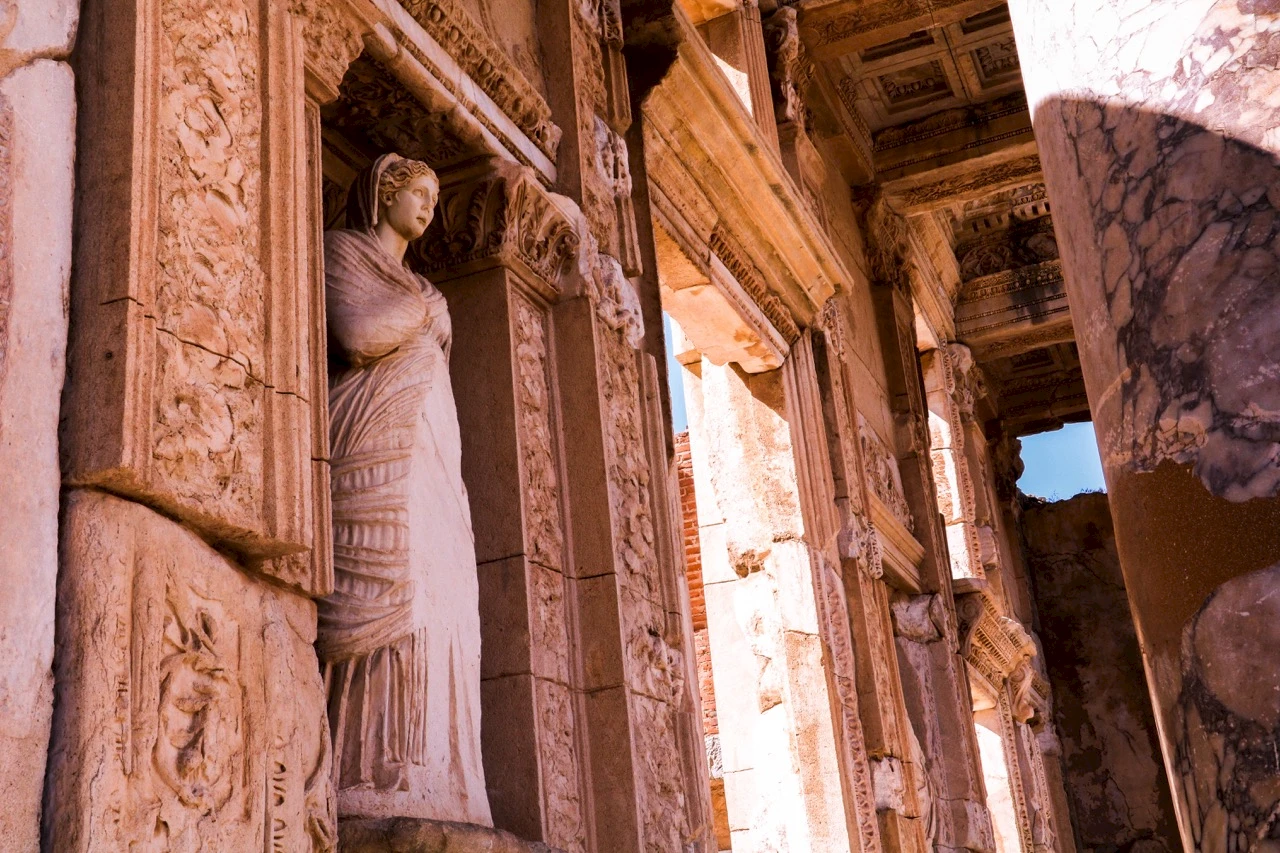
The Library of Celsus is one of Ephesus’s most iconic structures. Built to honor Tiberius Julius Celsus, this grand library once housed thousands of scrolls. Its ornate facade, with columns and statues, stands as a symbol of Ephesus’s intellectual heritage. Today, visitors can walk through the library’s remains, experiencing the grandeur of a place dedicated to knowledge and learning.
9. The Great Theatre: A Stage for Entertainment and Public Gatherings
As you near the end of Curetes Street, the Great Theatre rises before you, capable of seating 25,000 spectators. This massive structure was a venue for plays, concerts, and public assemblies, reflecting the city’s vibrant cultural life. The theater’s acoustics are remarkable, allowing visitors to hear sounds even from the highest seats, a testament to the engineering prowess of Ephesus’s builders.
10. The Harbor Street and the Church of Mary
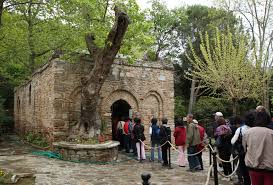
Conclude your visit by strolling down Harbor Street, which once connected Ephesus to its bustling port. Along this road lies the Church of Mary, one of the first churches dedicated to the Virgin Mary. The church marks Ephesus’s role in early Christianity, adding another layer to the city’s spiritual significance. Harbor Street offers a final glimpse of the city’s past, where traders, sailors, and pilgrims converged in a dynamic exchange of goods and ideas. Exploring Ephesus step-by-step allows visitors to immerse themselves in the city’s history, marveling at its architectural achievements and experiencing the culture that once thrived here. From grand temples to humble latrines, each site tells a story that adds depth to the city’s rich heritage. For more information on Ephesus and its history, visit the Wikipedia page on Ephesus. To experience the city’s wonders with a guided tour, consider Ephesus Tours, where you can walk the ancient streets and discover the legacy of one of the ancient world’s most remarkable cities.
Introduction
Discover the fascinating world of A Complete Guide to Ephesus: Step-by-Step Through the Anc... in ancient Ephesus. This comprehensive guide explores the historical significance, archaeological findings, and cultural impact of this remarkable aspect of Ephesian heritage.
Historical Background
The history of A Complete Guide to Ephesus: Step-by-Step Through the Anc... dates back to the early days of Ephesus. Archaeological evidence suggests that this aspect of Ephesian life played a crucial role in shaping the city's development and cultural identity.
Archaeological Discoveries
Recent excavations have unveiled remarkable findings related to A Complete Guide to Ephesus: Step-by-Step Through the Anc.... These discoveries provide valuable insights into how this aspect of Ephesian life evolved over time.
Cultural Significance
Understanding A Complete Guide to Ephesus: Step-by-Step Through the Anc... is crucial for appreciating the broader cultural context of ancient Ephesus. Its influence extended beyond the city walls, impacting trade, religion, and daily life.
Visitor Information
Today, visitors to Ephesus can explore the remnants of A Complete Guide to Ephesus: Step-by-Step Through the Anc... firsthand. This section provides practical information for making the most of your visit.
Preservation and Future
Ongoing conservation efforts ensure that A Complete Guide to Ephesus: Step-by-Step Through the Anc... remains preserved for future generations. Learn about the challenges and successes in maintaining this important historical site.
Frequently Asked Questions
What is the historical significance of A Complete Guide to Ephesus: Step-by-Step Through the Anc...?
The A Complete Guide to Ephesus: Step-by-Step Through the Anc... holds great historical importance in ancient Ephesus, providing valuable insights into the city's cultural and social development.
What can visitors see related to A Complete Guide to Ephesus: Step-by-Step Through the Anc... today?
Visitors to Ephesus can explore well-preserved remains and artifacts related to A Complete Guide to Ephesus: Step-by-Step Through the Anc..., offering a glimpse into the ancient world.
When is the best time to visit A Complete Guide to Ephesus: Step-by-Step Through the Anc...?
The best time to visit is during the spring (April-May) or autumn (September-October) when the weather is mild and crowds are smaller.
Frequently Asked Questions
What is the historical significance of A Complete Guide to Ephesus: Step-by-Step Through the Anc...?
The A Complete Guide to Ephesus: Step-by-Step Through the Anc... holds great historical importance in ancient Ephesus, providing valuable insights into the city's cultural and social development.
What can visitors see related to A Complete Guide to Ephesus: Step-by-Step Through the Anc... today?
Visitors to Ephesus can explore well-preserved remains and artifacts related to A Complete Guide to Ephesus: Step-by-Step Through the Anc..., offering a glimpse into the ancient world.
When is the best time to visit A Complete Guide to Ephesus: Step-by-Step Through the Anc...?
The best time to visit is during the spring (April-May) or autumn (September-October) when the weather is mild and crowds are smaller.
Frequently Asked Questions
What is the historical significance of A Complete Guide to Ephesus: Step-by-Step Through the Anc...?
The A Complete Guide to Ephesus: Step-by-Step Through the Anc... holds great historical importance in ancient Ephesus, providing valuable insights into the city's cultural and social development.
What can visitors see related to A Complete Guide to Ephesus: Step-by-Step Through the Anc... today?
Visitors to Ephesus can explore well-preserved remains and artifacts related to A Complete Guide to Ephesus: Step-by-Step Through the Anc..., offering a glimpse into the ancient world.
When is the best time to visit A Complete Guide to Ephesus: Step-by-Step Through the Anc...?
The best time to visit is during the spring (April-May) or autumn (September-October) when the weather is mild and crowds are smaller.