

Exploring the Ruins of Ephesus: Top Historical Sites to Visit
Ephesus, one of the most iconic cities of the ancient world, is a treasure trove of historical wonders. Located on Turkey’s Aegean coast, this once-thriving metropolis offers visitors a chance to walk through millennia of history, exploring grand structures and public spaces that reflect its importance in the ancient world. Here’s a guide to the top historical sites to visit in Ephesus, where each ruin tells a story of its own.
1. The Library of Celsus
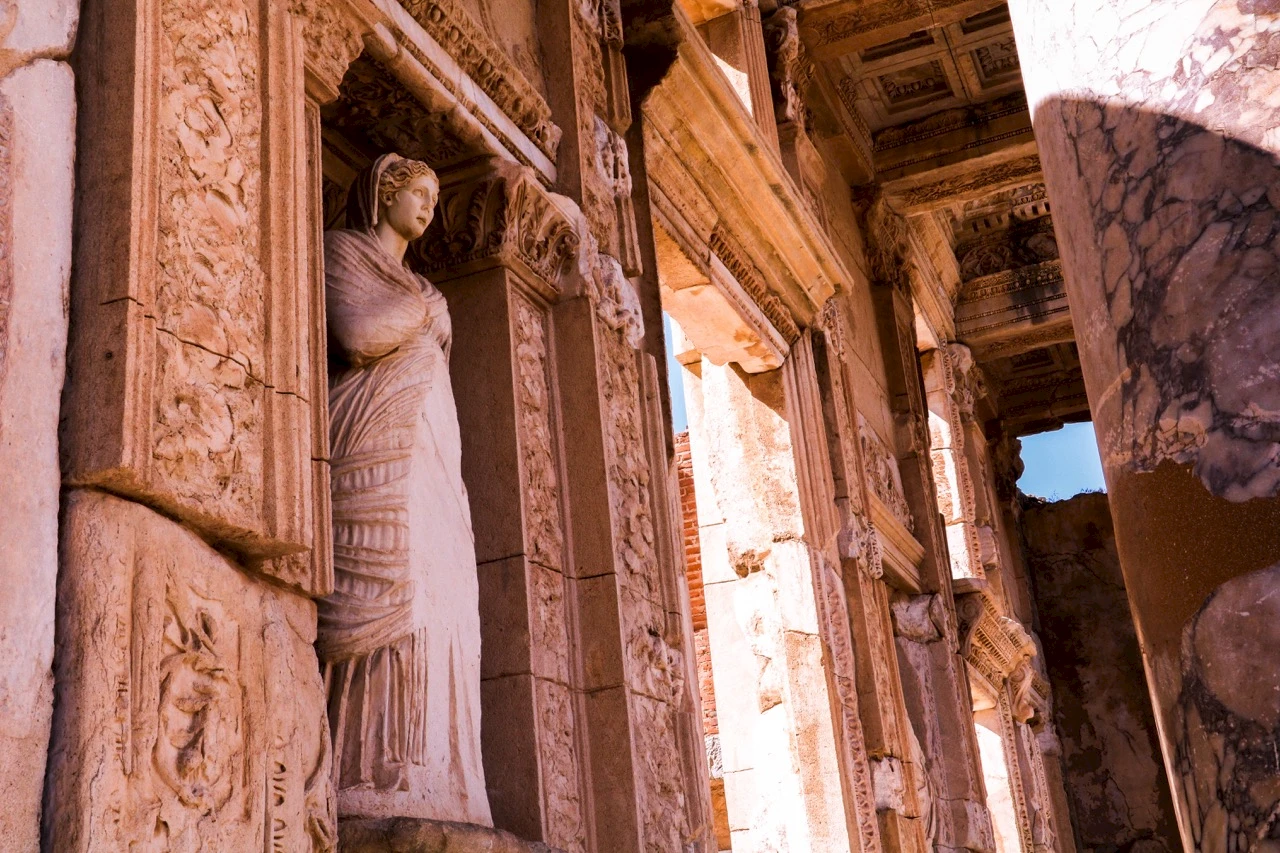
The Library of Celsus is perhaps the most famous structure in Ephesus. Built to honor Tiberius Julius Celsus, this grand library was a center of learning, housing thousands of scrolls. Its ornate facade, adorned with statues and columns, remains a symbol of Ephesus’s intellectual heritage. Visitors can marvel at the library’s architectural beauty and reflect on the city’s commitment to knowledge and culture.
2. The Great Theatre
One of the largest theaters of the ancient world, the Great Theatre of Ephesus could seat up to 25,000 spectators. This impressive structure hosted plays, concerts, and public gatherings. The theater’s exceptional acoustics allow visitors to imagine the sounds of performances that once filled the space. Climbing the theater’s steps provides a panoramic view of the city, offering a perspective on the grand scale of ancient Ephesus.
3. The Temple of Artemis
Though largely in ruins, the Temple of Artemis was one of the Seven Wonders of the Ancient World. This massive temple was dedicated to Artemis, the goddess of the hunt and fertility. Today, only a few columns remain, but the site continues to inspire visitors with its history and the aura of reverence that once surrounded it. The Temple of Artemis reflects the spiritual significance of Ephesus and its role as a major religious center.
4. Curetes Street
Curetes Street is a main thoroughfare lined with statues, monuments, and historic buildings. Walking down this ancient street, visitors pass by important structures such as the Temple of Hadrian and the Fountain of Trajan. Curetes Street was a bustling center of public life in Ephesus, where merchants, philosophers, and residents mingled. Exploring this street offers a glimpse into the everyday lives of the city’s inhabitants.
5. The Temple of Hadrian
One of the best-preserved temples in Ephesus, the Temple of Hadrian features intricate carvings and reliefs depicting mythological scenes. Dedicated to the Roman Emperor Hadrian, this temple is a stunning example of Roman architectural influence in Ephesus. Its detailed artwork and elegant design make it a must-see for visitors interested in ancient art and culture.
6. The Terrace Houses
The Terrace Houses provide a unique look into the luxurious lifestyles of Ephesus’s wealthy residents. These well-preserved homes feature beautiful mosaics, frescoes, and even an advanced heating system. Walking through the Terrace Houses allows visitors to experience the sophistication of Ephesian domestic life, with rooms arranged around central courtyards and stunning interior decorations.
7. The Basilica of St. John
The Basilica of St. John, believed to be built over the tomb of John the Apostle, reflects Ephesus’s importance in early Christian history. Though now in ruins, the basilica was once a grand structure that attracted pilgrims from across the region. The site offers a sense of the city’s spiritual heritage and its role in the spread of Christianity.
8. The Prytaneion
The Prytaneion, or city hall, was where official ceremonies and public functions took place. It once housed a sacred fire that symbolized the city’s eternal flame, tended by the city’s priests. The Prytaneion reflects the civic pride of Ephesus and the importance of public service in ancient society. Visiting this site provides a glimpse into the city’s political life and its dedication to civic rituals. Exploring the ruins of Ephesus allows visitors to connect with a world of beauty, intellect, and devotion. Each site, from the bustling Curetes Street to the serene Terrace Houses, offers a window into the lives of those who walked these streets thousands of years ago. Ephesus remains a place of wonder, where history and legend converge in a landscape that continues to inspire awe and admiration. For more information on Ephesus and its historical significance, visit the Wikipedia page on Ephesus. To experience these remarkable sites firsthand, consider a guided tour with Ephesus Tours, where the ancient wonders of Ephesus come to life.
Introduction
Discover the fascinating world of Exploring the Ruins of Ephesus: Top Historical Sites to V... in ancient Ephesus. This comprehensive guide explores the historical significance, archaeological findings, and cultural impact of this remarkable aspect of Ephesian heritage.
Historical Background
The history of Exploring the Ruins of Ephesus: Top Historical Sites to V... dates back to the early days of Ephesus. Archaeological evidence suggests that this aspect of Ephesian life played a crucial role in shaping the city's development and cultural identity.
Archaeological Discoveries
Recent excavations have unveiled remarkable findings related to Exploring the Ruins of Ephesus: Top Historical Sites to V.... These discoveries provide valuable insights into how this aspect of Ephesian life evolved over time.
Cultural Significance
Understanding Exploring the Ruins of Ephesus: Top Historical Sites to V... is crucial for appreciating the broader cultural context of ancient Ephesus. Its influence extended beyond the city walls, impacting trade, religion, and daily life.
Visitor Information
Today, visitors to Ephesus can explore the remnants of Exploring the Ruins of Ephesus: Top Historical Sites to V... firsthand. This section provides practical information for making the most of your visit.
Preservation and Future
Ongoing conservation efforts ensure that Exploring the Ruins of Ephesus: Top Historical Sites to V... remains preserved for future generations. Learn about the challenges and successes in maintaining this important historical site.
Frequently Asked Questions
What is the historical significance of Exploring the Ruins of Ephesus: Top Historical Sites to V...?
The Exploring the Ruins of Ephesus: Top Historical Sites to V... holds great historical importance in ancient Ephesus, providing valuable insights into the city's cultural and social development.
What can visitors see related to Exploring the Ruins of Ephesus: Top Historical Sites to V... today?
Visitors to Ephesus can explore well-preserved remains and artifacts related to Exploring the Ruins of Ephesus: Top Historical Sites to V..., offering a glimpse into the ancient world.
When is the best time to visit Exploring the Ruins of Ephesus: Top Historical Sites to V...?
The best time to visit is during the spring (April-May) or autumn (September-October) when the weather is mild and crowds are smaller.
Frequently Asked Questions
What is the historical significance of Exploring the Ruins of Ephesus: Top Historical Sites to V...?
The Exploring the Ruins of Ephesus: Top Historical Sites to V... holds great historical importance in ancient Ephesus, providing valuable insights into the city's cultural and social development.
What can visitors see related to Exploring the Ruins of Ephesus: Top Historical Sites to V... today?
Visitors to Ephesus can explore well-preserved remains and artifacts related to Exploring the Ruins of Ephesus: Top Historical Sites to V..., offering a glimpse into the ancient world.
When is the best time to visit Exploring the Ruins of Ephesus: Top Historical Sites to V...?
The best time to visit is during the spring (April-May) or autumn (September-October) when the weather is mild and crowds are smaller.
Frequently Asked Questions
What is the historical significance of Exploring the Ruins of Ephesus: Top Historical Sites to V...?
The Exploring the Ruins of Ephesus: Top Historical Sites to V... holds great historical importance in ancient Ephesus, providing valuable insights into the city's cultural and social development.
What can visitors see related to Exploring the Ruins of Ephesus: Top Historical Sites to V... today?
Visitors to Ephesus can explore well-preserved remains and artifacts related to Exploring the Ruins of Ephesus: Top Historical Sites to V..., offering a glimpse into the ancient world.
When is the best time to visit Exploring the Ruins of Ephesus: Top Historical Sites to V...?
The best time to visit is during the spring (April-May) or autumn (September-October) when the weather is mild and crowds are smaller.