

Travel Through Time: Ephesus and Its Legendary Wonders
Ephesus, an ancient city on Turkey’s Aegean coast, is a place where history comes alive. Known for its breathtaking architecture, rich cultural heritage, and sacred sites, Ephesus allows visitors to travel through time, experiencing the wonders that made it one of the most influential cities of the ancient world. From the Temple of Artemis to the Library of Celsus, Ephesus offers a glimpse into a bygone era filled with beauty, spirituality, and innovation.
The Temple of Artemis: A Wonder of the Ancient World
The Temple of Artemis, once one of the Seven Wonders of the Ancient World, stood as a beacon of devotion and architectural grandeur. Dedicated to Artemis, the goddess of the hunt and fertility, the temple attracted pilgrims from across the ancient Mediterranean. Though only a few columns remain today, the site evokes a sense of wonder, inviting visitors to imagine the scale and splendor of this once-magnificent sanctuary. The temple’s history is a testament to Ephesus’s spiritual significance and the devotion of those who built it.
The Great Theatre: A Stage for Entertainment and Community
The Great Theatre of Ephesus, with a seating capacity of 25,000, was an impressive venue for public gatherings, theatrical performances, and debates. Carved into the hillside, the theater offered stunning views of the surrounding city and showcased the architectural prowess of ancient builders. Today, visitors can walk through its tiered seating, experiencing the echoes of voices that once filled the space. The Great Theatre stands as a symbol of Ephesus’s cultural richness and its role as a hub of entertainment and civic life.
The Library of Celsus: A Monument to Knowledge
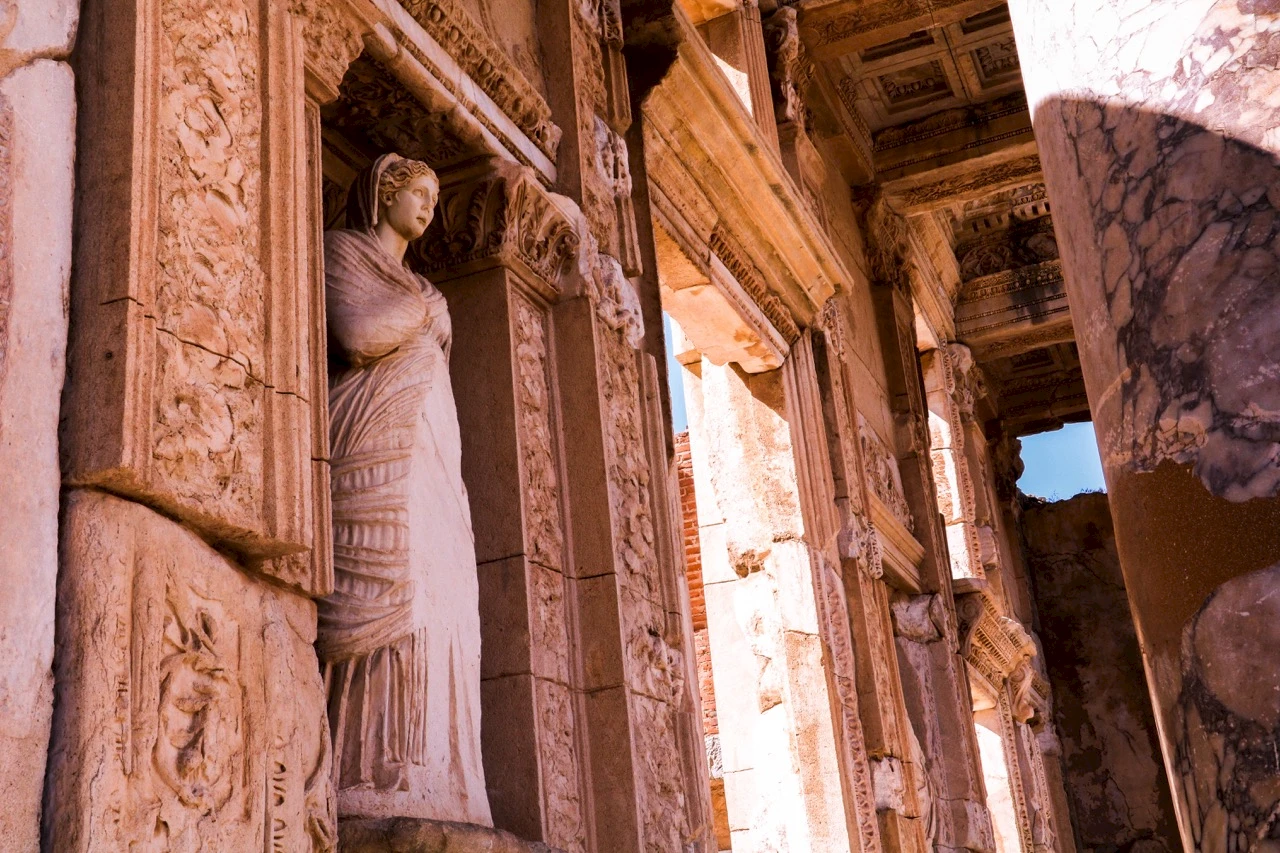
One of the most iconic structures in Ephesus is the Library of Celsus, built in honor of the Roman senator Tiberius Julius Celsus. With its grand facade adorned with statues and carvings, the library was a center of learning and intellectual exchange. Housing thousands of scrolls, it reflected the city’s dedication to knowledge and scholarship. Today, the restored facade continues to inspire awe, reminding visitors of Ephesus’s role as a city that valued education and cultural achievement.
The Sacred Path to the Temple of Hadrian
The Temple of Hadrian, another architectural marvel, is dedicated to the Roman Emperor Hadrian and features intricate reliefs that depict the city’s founding myths. As visitors walk along Curetes Street, they pass by the temple’s beautifully preserved columns and arches. This pathway, lined with statues and ancient shops, leads to the temple, evoking a sense of connection with the city’s past. The Temple of Hadrian reflects the influence of Roman culture on Ephesus, adding another layer to the city’s diverse historical landscape.
The Basilica of St. John: A Legacy of Faith
Built over the supposed tomb of John the Apostle, the Basilica of St. John is a site of Christian pilgrimage. The basilica, though now in ruins, was once a grand structure that drew worshippers from across the region. The connection to John the Apostle adds spiritual significance to Ephesus, a city where early Christianity flourished. Walking through the ruins of the basilica, visitors can reflect on the religious heritage that shaped Ephesus, blending Greek, Roman, and Christian traditions.
Experiencing Ephesus Today
Traveling through Ephesus is like stepping into a time capsule, where the wonders of the ancient world are preserved for modern-day explorers. The city’s ruins offer a glimpse into the lives of those who lived, worshipped, and worked here, creating a connection that transcends centuries. Ephesus is a place where history, culture, and spirituality converge, offering an experience that is both educational and inspiring. For more information on the history and wonders of Ephesus, visit the Wikipedia page on Ephesus. To experience the city firsthand, consider a guided tour with Ephesus Tours, where you can walk among the ruins and discover the legendary wonders that make Ephesus a timeless destination.
Introduction
Discover the fascinating world of Travel Through Time: Ephesus and Its Legendary Wonders in ancient Ephesus. This comprehensive guide explores the historical significance, archaeological findings, and cultural impact of this remarkable aspect of Ephesian heritage.
Historical Background
The history of Travel Through Time: Ephesus and Its Legendary Wonders dates back to the early days of Ephesus. Archaeological evidence suggests that this aspect of Ephesian life played a crucial role in shaping the city's development and cultural identity.
Archaeological Discoveries
Recent excavations have unveiled remarkable findings related to Travel Through Time: Ephesus and Its Legendary Wonders. These discoveries provide valuable insights into how this aspect of Ephesian life evolved over time.
Cultural Significance
Understanding Travel Through Time: Ephesus and Its Legendary Wonders is crucial for appreciating the broader cultural context of ancient Ephesus. Its influence extended beyond the city walls, impacting trade, religion, and daily life.
Visitor Information
Today, visitors to Ephesus can explore the remnants of Travel Through Time: Ephesus and Its Legendary Wonders firsthand. This section provides practical information for making the most of your visit.
Preservation and Future
Ongoing conservation efforts ensure that Travel Through Time: Ephesus and Its Legendary Wonders remains preserved for future generations. Learn about the challenges and successes in maintaining this important historical site.
Frequently Asked Questions
What is the historical significance of Travel Through Time: Ephesus and Its Legendary Wonders?
The Travel Through Time: Ephesus and Its Legendary Wonders holds great historical importance in ancient Ephesus, providing valuable insights into the city's cultural and social development.
What can visitors see related to Travel Through Time: Ephesus and Its Legendary Wonders today?
Visitors to Ephesus can explore well-preserved remains and artifacts related to Travel Through Time: Ephesus and Its Legendary Wonders, offering a glimpse into the ancient world.
When is the best time to visit Travel Through Time: Ephesus and Its Legendary Wonders?
The best time to visit is during the spring (April-May) or autumn (September-October) when the weather is mild and crowds are smaller.
Frequently Asked Questions
What is the historical significance of Travel Through Time: Ephesus and Its Legendary Wonders?
The Travel Through Time: Ephesus and Its Legendary Wonders holds great historical importance in ancient Ephesus, providing valuable insights into the city's cultural and social development.
What can visitors see related to Travel Through Time: Ephesus and Its Legendary Wonders today?
Visitors to Ephesus can explore well-preserved remains and artifacts related to Travel Through Time: Ephesus and Its Legendary Wonders, offering a glimpse into the ancient world.
When is the best time to visit Travel Through Time: Ephesus and Its Legendary Wonders?
The best time to visit is during the spring (April-May) or autumn (September-October) when the weather is mild and crowds are smaller.
Frequently Asked Questions
What is the historical significance of Travel Through Time: Ephesus and Its Legendary Wonders?
The Travel Through Time: Ephesus and Its Legendary Wonders holds great historical importance in ancient Ephesus, providing valuable insights into the city's cultural and social development.
What can visitors see related to Travel Through Time: Ephesus and Its Legendary Wonders today?
Visitors to Ephesus can explore well-preserved remains and artifacts related to Travel Through Time: Ephesus and Its Legendary Wonders, offering a glimpse into the ancient world.
When is the best time to visit Travel Through Time: Ephesus and Its Legendary Wonders?
The best time to visit is during the spring (April-May) or autumn (September-October) when the weather is mild and crowds are smaller.