

Exploring the Library of Celsus in Ephesus
Library of Celsus
The Library of Celsus, located in the ancient city of Ephesus in modern-day Turkey, is a testament to the grandeur and sophistication of Roman architecture and engineering. Built to honor the Roman Senator Tiberius Julius Celsus Polemaeanus, the library is one of the most well-preserved structures from antiquity and remains a highlight for visitors to Ephesus.
History of the Library of Celsus
The library was commissioned by Celsus' son, Gaius Julius Aquila, and completed in 135 AD. It served not only as a monumental tomb for Celsus but also as a public library housing over 12,000 scrolls. This dual purpose underscores the cultural and intellectual significance the Romans placed on literature and knowledge.
The library's construction was an extraordinary feat, showcasing the wealth and power of the Roman Empire. It was built to store vast collections of scrolls and serve as a mausoleum, a unique combination that highlights its importance.
Architectural Features
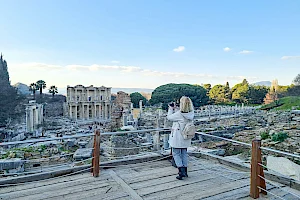
The Library of Celsus is renowned for its architectural beauty. The facade, which has been extensively restored, features a two-story design with Corinthian and Ionic columns. The intricate carvings and statues that adorn the facade represent various virtues, such as wisdom and knowledge, which were highly valued in Roman society.
The interior of the library was designed with a central nave surrounded by niches that held the scrolls. The walls were double-layered to protect the scrolls from the harsh Mediterranean climate. Although the interior has not survived as well as the exterior, the layout and design can still be appreciated.
Significance of the Library
The Library of Celsus was one of the three largest libraries of the ancient world, alongside the libraries of Alexandria and Pergamum. It symbolized the intellectual and cultural prowess of Ephesus, making the city a prominent center of learning and culture in the Roman Empire.
The library's strategic location on Curetes Street, one of the main thoroughfares in Ephesus, underscores its importance in the daily life of the city. It was a place where scholars, philosophers, and citizens gathered to read, study, and exchange ideas.
Visiting the Library of Celsus
The Library of Celsus is a must-see for any visitor to Ephesus. Here are some tips for exploring this magnificent site:
- Best Time to Visit: The library is best visited early in the morning or late in the afternoon to avoid the midday heat and crowds.
- Guided Tours: Consider joining a guided tour to gain deeper insights into the history and architecture of the library.
- Photography: The library's facade is particularly stunning at sunrise and sunset, making these times ideal for photography.
- Nearby Attractions: The library is located near other significant sites in Ephesus, such as the Great Theatre and the Temple of Artemis, making it easy to explore multiple attractions in one visit.
External Links for Further Reading
For more detailed information about the Library of Celsus, you can visit the following resources:
Conclusion
The Library of Celsus stands as a monumental tribute to the cultural and intellectual achievements of the ancient world. Its architectural beauty and historical significance make it a centerpiece of Ephesus, drawing visitors from around the globe. Whether you are a history enthusiast or a casual traveler, a visit to the Library of Celsus offers a fascinating glimpse into the past.
Introduction
Discover the fascinating world of Exploring the Library of Celsus in Ephesus in ancient Ephesus. This comprehensive guide explores the historical significance, archaeological findings, and cultural impact of this remarkable aspect of Ephesian heritage.
Historical Background
The history of Exploring the Library of Celsus in Ephesus dates back to the early days of Ephesus. Archaeological evidence suggests that this aspect of Ephesian life played a crucial role in shaping the city's development and cultural identity.
Archaeological Discoveries
Recent excavations have unveiled remarkable findings related to Exploring the Library of Celsus in Ephesus. These discoveries provide valuable insights into how this aspect of Ephesian life evolved over time.
Cultural Significance
Understanding Exploring the Library of Celsus in Ephesus is crucial for appreciating the broader cultural context of ancient Ephesus. Its influence extended beyond the city walls, impacting trade, religion, and daily life.
Visitor Information
Today, visitors to Ephesus can explore the remnants of Exploring the Library of Celsus in Ephesus firsthand. This section provides practical information for making the most of your visit.
Preservation and Future
Ongoing conservation efforts ensure that Exploring the Library of Celsus in Ephesus remains preserved for future generations. Learn about the challenges and successes in maintaining this important historical site.
Frequently Asked Questions
What is the historical significance of Exploring the Library of Celsus in Ephesus?
The Exploring the Library of Celsus in Ephesus holds great historical importance in ancient Ephesus, providing valuable insights into the city's cultural and social development.
What can visitors see related to Exploring the Library of Celsus in Ephesus today?
Visitors to Ephesus can explore well-preserved remains and artifacts related to Exploring the Library of Celsus in Ephesus, offering a glimpse into the ancient world.
When is the best time to visit Exploring the Library of Celsus in Ephesus?
The best time to visit is during the spring (April-May) or autumn (September-October) when the weather is mild and crowds are smaller.
Frequently Asked Questions
What is the historical significance of Exploring the Library of Celsus in Ephesus?
The Exploring the Library of Celsus in Ephesus holds great historical importance in ancient Ephesus, providing valuable insights into the city's cultural and social development.
What can visitors see related to Exploring the Library of Celsus in Ephesus today?
Visitors to Ephesus can explore well-preserved remains and artifacts related to Exploring the Library of Celsus in Ephesus, offering a glimpse into the ancient world.
When is the best time to visit Exploring the Library of Celsus in Ephesus?
The best time to visit is during the spring (April-May) or autumn (September-October) when the weather is mild and crowds are smaller.
Frequently Asked Questions
What is the historical significance of Exploring the Library of Celsus in Ephesus?
The Exploring the Library of Celsus in Ephesus holds great historical importance in ancient Ephesus, providing valuable insights into the city's cultural and social development.
What can visitors see related to Exploring the Library of Celsus in Ephesus today?
Visitors to Ephesus can explore well-preserved remains and artifacts related to Exploring the Library of Celsus in Ephesus, offering a glimpse into the ancient world.
When is the best time to visit Exploring the Library of Celsus in Ephesus?
The best time to visit is during the spring (April-May) or autumn (September-October) when the weather is mild and crowds are smaller.