

The Temple of Serapis: Ephesus’ Connection to Egyptian ...
The ancient city of Ephesus was a melting pot of cultures, beliefs, and traditions, where influences from across the Mediterranean converged. Among its many religious sites, the Temple of Serapis stands out as a unique testament to the city’s connection to Egyptian deities. Dedicated to Serapis, a god who symbolized a fusion of Greek and Egyptian beliefs, this temple reflects the diversity and openness of Ephesian society. This post explores the history of the Temple of Serapis and its significance in connecting Ephesus with the wider ancient world.
1. Who Was Serapis?
Serapis was a deity created by the Ptolemaic rulers of Egypt to unify Greek and Egyptian religious practices. He combined aspects of the Egyptian god Osiris and the Greek god Zeus, embodying elements of both the underworld and the heavens. Serapis was portrayed as a bearded man with a modius (grain measure) on his head, symbolizing abundance and prosperity. His worship spread throughout the Hellenistic world, including the Roman Empire, as he became associated with healing, fertility, and the afterlife. For the citizens of Ephesus, worshipping Serapis represented a connection to the powerful cultural influences of both Greece and Egypt, illustrating the city’s role as a crossroads between East and West.
2. The Temple of Serapis in Ephesus
Located near the Commercial Agora, the Temple of Serapis was built in the 2nd century AD during the Roman period. The temple’s design, with its massive columns and spacious layout, reflects a blend of Greek and Egyptian architectural styles. The columns were among the tallest in Ephesus, symbolizing the grandeur of the deity to whom it was dedicated. Though Serapis was a foreign god, his presence in Ephesus demonstrates the city’s openness to diverse religious practices and its status as a cosmopolitan hub. The temple’s position near the commercial district also highlights the practical role of the deity in the lives of traders and merchants. Serapis was associated with prosperity and protection, making him a fitting patron for those engaged in commerce.
3. Cultural Significance of the Temple
The Temple of Serapis wasn’t just a religious site—it was a symbol of the blending of cultures that characterized life in Ephesus. The temple hosted rituals and ceremonies dedicated to Serapis, drawing in followers from different backgrounds. By welcoming a god with Egyptian origins, the people of Ephesus demonstrated their willingness to embrace and integrate foreign traditions. This cultural openness helped to shape Ephesus as a place where ideas, beliefs, and people from across the ancient world could come together. Highlights of the Temple’s Architecture:
- Columns and Reliefs: The massive columns and intricate carvings reflect both Greek and Egyptian influences.
- Statues of Serapis: Although few remain, statues of the deity once adorned the temple, depicting him with traditional Egyptian symbols, such as the Ankh and the Apis bull.
4. The Legacy of Serapis in Ephesus
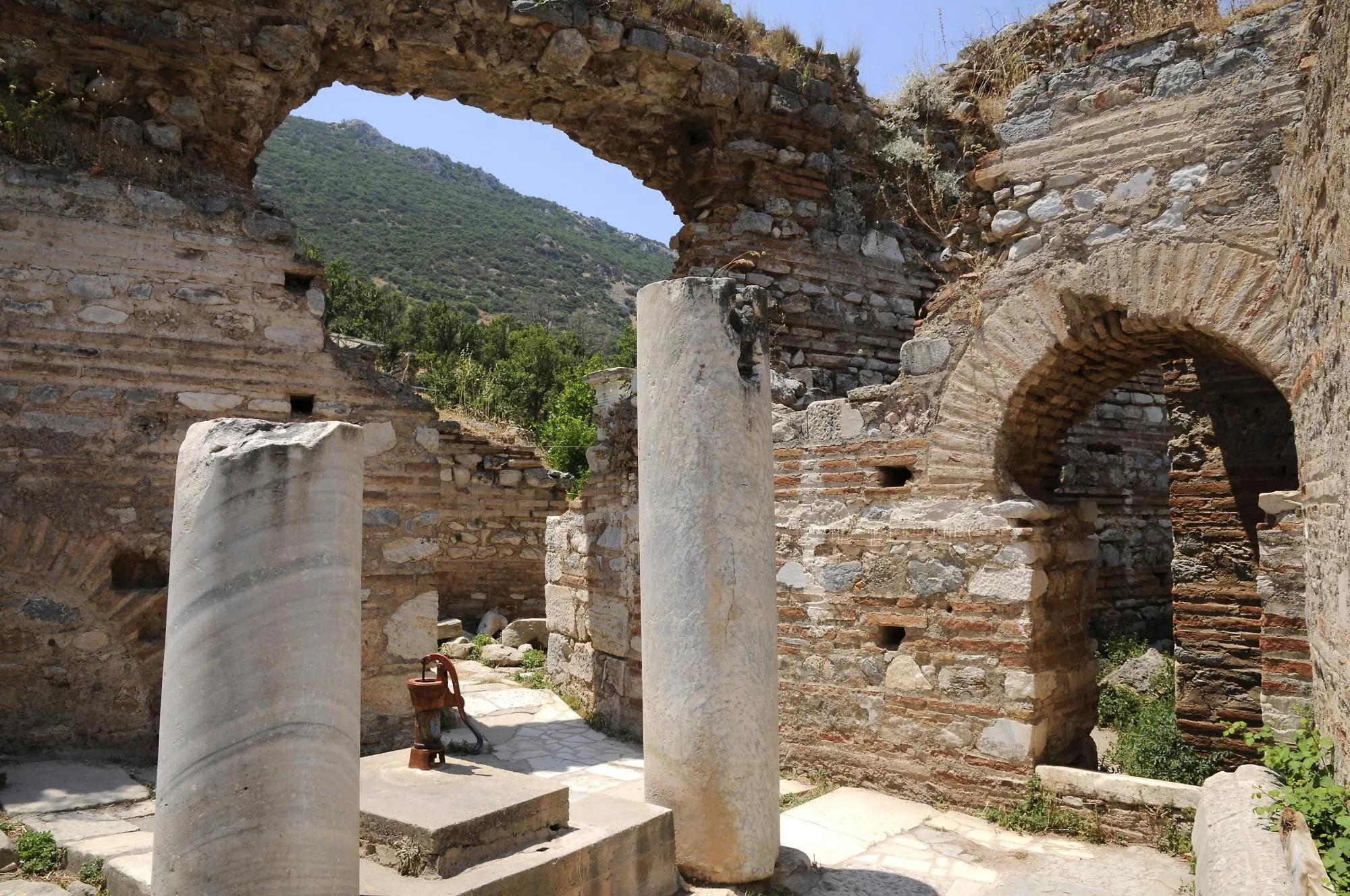
While the worship of Serapis eventually declined with the rise of Christianity, the temple remains an enduring symbol of Ephesus’ religious diversity. The ruins of the Temple of Serapis remind us of a time when the city was a thriving center of exchange—where cultures mixed, deities crossed borders, and new ideas flourished. The presence of this temple highlights Ephesus’ role in facilitating the spread of Egyptian and Greek religious practices and underscores the city’s importance as a bridge between cultures. Today, visitors to Ephesus can explore the remains of the temple and reflect on the rich tapestry of beliefs that once coexisted here. Although little of the temple remains, its columns stand as a reminder of the connections that linked Ephesus to Egypt and the broader ancient world. Conclusion The Temple of Serapis represents the spirit of Ephesus as a city open to foreign influences and diverse spiritual practices. Through the worship of Serapis, Ephesus connected with the religious traditions of Egypt, demonstrating the city’s cosmopolitan character. As visitors wander through the temple’s ruins, they can envision the ancient worshippers who sought Serapis’ protection and blessings, illustrating the enduring legacy of a city where gods and cultures converged.
For more information on Ephesus and its ancient temples, visit the Wikipedia page on Ephesus.
Introduction
Discover the fascinating world of The Temple of Serapis: Ephesus’ Connection to Egyptian ... in ancient Ephesus. This comprehensive guide explores the historical significance, archaeological findings, and cultural impact of this remarkable aspect of Ephesian heritage.
Historical Background
The history of The Temple of Serapis: Ephesus’ Connection to Egyptian ... dates back to the early days of Ephesus. Archaeological evidence suggests that this aspect of Ephesian life played a crucial role in shaping the city's development and cultural identity.
Archaeological Discoveries
Recent excavations have unveiled remarkable findings related to The Temple of Serapis: Ephesus’ Connection to Egyptian .... These discoveries provide valuable insights into how this aspect of Ephesian life evolved over time.
Visitor Information
Today, visitors to Ephesus can explore the remnants of The Temple of Serapis: Ephesus’ Connection to Egyptian ... firsthand. This section provides practical information for making the most of your visit.
Preservation and Future
Ongoing conservation efforts ensure that The Temple of Serapis: Ephesus’ Connection to Egyptian ... remains preserved for future generations. Learn about the challenges and successes in maintaining this important historical site.
Frequently Asked Questions
What is the historical significance of The Temple of Serapis: Ephesus’ Connection to Egyptian ...?
The The Temple of Serapis: Ephesus’ Connection to Egyptian ... holds great historical importance in ancient Ephesus, providing valuable insights into the city's cultural and social development.
What can visitors see related to The Temple of Serapis: Ephesus’ Connection to Egyptian ... today?
Visitors to Ephesus can explore well-preserved remains and artifacts related to The Temple of Serapis: Ephesus’ Connection to Egyptian ..., offering a glimpse into the ancient world.
When is the best time to visit The Temple of Serapis: Ephesus’ Connection to Egyptian ...?
The best time to visit is during the spring (April-May) or autumn (September-October) when the weather is mild and crowds are smaller.
Frequently Asked Questions
What is the historical significance of The Temple of Serapis: Ephesus’ Connection to Egyptian ...?
The The Temple of Serapis: Ephesus’ Connection to Egyptian ... holds great historical importance in ancient Ephesus, providing valuable insights into the city's cultural and social development.
What can visitors see related to The Temple of Serapis: Ephesus’ Connection to Egyptian ... today?
Visitors to Ephesus can explore well-preserved remains and artifacts related to The Temple of Serapis: Ephesus’ Connection to Egyptian ..., offering a glimpse into the ancient world.
When is the best time to visit The Temple of Serapis: Ephesus’ Connection to Egyptian ...?
The best time to visit is during the spring (April-May) or autumn (September-October) when the weather is mild and crowds are smaller.
Frequently Asked Questions
What is the historical significance of The Temple of Serapis: Ephesus’ Connection to Egyptian ...?
The The Temple of Serapis: Ephesus’ Connection to Egyptian ... holds great historical importance in ancient Ephesus, providing valuable insights into the city's cultural and social development.
What can visitors see related to The Temple of Serapis: Ephesus’ Connection to Egyptian ... today?
Visitors to Ephesus can explore well-preserved remains and artifacts related to The Temple of Serapis: Ephesus’ Connection to Egyptian ..., offering a glimpse into the ancient world.
When is the best time to visit The Temple of Serapis: Ephesus’ Connection to Egyptian ...?
The best time to visit is during the spring (April-May) or autumn (September-October) when the weather is mild and crowds are smaller.