
Unveiling the Life of Mary in Ephesus: From Jerusalem to ...
Introduction
Introduce Ephesus as a significant place for early Christianity, where Mary, the mother of Jesus, is believed to have spent her final years. According to tradition, Mary traveled to Ephesus with the Apostle John, fulfilling Jesus’ request for John to care for her. Ephesus became her final home, where she lived a quiet, prayerful life.
Journey from Jerusalem to Ephesus
Describe the tradition that Mary and John journeyed from Jerusalem to Ephesus after Jesus’ crucifixion. Explain that John, fulfilling Jesus’ wishes, brought Mary to Ephesus, where she could live in peace and continue her spiritual mission.
- A Place of Peace and Refuge: Discuss why John may have chosen Ephesus as a safe place for Mary, far from the turmoil in Jerusalem, allowing her to live a secluded life.
- Mary’s New Life in Ephesus: Explain that Ephesus, a bustling Roman city, provided a unique environment for Mary and John to carry on their mission quietly, inspiring those around them.
The House of the Virgin Mary: Mary’s Final Residence
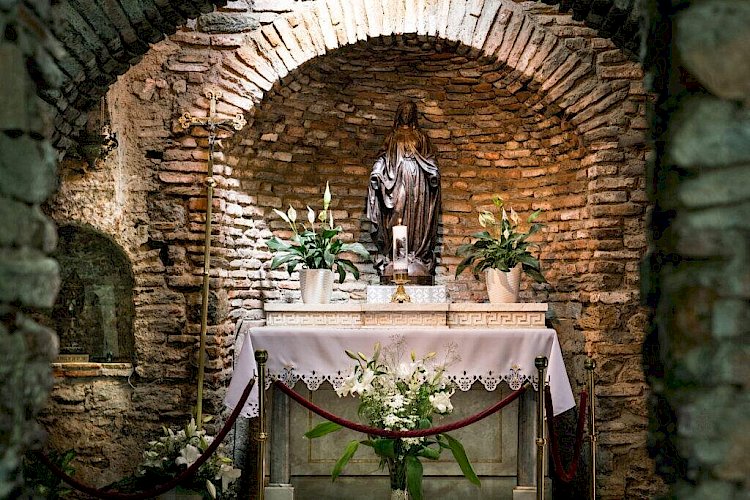
Explore the significance of the House of the Virgin Mary, a small stone structure on Nightingale Mountain, believed to be where Mary spent her last years. Explain how this site was rediscovered based on the visions of Sister Anne Catherine Emmerich and later recognized by the Catholic Church.
- Discovery of the House: Describe how the house was located in the 19th century and has since become a pilgrimage site for Christians and Muslims alike.
- A Sacred Site for Reflection and Prayer: Highlight the tranquil surroundings of the house, where visitors can experience the peaceful atmosphere and connect with Mary’s legacy.
Mary’s Influence on the Early Christian Community
Analyze Mary’s influence on the early Christian community in Ephesus, where her presence provided spiritual guidance and support. Explain that Mary’s example of devotion and compassion inspired early Christians and strengthened their faith.
- A Spiritual Mother to Believers: Describe how Mary’s role as Jesus’ mother made her a respected figure, fostering a sense of unity and faith within the Christian community.
- Encouraging Christian Values: Discuss how Mary’s daily life of prayer and humility in Ephesus served as a model for others, emphasizing the values of love, compassion, and forgiveness.
Legends and Traditions Surrounding Mary’s Final Days
Explore the various legends surrounding Mary’s final days in Ephesus, which reflect the deep reverence for her in Christian tradition. Explain that these stories have contributed to Ephesus’ importance as a spiritual center.
- The Tradition of the Assumption: Mention the belief in Mary’s Assumption, celebrated by Christians as a testament to her holiness, even though the exact location is a topic of legend.
- Enduring Legacy: Reflect on how these stories have helped preserve Mary’s legacy in Ephesus, making the city a cherished pilgrimage destination for those seeking to honor her memory.
Pilgrimage to Ephesus: Following Mary’s Footsteps
Discuss the significance of making a pilgrimage to Ephesus, where visitors can connect with Mary’s final years and reflect on her life. Explain how the House of the Virgin Mary offers a sacred space for prayer and contemplation.
- A Journey of Faith: Describe how pilgrims to Ephesus can experience the city’s spiritual atmosphere and gain insight into Mary’s influence on the early church.
- The Power of Mary’s Legacy: Encourage visitors to explore other Christian sites in Ephesus, such as the Basilica of St. John, where they can reflect on the lives of those who shaped early Christianity.
Conclusion
Conclude by highlighting the significance of Mary’s final years in Ephesus and her lasting impact on the Christian faith. Encourage readers to visit Ephesus to experience the peace and inspiration associated with Mary’s legacy and to gain a deeper appreciation for her role in early Christianity.
External Link Suggestion:
Link to the Wikipedia page on the House of the Virgin Mary for additional background on the site’s history and spiritual significance.
Historical Background
The history of Unveiling the Life of Mary in Ephesus: From Jerusalem to ... dates back to the early days of Ephesus. Archaeological evidence suggests that this aspect of Ephesian life played a crucial role in shaping the city's development and cultural identity.
Archaeological Discoveries
Recent excavations have unveiled remarkable findings related to Unveiling the Life of Mary in Ephesus: From Jerusalem to .... These discoveries provide valuable insights into how this aspect of Ephesian life evolved over time.
Cultural Significance
Understanding Unveiling the Life of Mary in Ephesus: From Jerusalem to ... is crucial for appreciating the broader cultural context of ancient Ephesus. Its influence extended beyond the city walls, impacting trade, religion, and daily life.
Visitor Information
Today, visitors to Ephesus can explore the remnants of Unveiling the Life of Mary in Ephesus: From Jerusalem to ... firsthand. This section provides practical information for making the most of your visit.
Preservation and Future
Ongoing conservation efforts ensure that Unveiling the Life of Mary in Ephesus: From Jerusalem to ... remains preserved for future generations. Learn about the challenges and successes in maintaining this important historical site.
Frequently Asked Questions
What is the historical significance of Unveiling the Life of Mary in Ephesus: From Jerusalem to ...?
The Unveiling the Life of Mary in Ephesus: From Jerusalem to ... holds great historical importance in ancient Ephesus, providing valuable insights into the city's cultural and social development.
What can visitors see related to Unveiling the Life of Mary in Ephesus: From Jerusalem to ... today?
Visitors to Ephesus can explore well-preserved remains and artifacts related to Unveiling the Life of Mary in Ephesus: From Jerusalem to ..., offering a glimpse into the ancient world.
When is the best time to visit Unveiling the Life of Mary in Ephesus: From Jerusalem to ...?
The best time to visit is during the spring (April-May) or autumn (September-October) when the weather is mild and crowds are smaller.
Frequently Asked Questions
What is the historical significance of Unveiling the Life of Mary in Ephesus: From Jerusalem to ...?
The Unveiling the Life of Mary in Ephesus: From Jerusalem to ... holds great historical importance in ancient Ephesus, providing valuable insights into the city's cultural and social development.
What can visitors see related to Unveiling the Life of Mary in Ephesus: From Jerusalem to ... today?
Visitors to Ephesus can explore well-preserved remains and artifacts related to Unveiling the Life of Mary in Ephesus: From Jerusalem to ..., offering a glimpse into the ancient world.
When is the best time to visit Unveiling the Life of Mary in Ephesus: From Jerusalem to ...?
The best time to visit is during the spring (April-May) or autumn (September-October) when the weather is mild and crowds are smaller.
Frequently Asked Questions
What is the historical significance of Unveiling the Life of Mary in Ephesus: From Jerusalem to ...?
The Unveiling the Life of Mary in Ephesus: From Jerusalem to ... holds great historical importance in ancient Ephesus, providing valuable insights into the city's cultural and social development.
What can visitors see related to Unveiling the Life of Mary in Ephesus: From Jerusalem to ... today?
Visitors to Ephesus can explore well-preserved remains and artifacts related to Unveiling the Life of Mary in Ephesus: From Jerusalem to ..., offering a glimpse into the ancient world.
When is the best time to visit Unveiling the Life of Mary in Ephesus: From Jerusalem to ...?
The best time to visit is during the spring (April-May) or autumn (September-October) when the weather is mild and crowds are smaller.