

Is Ephesus Walkable? in Ancient Ephesus
Find out whether Ephesus is walkable, how to navigate the ancient ruins, and tips for making the most of your visit to this incredible archaeological site. Ephesus is indeed walkable, and most visitors explore the ancient city on foot. The archaeological site, located near Selçuk in Turkey, covers around 4 kilometers (2.5 miles) and features well-preserved streets, impressive ruins, and various historical landmarks, all connected by walkways. As you journey through Ephesus, you’ll experience the city much like its ancient inhabitants did—by strolling along its marble streets, visiting iconic sites, and taking in the rich history around every corner. Here’s what you need to know about walking Ephesus.
Walking Through the Main Sites of Ephesus
The layout of Ephesus makes it easy to navigate on foot, with most of the key sites connected along the Marble Street and Curetes Street. The main highlights, such as the Library of Celsus, Great Theatre, Temple of Hadrian, and the Terrace Houses, are conveniently located within walking distance of each other.
Key Sites and Walking Route
- Upper Gate (Magnesian Gate): Many tours begin at the Upper Gate, which leads to the top of Ephesus. From here, you’ll walk downhill through the main sites, ending at the Lower Gate near the Great Theatre. This route is recommended, as it allows you to walk downhill, making the experience more comfortable.
- Curetes Street: As you descend, you’ll follow Curetes Street, a marble-paved road lined with statues, columns, and ancient shops. Along this street, you’ll see sites like the Temple of Hadrian and the Terrace Houses.
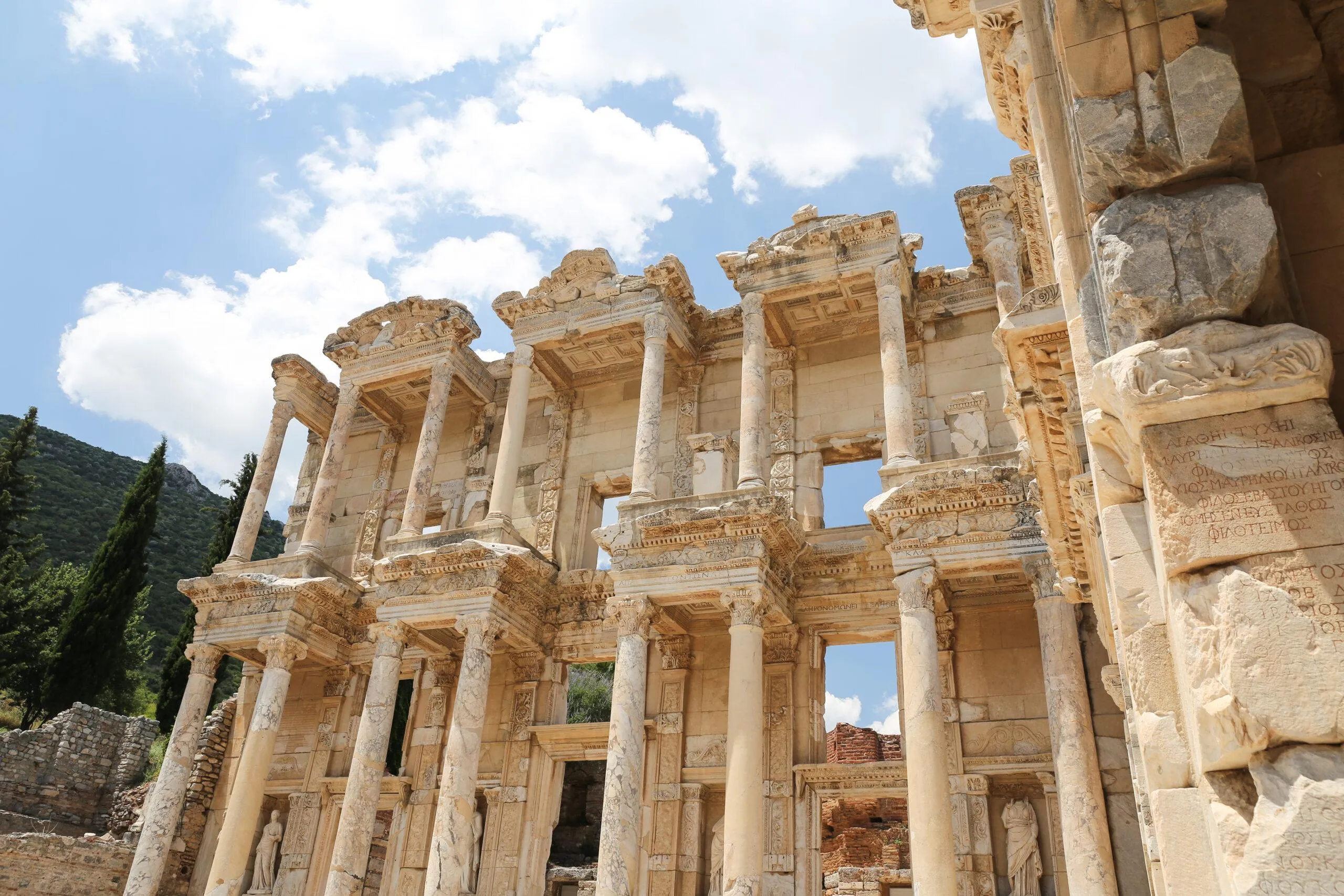
- Library of Celsus: One of the most famous landmarks in Ephesus, the Library of Celsus, is easily accessible by foot and located near the lower section of Curetes Street.
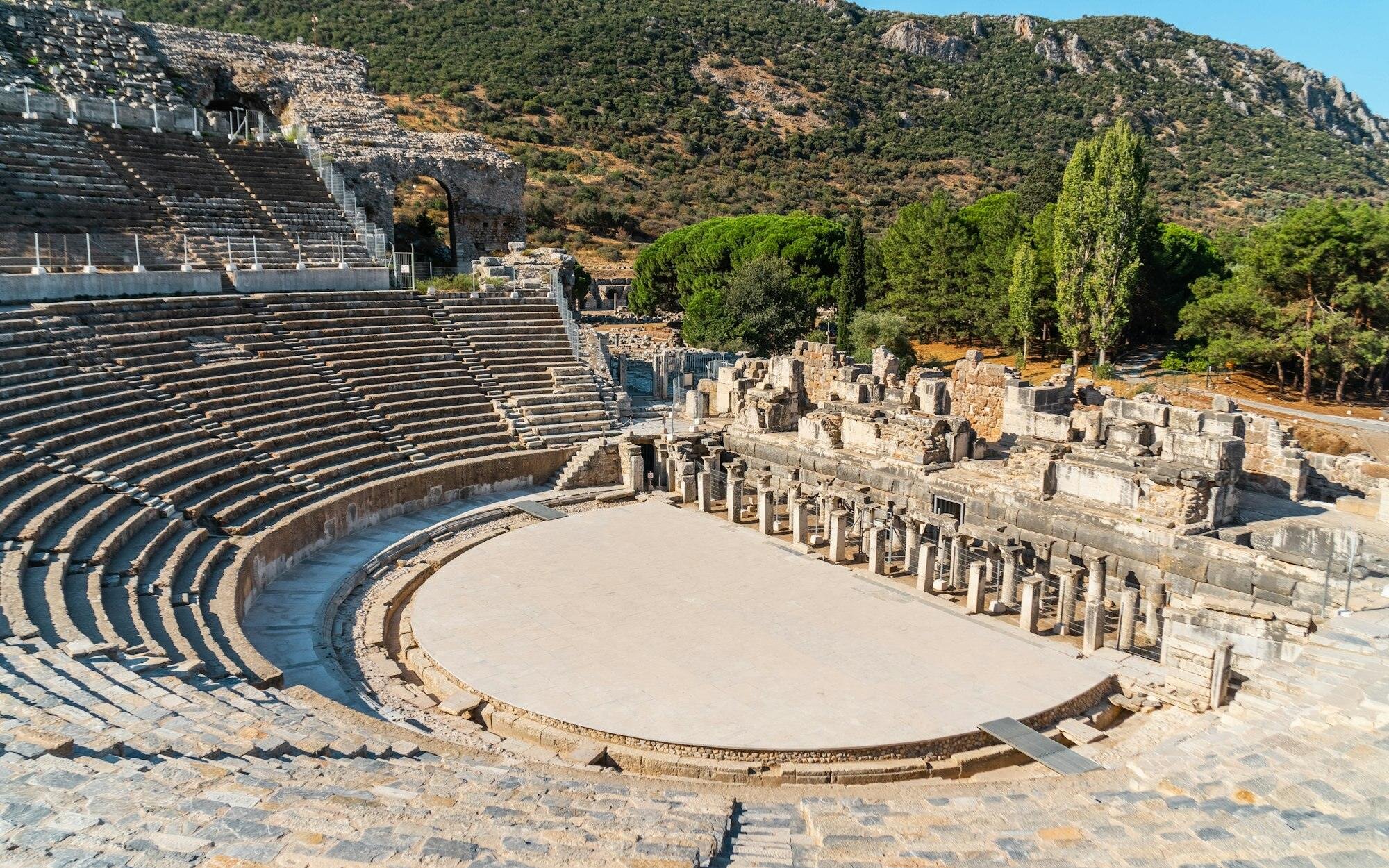
- Great Theatre: The walk concludes at the Great Theatre, one of the largest and best-preserved theatres of the ancient world. Its vast seating area and panoramic views make it a rewarding final stop.
Tips for Walking Ephesus
To ensure a comfortable and enjoyable visit, consider the following tips:
1. Wear Comfortable Shoes
Ephesus is mostly paved with uneven stone and marble surfaces, so comfortable, sturdy shoes are essential. Avoid sandals with thin soles, as the terrain can be rough in some areas.
2. Bring Sun Protection
There is limited shade within the archaeological site, especially during the summer months when temperatures can be high. Sunscreen, a hat, and sunglasses are recommended, as well as carrying a bottle of water to stay hydrated.
3. Plan for a Few Hours
To fully appreciate Ephesus, allow 2-3 hours to explore the site at a leisurely pace. This timeframe gives you enough time to stop at the major attractions, take photos, and absorb the history without feeling rushed.
4. Use the Upper Gate to Lower Gate Route
Starting at the Upper Gate and walking downhill to the Lower Gate is generally easier, especially for those concerned about fatigue. This route takes advantage of the natural slope, making the journey more comfortable and allowing you to enjoy the highlights without backtracking.
Accessibility Considerations
While Ephesus is walkable, the ancient pathways and steps can present challenges for those with mobility issues. Here are a few things to keep in mind:
- Uneven Terrain: Many areas are paved with ancient stones that can be slippery or uneven. Visitors should be prepared for some rough surfaces.
- Wheelchair Accessibility: Due to the historical nature of the site, accessibility for wheelchairs is limited. However, certain areas, such as the Great Theatre and Library of Celsus, can be accessed with assistance.
- Assistance Options: Some tour operators offer assistance for those with mobility concerns, and it’s worth asking about specific accessibility options when booking a tour.
The Experience of Walking Ephesus
Walking through Ephesus allows you to experience the city much as ancient visitors did. You’ll pass by remnants of storefronts, imagine the bustling Agora where people traded goods, and see temples dedicated to Roman emperors and gods. The proximity of the buildings and layout of the streets make it easy to envision Ephesus in its heyday as a lively, prosperous city. As you explore on foot, you can take your time to appreciate the details, such as the carvings on the columns of the Temple of Hadrian, the mosaics in the Terrace Houses, and the grandeur of the Library of Celsus. Walking Ephesus gives you a sense of connection to the past, providing an immersive experience that brings history to life.
Conclusion
Ephesus is a walkable archaeological site that offers a fascinating journey through ancient history. With comfortable shoes, sun protection, and a few hours to explore, visitors can walk the same streets that ancient Ephesians once traversed, marvel at the impressive ruins, and connect with the city’s rich heritage. Whether you’re captivated by the architecture, intrigued by the history, or simply seeking a memorable travel experience, walking Ephesus promises a rewarding adventure that transports you back in time.
Introduction
Discover the fascinating world of Is Ephesus Walkable? in Ancient Ephesus in ancient Ephesus. This comprehensive guide explores the historical significance, archaeological findings, and cultural impact of this remarkable aspect of Ephesian heritage.
Historical Background
The history of Is Ephesus Walkable? in Ancient Ephesus dates back to the early days of Ephesus. Archaeological evidence suggests that this aspect of Ephesian life played a crucial role in shaping the city's development and cultural identity.
Archaeological Discoveries
Recent excavations have unveiled remarkable findings related to Is Ephesus Walkable? in Ancient Ephesus. These discoveries provide valuable insights into how this aspect of Ephesian life evolved over time.
Cultural Significance
Understanding Is Ephesus Walkable? in Ancient Ephesus is crucial for appreciating the broader cultural context of ancient Ephesus. Its influence extended beyond the city walls, impacting trade, religion, and daily life.
Visitor Information
Today, visitors to Ephesus can explore the remnants of Is Ephesus Walkable? in Ancient Ephesus firsthand. This section provides practical information for making the most of your visit.
Preservation and Future
Ongoing conservation efforts ensure that Is Ephesus Walkable? in Ancient Ephesus remains preserved for future generations. Learn about the challenges and successes in maintaining this important historical site.
Frequently Asked Questions
What is the historical significance of Is Ephesus Walkable? in Ancient Ephesus?
The Is Ephesus Walkable? in Ancient Ephesus holds great historical importance in ancient Ephesus, providing valuable insights into the city's cultural and social development.
What can visitors see related to Is Ephesus Walkable? in Ancient Ephesus today?
Visitors to Ephesus can explore well-preserved remains and artifacts related to Is Ephesus Walkable? in Ancient Ephesus, offering a glimpse into the ancient world.
When is the best time to visit Is Ephesus Walkable? in Ancient Ephesus?
The best time to visit is during the spring (April-May) or autumn (September-October) when the weather is mild and crowds are smaller.
Frequently Asked Questions
What is the historical significance of Is Ephesus Walkable? in Ancient Ephesus?
The Is Ephesus Walkable? in Ancient Ephesus holds great historical importance in ancient Ephesus, providing valuable insights into the city's cultural and social development.
What can visitors see related to Is Ephesus Walkable? in Ancient Ephesus today?
Visitors to Ephesus can explore well-preserved remains and artifacts related to Is Ephesus Walkable? in Ancient Ephesus, offering a glimpse into the ancient world.
When is the best time to visit Is Ephesus Walkable? in Ancient Ephesus?
The best time to visit is during the spring (April-May) or autumn (September-October) when the weather is mild and crowds are smaller.
Frequently Asked Questions
What is the historical significance of Is Ephesus Walkable? in Ancient Ephesus?
The Is Ephesus Walkable? in Ancient Ephesus holds great historical importance in ancient Ephesus, providing valuable insights into the city's cultural and social development.
What can visitors see related to Is Ephesus Walkable? in Ancient Ephesus today?
Visitors to Ephesus can explore well-preserved remains and artifacts related to Is Ephesus Walkable? in Ancient Ephesus, offering a glimpse into the ancient world.
When is the best time to visit Is Ephesus Walkable? in Ancient Ephesus?
The best time to visit is during the spring (April-May) or autumn (September-October) when the weather is mild and crowds are smaller.