
Discover how archaeology has revealed the hidden secrets of Ephesus, one of the most significant ancient cities in the world. Explore its history, major findings, and ongoing excavations. The ancient city of Ephesus, once a thriving hub of commerce, culture, and religion, lay hidden for centuries before archaeology brought it back to life. Located in modern-day Turkey, Ephesus was home to architectural marvels, religious landmarks, and one of the largest libraries of the ancient world. Through archaeology, we can now walk its streets, marvel at its temples, and imagine the lives of those who lived here thousands of years ago. This article explores Ephesus through the lens of archaeology, revealing the city’s secrets and examining how modern techniques continue to uncover its rich history.
The Rediscovery of Ephesus
The journey to uncover Ephesus began in the 19th century, when British and Austrian archaeologists embarked on a mission to locate the famed Temple of Artemis, one of the Seven Wonders of the Ancient World. In 1863, John Turtle Wood, a British architect, and engineer, initiated excavations in search of the temple. After years of persistence, he finally uncovered remnants of the temple in 1869, marking the first major discovery in Ephesus and sparking global interest in the site. The Austrian Archaeological Institute took over in 1895, systematically excavating and documenting the ruins of Ephesus. Led by archaeologists like Otto Benndorf, this team of experts focused on uncovering major public structures, temples, and residential areas. Their meticulous work over the past century has transformed Ephesus into one of the best-preserved ancient cities, attracting historians, archaeologists, and tourists alike.
Archaeological Techniques Used in Ephesus
Archaeology has evolved significantly since the early days of excavation at Ephesus. Modern technology has provided new tools that allow for more precise and less invasive exploration. Some of the key archaeological techniques used in Ephesus include:
- Ground-Penetrating Radar (GPR): This technology enables archaeologists to detect buried structures without disturbing the soil. GPR has been instrumental in locating buried walls, floors, and other features, helping researchers map the city’s layout before excavation.
- 3D Laser Scanning: 3D scanning technology allows for the creation of accurate, detailed models of structures like the Library of Celsus and the Great Theatre. These models provide valuable data for conservation efforts and enable virtual exploration of the ruins.
- Digital Mapping: With the use of satellite imagery and GIS (Geographic Information Systems), archaeologists have been able to map Ephesus in high detail. This has revealed the extent of the city and provided insights into its urban planning and infrastructure.
- Conservation Techniques: The preservation of artifacts and structures is crucial in archaeology. In Ephesus, conservators use advanced methods to protect mosaics, frescoes, and statues from environmental damage, ensuring that the city’s treasures endure for future generations.
Major Discoveries in Ephesus
1. The Library of Celsus
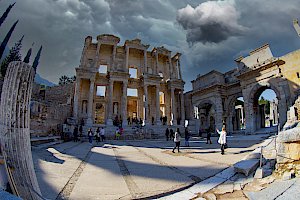
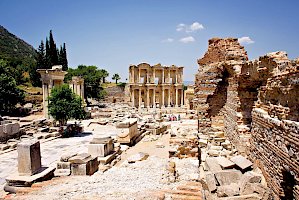
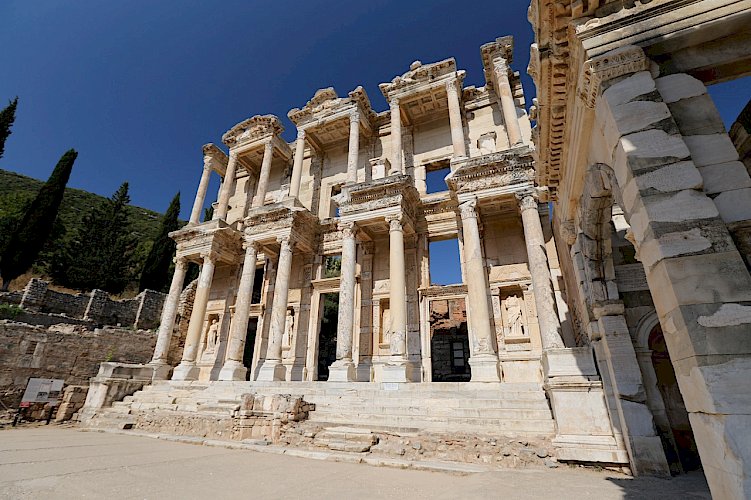
The Library of Celsus, built in the 2nd century CE, is one of the most iconic discoveries at Ephesus. Dedicated to the Roman senator Tiberius Julius Celsus Polemaeanus, this grand library once held over 12,000 scrolls. Its ornate façade, with columns and statues, has been partially reconstructed, showcasing the architectural sophistication of the Roman period. The library remains a symbol of Ephesus’s intellectual and cultural life.
2. The Great Theatre
Excavations of the Great Theatre, one of the largest theatres in the ancient world, revealed a structure capable of seating 25,000 people. The theatre was used for performances, political meetings, and gladiatorial contests. The Apostle Paul is believed to have preached here, making it a significant site for both cultural and religious gatherings. Archaeologists have restored much of the seating area and stage, offering visitors a glimpse into ancient entertainment.
3. The Temple of Artemis
The Temple of Artemis, although largely destroyed, remains one of the most important archaeological finds in Ephesus. Built in honor of the goddess Artemis, it attracted pilgrims from across the Mediterranean. Archaeologists uncovered fragments of columns and statues, providing insights into its size and grandeur. The temple is a reminder of Ephesus’s religious importance in the ancient world.
4. The Terrace Houses
The Terrace Houses, also known as the “houses of the rich,” offer a look into the luxurious lifestyles of Ephesus’s elite. These multi-story residences feature mosaics, frescoes, and intricate heating systems. Archaeologists have discovered household items, sculptures, and wall paintings within these homes, which continue to be studied for insights into Roman domestic life. The Terrace Houses provide a unique perspective on daily life in Ephesus, showcasing the city’s social stratification.
5. The Agora
Ephesus had two major agoras: the Commercial Agora and the State Agora. These marketplaces were bustling centers of trade, where merchants sold goods from across the Roman Empire. Archaeologists have uncovered remnants of shops, warehouses, and administrative buildings, highlighting Ephesus’s role as a major economic hub. The agora underscores the city’s importance in the trade networks that connected the Mediterranean to Asia.
Ongoing Excavations and New Findings
Archaeological work at Ephesus is ongoing, with several projects focused on exploring unexplored sections of the city. Recent discoveries include:
- The Church of Mary: This early Christian church, believed to be the site of the Third Ecumenical Council in 431 CE, has revealed artifacts and architectural features that shed light on the spread of Christianity in Ephesus.
- Residential Areas: Excavations of additional homes and neighborhoods continue to reveal the city’s social structure and lifestyle. Artifacts from these areas, such as pottery, tools, and jewelry, offer a glimpse into the daily lives of ordinary Ephesians.
- The Prytaneion: This civic building, where the eternal flame of Hestia burned, has been a focus of recent excavation. The Prytaneion was the administrative heart of Ephesus, used for ceremonies and public meetings. Findings here contribute to our understanding of the city’s governance.
The Cultural Significance of Ephesus Through Archaeology
The archaeological discoveries in Ephesus provide a comprehensive view of the city’s historical and cultural importance. Through its architecture, public spaces, and religious sites, Ephesus reveals a unique blend of Greek, Roman, and early Christian influences. The city’s temples, theatres, and libraries stand as testaments to its role as a center of learning, entertainment, and worship. Archaeology has also illuminated Ephesus’s contributions to the development of early Christianity. The city is mentioned in the New Testament, and the Apostle Paul spent time here, establishing a Christian community. The House of the Virgin Mary, located nearby, is believed by some to be the final home of Mary, the mother of Jesus. This site, which attracts pilgrims from around the world, adds a layer of spiritual significance to the city’s archaeological record.
Preserving Ephesus for Future Generations
As one of Turkey’s most visited sites, Ephesus requires ongoing conservation efforts. The Turkish government, in partnership with international organizations, has invested in protecting the site from environmental damage and ensuring that future generations can experience its history. Guided tours, available through services like ephesustours.biz, provide visitors with insights into the archaeological work and cultural heritage of Ephesus. The ruins of Ephesus remind us of the city’s enduring legacy, from its role in the Roman Empire to its place in early Christian history. As archaeologists continue to uncover new artifacts and structures, Ephesus stands as a testament to human ingenuity, resilience, and the pursuit of knowledge.
Conclusion
Ephesus, through the lens of archaeology, offers a unique and intimate look at the ancient world. Each discovery, from the grand Library of Celsus to the intricately decorated Terrace Houses, adds depth to our understanding of the city’s history. Ephesus is more than just ruins; it is a living archive of cultural exchange, architectural achievement, and spiritual significance. With each layer that archaeologists uncover, the story of Ephesus becomes richer, reminding us of the power of history to connect us with the past.