

Exploring Ephesus’ Great Monuments: The Library of Celsus and Beyond
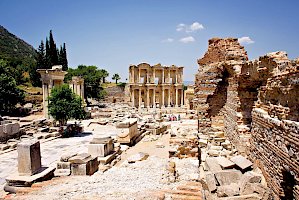
The Library of Celsus stands as one of the most iconic landmarks in Ephesus, showcasing the city's cultural and architectural brilliance. Together with other grand monuments, such as the Great Theatre and the Temple of Artemis, these structures reveal the vibrant life of one of the ancient world's most significant cities. Each monument played a crucial role in shaping Ephesus' development, reflecting its wealth, innovation, and cultural identity. This article delves into the history, architecture, and significance of the Library of Celsus and other great monuments of Ephesus.
Historical Background
Ephesus: A City of Grandeur
Founded in the 10th century BCE by Ionian settlers, Ephesus evolved into a bustling metropolis and a cultural hub of the ancient world. By the Roman period, it had become one of the empire's most important cities, known for its wealth, trade, and monumental architecture. These structures were not only functional but also symbolic of Ephesus' power and prestige.
The Role of Public Monuments
Public monuments in Ephesus were more than just architectural marvels; they served as symbols of civic pride, religious devotion, and cultural achievement. The Library of Celsus, for instance, represented the city’s intellectual aspirations, while the Great Theatre reflected its social and artistic vibrancy.
The Library of Celsus
History and Purpose
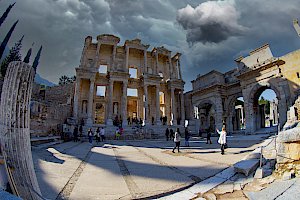
The Library of Celsus was built between 114 and 117 CE by Gaius Julius Aquila to honor his father, Tiberius Julius Celsus Polemaeanus, a Roman senator and governor of Asia. It served as both a mausoleum for Celsus, whose sarcophagus was housed in a crypt beneath the library, and a repository for knowledge, holding an estimated 12,000 scrolls.
Architectural Features
The Library of Celsus is renowned for its striking façade, a masterpiece of Roman urban design. Key features include:
-
Two-Story Façade: Adorned with Corinthian columns and intricately carved reliefs, the façade is an outstanding example of elegance and grandeur.
-
Statues of Virtues: Four statues representing Wisdom (Sophia), Knowledge (Episteme), Intelligence (Ennoia), and Valor (Arete) symbolize the qualities attributed to Celsus.
-
Central Niche: The main entrance is framed by a large niche, drawing visitors' eyes upward and emphasizing the library's significance.
Intellectual and Cultural Significance
As one of the largest libraries of its time, the Library of Celsus was a center for learning and intellectual exchange. It attracted philosophers, scholars, and students, enhancing Ephesus' reputation as a cultural hub.
The Great Theatre of Ephesus
A Monument to Entertainment
The Great Theatre of Ephesus, built into the slopes of Mount Pion, was the city's largest public venue. With a seating capacity of 25,000, it hosted a variety of events, including theatrical performances, public assemblies, and gladiatorial contests.
Architectural Brilliance
The theatre's design reflects the Romans' advanced engineering skills:
-
Semi-Circular Seating: The tiered seating ensured excellent acoustics and visibility for all spectators.
-
Stage Building: The multi-story stage building (scaenae frons) was adorned with columns and statues, creating a dramatic backdrop for performances.
Cultural Impact
The theatre was a focal point for Ephesus' social life, where citizens gathered to enjoy entertainment and engage in civic discourse. It also played a role in religious events, including the famous riot against St. Paul described in the Bible.
The Temple of Artemis
A Wonder of the Ancient World
The Temple of Artemis, also known as the Artemision, was one of the Seven Wonders of the Ancient World. Dedicated to Artemis, the goddess of the hunt and fertility, it symbolized Ephesus' religious devotion and architectural ambition.
Scale and Design
The temple was an architectural masterpiece, featuring:
-
127 Ionic Columns: Each column stood 18 meters tall, creating a sense of grandeur.
-
Marble Construction: The use of white marble enhanced the temple's ethereal beauty.
-
Intricate Sculptures: Reliefs and statues depicted scenes from mythology and celebrated the goddess Artemis.
Religious and Cultural Significance
As a major pilgrimage site, the Temple of Artemis attracted visitors from across the ancient world. It was not only a place of worship but also a hub for commerce and cultural exchange, contributing to Ephesus' prosperity.
Other Notable Monuments
The Odeon
A smaller theater compared to the Great Theatre, the Odeon was used for musical performances, poetry readings, and council meetings. Its intimate setting and elegant design reflect Ephesus' appreciation for the arts.
The Bouleuterion
The Bouleuterion, or council house, was where the city’s governing body convened. This semicircular building was a testament to Ephesus' democratic traditions and political organization.
The Nymphaeum
The Nymphaeum of Trajan was a monumental fountain that supplied fresh water to the city. Its elaborate carvings and sculptures celebrated the emperor and showcased Ephesus' wealth.
Visiting Ephesus' Monuments Today
Highlights for Visitors
-
Library of Celsus: Stand before its magnificent façade and imagine the knowledge once housed within its walls.
-
Great Theatre: Climb the marble tiers for panoramic views and experience the awe of this ancient venue.
-
Temple of Artemis: Explore the foundations and a reconstructed column of this legendary wonder.
-
Odeon and Bouleuterion: Discover these smaller yet significant public spaces that reflect Ephesus' civic and cultural life.
Practical Tips
-
Best Time to Visit: Spring (April-May) and autumn (September-October) offer mild weather and fewer crowds.
-
Guided Tours: Enhance your experience with a knowledgeable guide who can provide historical insights.
-
Nearby Attractions: Combine your visit with other landmarks, such as the Terrace Houses and the Prytaneion.
Lessons from the Past
The great monuments of Ephesus reflect the ingenuity, ambition, and communal spirit of ancient civilizations. They offer valuable lessons about the importance of shared spaces in fostering culture, education, and community life. These structures continue to inspire awe and curiosity, reminding us of the enduring legacy of human creativity.
Conclusion
Exploring the Library of Celsus and other great monuments of Ephesus provides a profound connection to the past. These landmarks not only reveal the city's grandeur but also its values and aspirations. Visiting Ephesus today allows us to witness the architectural and cultural achievements of one of antiquity's greatest cities. Plan your journey to uncover the stories behind these iconic structures and immerse yourself in the history of Ephesus.