

Exploring the Temple of Domitian: Ephesus’ Monument to Imperial Power
The Temple of Domitian in Ephesus stands as a testament to the city's deep connections with the Roman Empire and its emperors. Dedicated to Emperor Domitian, this impressive structure symbolized the power and influence of the imperial cult in one of the most significant cities of the ancient world. Its history reflects the intertwined political and religious dynamics that shaped Ephesus and the broader Roman Empire. In this article, we explore the history, architectural marvels, and cultural significance of the Temple of Domitian, uncovering its role in the life of ancient Ephesus.
Historical Background
Origins of the Temple
The construction of the Temple of Domitian dates back to the 1st century CE, during the reign of Emperor Domitian (81–96 CE). Ephesus, as the capital of the Roman province of Asia, held a prominent position in the empire, and the temple was a way to honor the emperor while solidifying his divine status among the city's inhabitants. The imperial cult, which deified emperors and their families, was central to the political and religious life of Roman cities, and Ephesus was no exception.
Role in Ephesian Society
The temple served as both a religious and political symbol, reflecting the loyalty of Ephesus to the Roman Empire. It was a venue for ceremonies, festivals, and public gatherings that reinforced the emperor's authority and the city's integration into the Roman state. The dedication to Domitian also emphasized Ephesus' role as a leading city in the empire, showcasing its wealth and importance.
Architectural Features
Grand Design
The Temple of Domitian was one of the largest structures in Ephesus, built on a high platform overlooking the city. Its imposing presence was designed to inspire awe and reinforce the emperor's divine status. The temple was part of a larger complex that included a courtyard, altars, and statues, creating a sacred space for worship and public ceremonies.
Columns and Façade
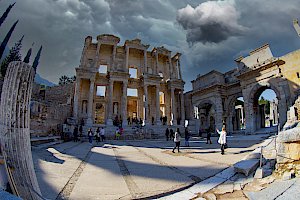
The temple featured a colonnaded façade with Corinthian columns, showcasing the architectural sophistication of the time. The columns were adorned with intricate carvings, and the temple's pediment displayed scenes that celebrated the emperor's achievements and divine lineage.
Statue of Domitian
A colossal statue of Emperor Domitian stood within the temple, further emphasizing his deified status. Although the statue itself has not survived, fragments of it have been discovered during excavations, offering insights into its grandeur and scale.
Cultural and Religious Significance
The Imperial Cult in Ephesus
The Temple of Domitian was central to the practice of the imperial cult in Ephesus. Worshiping the emperor as a god was a way to demonstrate loyalty to Rome and maintain political stability. The temple hosted rituals and festivals that celebrated the emperor's divine status, fostering a sense of unity among the city's inhabitants.
Integration of Politics and Religion
The temple exemplifies the fusion of political and religious life in the Roman Empire. By honoring the emperor as a deity, Ephesus reinforced its connection to Rome and ensured its prominence within the empire. This integration also highlights the role of religion as a tool for consolidating power and fostering allegiance.
Archaeological Discoveries
Excavation and Restoration
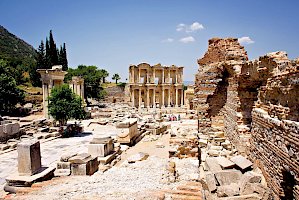
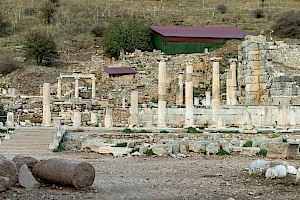
The remains of the Temple of Domitian were uncovered during archaeological excavations in the 20th century. Although much of the structure has been lost over time, the foundation, fragments of columns, and parts of the statue of Domitian have been preserved. These findings provide valuable insights into the temple's design and significance.
Artifacts and Inscriptions
Artifacts discovered at the site include inscriptions, reliefs, and decorative elements that offer a glimpse into the artistic and cultural achievements of Ephesus during the Roman period. These discoveries have enriched our understanding of the city's history and its role in the imperial cult.
Visiting the Temple of Domitian Today
What to See
-
Foundation and Platform: Explore the remains of the temple's foundation, which offer a sense of its original scale and grandeur.
-
Statue Fragments: View fragments of the colossal statue of Domitian, now displayed in the Ephesus Archaeological Museum.
-
Surrounding Complex: Discover the remains of the temple's courtyard and altars, which provide context for its religious and ceremonial functions.
Practical Information
-
Location: The Temple of Domitian is located within the Ephesus archaeological site, easily accessible from nearby towns like Selçuk.
-
Opening Hours: Open year-round, with extended hours during the summer season.
-
Admission: Access to the temple is included in the general ticket for Ephesus.
Tips for Visitors
-
Guided Tours: Enhance your visit with a guided tour to learn about the history and significance of the Temple of Domitian and its role in the imperial cult.
-
Nearby Attractions: Combine your visit with other landmarks, such as the Library of Celsus, the Great Theatre, and the Temple of Artemis.
Legacy of the Temple of Domitian
Reflection of Roman Power
The Temple of Domitian stands as a symbol of Roman power and the city's integration into the empire. It highlights the importance of Ephesus as a political and cultural center and its role in promoting the imperial cult.
Lessons from the Past
The temple also serves as a reminder of the ways in which religion and politics were intertwined in the ancient world. It reflects the strategies used by empires to maintain control and foster loyalty among their subjects.
Conclusion
The Temple of Domitian is a fascinating monument that offers a glimpse into the political and religious life of ancient Ephesus. Its grand design, cultural significance, and connection to the Roman Empire make it a must-visit site for history enthusiasts and travelers. Exploring the temple today provides an opportunity to connect with the legacy of Ephesus and appreciate its role as a hub of imperial power and devotion. Plan your visit to uncover the stories behind this remarkable structure and immerse yourself in the history of one of antiquity's greatest cities.