

Introduction
Introduce the Library of Celsus as one of the most iconic structures in Ephesus and a testament to Roman architectural achievement. Explain its role as a cultural and intellectual center in the ancient world, reflecting the value placed on knowledge and learning in Roman society.
The History and Purpose of the Library
Describe the origins of the Library of Celsus, built in honor of Tiberius Julius Celsus Polemaeanus, a Roman senator and governor. Explain that the library was constructed by Celsus' son, Gaius Julius Aquila, as both a memorial and a public library, showcasing the family’s wealth and commitment to the public good.
Architectural Design and Features
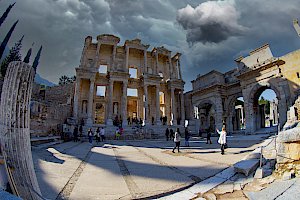
Detail the architectural design of the Library of Celsus, which includes a two-story facade with Corinthian columns, large archways, and statues representing virtues like wisdom and knowledge. Highlight how the facade is designed to create the illusion of greater height and depth.
- Decorative Elements: Describe the statues, carvings, and inscriptions that adorn the library, reflecting Roman craftsmanship and artistic values.
- Interior Layout: Explain the library’s interior design, with niches for scrolls and a central tomb chamber where Celsus himself was laid to rest, making it a rare combination of a library and a mausoleum.
The Library’s Role in Ephesus’ Cultural Life
Explore how the Library of Celsus functioned as more than just a repository of scrolls; it was a place where citizens gathered to study, engage in discourse, and celebrate the pursuit of knowledge. Explain how the library symbolized Ephesus' status as an intellectual center.
- Collections and Knowledge: Discuss the types of scrolls and works that might have been housed in the library, including philosophical, scientific, and literary texts that reflected Roman and Greek knowledge.
- Gathering Space: Explain how the library served as a public gathering place for scholars, writers, and citizens, reinforcing the city’s reputation as a center of learning.
Restoration and Preservation of the Library
Detail the efforts taken to restore the Library of Celsus, particularly the work conducted in the 20th century that preserved its facade. Describe the techniques used to rebuild and stabilize the structure, allowing visitors to appreciate its original beauty.
- Preservation Techniques: Mention specific preservation methods, such as the use of modern materials that match the ancient stonework, to ensure the library’s survival.
- Cultural Significance Today: Explain how the Library of Celsus continues to attract tourists, scholars, and history enthusiasts, serving as a symbol of the enduring legacy of Roman architecture.
Visiting the Library of Celsus Today
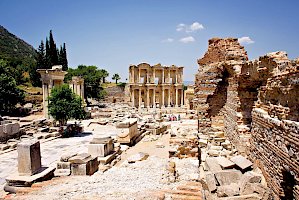
Provide information for visitors who wish to experience the Library of Celsus in person. Describe what remains of the structure, including the grand facade and some interior elements, and suggest nearby points of interest, such as the Great Theatre, that add to the historical experience.
Conclusion
Conclude by reflecting on the Library of Celsus as a lasting Roman treasure in Ephesus. Emphasize how the library embodies the values of learning, cultural exchange, and architectural mastery, making it one of the most celebrated landmarks of the ancient world.
External Link Suggestion:
Link to the Wikipedia page on the Library of Celsus for more in-depth background information.