

Explore the remarkable discoveries archaeologists have made at Ephesus, from ancient temples and theatres to residential houses and public baths. Discover the rich history revealed by the ruins of this ancient city. The ancient city of Ephesus, nestled in Turkey’s Aegean region near Selçuk, is one of the most well-preserved archaeological sites in the world. Once a bustling center of commerce, religion, and culture, Ephesus holds a treasure trove of ruins that shed light on its historical significance. Over the years, archaeologists have uncovered temples, theatres, public spaces, and homes, each revealing aspects of daily life, religious practices, and the architectural prowess of the people who once lived here. Here’s a look at what archaeologists have discovered among the ruins of Ephesus.
The Temple of Artemis: One of the Seven Wonders
The Temple of Artemis was one of the first major discoveries at Ephesus and remains one of the most significant. Known as one of the Seven Wonders of the Ancient World, this temple was built in honor of the Greek goddess Artemis, the deity of the hunt and fertility. The temple attracted pilgrims from across the ancient world, who came to worship and participate in grand festivals held in Artemis's honor. Today, only fragments of the temple remain, but archaeological findings, including columns and statues, offer insight into its once-immense scale and grandeur.
The Library of Celsus: A Center of Knowledge
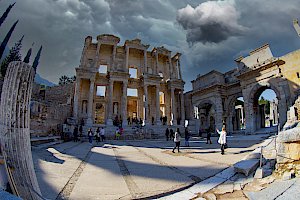
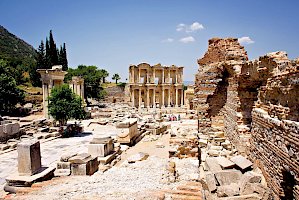
The Library of Celsus is one of Ephesus’s most iconic ruins and a prime example of Roman architecture. Built in the 2nd century CE by Gaius Julius Aquila in honor of his father, Tiberius Julius Celsus Polemaeanus, the library was once one of the largest in the ancient world, housing over 12,000 scrolls. Its elaborate façade, featuring columns and statues, has been meticulously reconstructed by archaeologists, allowing visitors to appreciate its beauty. The Library of Celsus stands as a testament to the cultural and intellectual life that flourished in Ephesus during Roman times.
The Great Theatre: A Place for Entertainment and Gatherings
Carved into the hillside of Mount Pion, the Great Theatre of Ephesus could seat up to 25,000 spectators. This theatre, one of the largest in the ancient world, was used for theatrical performances, gladiatorial contests, and large public gatherings. According to the Book of Acts in the Bible, the Apostle Paul preached in this very theatre, demonstrating its significance as a venue for both entertainment and religious discourse. Archaeologists have uncovered much of the theatre's structure, including its stage and seating areas, revealing the grandeur of Ephesus’s public spaces.
The Terrace Houses: Homes of the Elite
The Terrace Houses, also known as the “houses of the rich,” provide a fascinating glimpse into the daily lives of Ephesus’s wealthiest citizens. These multi-story homes, built on terraces overlooking the city, feature intricate mosaics, colorful frescoes, and a sophisticated heating system. Archaeologists have found household items, statues, and detailed artwork within these residences, indicating the luxurious lifestyles of their inhabitants. The ongoing excavations of the Terrace Houses continue to uncover artifacts that enhance our understanding of domestic life in ancient Ephesus.
The Agora: A Hub for Trade and Politics
Ephesus was a major trade center, and the agora, or marketplace, was at the heart of its economic life. The city had two main agoras: the Commercial Agora and the State Agora. The Commercial Agora, located near the harbor, was a bustling center of trade, where merchants bought and sold goods from across the Roman Empire. The State Agora, on the other hand, was a political and administrative hub. Archaeologists have uncovered remnants of shops, warehouses, and public buildings, painting a vivid picture of Ephesus as a vibrant and economically prosperous city.
The Temple of Hadrian: A Blend of Mythology and Roman Power
Built in honor of Emperor Hadrian, the Temple of Hadrian is another architectural gem uncovered by archaeologists. The temple features reliefs that depict scenes from mythology and symbols of Roman imperial power. This blend of cultural elements reflects the integration of local traditions with Roman influence. The temple’s remains, including columns and decorative carvings, provide insight into the religious practices and artistic achievements of Roman Ephesus.
Public Baths and Fountains: Social and Hygienic Spaces
The ruins of public baths and fountains throughout Ephesus highlight the importance of social life and public hygiene in Roman society. The Harbor Baths, Scholastica Baths, and Varius Baths were elaborate facilities where citizens gathered to relax, socialize, and conduct business. The Fountain of Trajan and other public fountains served both decorative and practical purposes, showcasing Roman engineering skills and the city’s infrastructure. Archaeologists have uncovered heating systems, pools, and intricate mosaics within these structures, illustrating the complexity of ancient Roman bath culture.
The Prytaneion: Civic Life and Eternal Flame
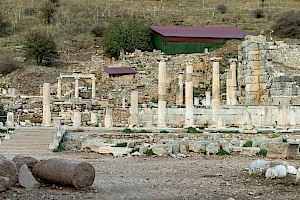
The Prytaneion was the city’s town hall and a place for civic ceremonies and official gatherings. Here, the eternal flame of Hestia, the goddess of the hearth, was kept burning to symbolize the heart of the city. Archaeologists have uncovered portions of its columns, statues, and the sacred altar, offering insight into the civic life and religious practices of Ephesus. This site underscores the importance of communal rituals and public service in the daily lives of ancient Ephesians.
Ongoing Discoveries at Ephesus
Archaeological work at Ephesus is far from complete, as ongoing excavations continue to uncover new sections of the city. Recent projects have focused on areas such as the Church of Mary, believed to be one of the earliest churches dedicated to the Virgin Mary, and additional residential areas that provide further insight into the city's social structure. Modern technology has also enhanced excavation efforts. Tools like ground-penetrating radar, 3D scanning, and digital mapping allow archaeologists to locate and analyze structures that are still buried, enabling a more comprehensive understanding of Ephesus’s layout and its evolution over time.
The Importance of Ephesus in Ancient and Modern Times
Ephesus’s ruins reflect the city’s significant role in ancient history, as a center of commerce, religion, and culture. The city was a place where Greek, Roman, and early Christian influences converged, creating a unique blend of traditions and customs. Ephesus’s legacy endures today, as millions of visitors from around the world explore its ruins, marveling at the city’s ancient achievements and the stories that each stone, column, and mosaic tells. Recognized as a UNESCO World Heritage Site, Ephesus is a destination that continues to captivate the imaginations of archaeologists, historians, and travelers alike. Guided tours are available through ephesustours.biz, allowing visitors to walk through history and experience the grandeur of this once-thriving metropolis.
Visiting the Ephesus Ruins Today
If you plan to visit Ephesus, here are a few tips to make the most of your experience:
- Arrive Early: Ephesus can get crowded, so visiting early in the morning allows you to enjoy the ruins with fewer people.
- Wear Comfortable Shoes: The site covers a large area with uneven marble streets, so good walking shoes are a must.
- Bring Sun Protection: Ephesus is open and exposed, with limited shade. Sunscreen, a hat, and water are essential, especially in summer.
- Take a Guided Tour: A guide can offer valuable insights into the history and significance of each structure, enriching your understanding of Ephesus.
Conclusion
The ruins of Ephesus are a window into a world that thrived thousands of years ago, yet still captivates us today. From the grandeur of the Temple of Artemis to the intricacies of the Terrace Houses, each discovery made by archaeologists adds depth to our understanding of this ancient city. Ephesus remains a testament to human creativity, resilience, and the enduring power of cultural heritage. As excavations continue, we can only anticipate what new treasures the ruins of Ephesus will reveal in the future.