

A Stroll Down Kuretes Street: The Heart of Ancient Ephesus
Kuretes Street, one of the main thoroughfares of ancient Ephesus, was more than just a roadit was the cultural and social heart of the city. As you walk along its polished marble path, you can imagine the lively atmosphere, with merchants, travelers, and citizens going about their daily lives. Lined with statues, fountains, temples, and grand public buildings, Kuretes Street offers a glimpse into the splendor of Ephesus at its height. This guide takes you step-by-step through the highlights of this iconic street, uncovering the stories behind its ancient structures.
1. The Hercules Gate
At the entrance to Kuretes Street, the Hercules Gate greets visitors with a pair of towering reliefs depicting Hercules, symbolizing strength and heroism. Originally built as a two-story structure, the gate narrowed the street, helping to control traffic and emphasizing the importance of the avenue ahead. Passing through this gate, visitors are transported into the heart of the ancient city. What to See:
- Reliefs of Hercules: Detailed carvings that showcase the mythological hero’s journey.
- Monumental Entrance: An impressive gateway that offers a fitting introduction to Kuretes Street.
2. The Temple of Hadrian
Continuing down Kuretes Street, you’ll come across the Temple of Hadrian, one of the best-preserved buildings in Ephesus. Built in the 2nd century AD, the temple was dedicated to Emperor Hadrian and features a beautifully preserved arch and frieze depicting scenes from Ephesian mythology. The temple’s elaborate carvings and graceful columns make it a highlight of the street. Highlights:
- Intricate Reliefs: Depictions of Medusa and mythological scenes that tell the city’s founding legends.
- Corinthian Columns: Ornate columns that reflect the artistry of ancient craftsmen.
3. The Fountain of Trajan
Just a short walk from the Temple of Hadrian, the Fountain of Trajan is an ornately decorated fountain that once featured a statue of Emperor Trajan. The fountain was built to celebrate the emperor’s achievements, and its grand design reflects the importance of public fountains in the city. Fountains like this provided fresh water and served as gathering spots where citizens could meet, converse, and refresh themselves. What to See:
- Statue Base: The remaining base where a grand statue of Trajan once stood.
- Decorative Pool: Remnants of the pool, which would have been filled with flowing water.
4. The Scholastica Baths
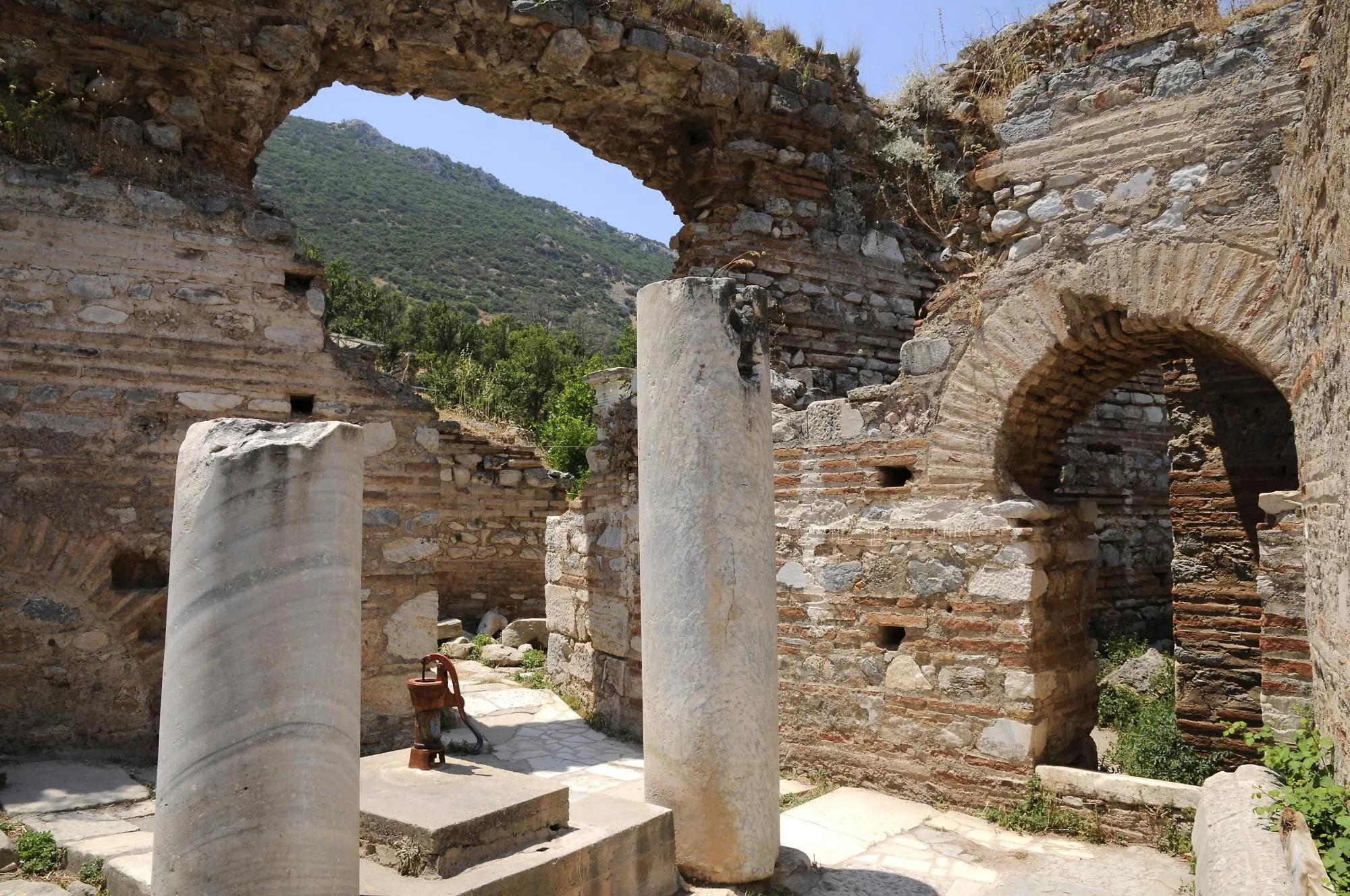
Kuretes Street was lined with public buildings, including the impressive Scholastica Baths. These Roman baths featured a series of heated rooms, cold pools, and social spaces where Ephesians gathered to relax, converse, and conduct business. Named after a wealthy Ephesian woman who funded its renovation, the baths demonstrate the city’s sophisticated infrastructure and the importance of bathing in Roman culture. What to Explore:
- Heated Rooms: Structures for hot, warm, and cold baths that reflect the Roman bathing tradition.
- Mosaic Floors: Colorful mosaic fragments that have survived centuries.
5. The Terrace Houses
Alongside Kuretes Street are the Terrace Houses, luxurious residences of Ephesus’ elite. These multi-level homes, complete with courtyards, frescoes, and mosaics, offer a glimpse into the private lives of wealthy Ephesians. The Terrace Houses are one of the most visited attractions on Kuretes Street, allowing visitors to see intricate wall paintings and detailed floor mosaics up close. What to See:
- Intricate Mosaics: Colorful designs featuring mythological themes and geometric patterns.
- Private Courtyards: Elegant spaces that once hosted social gatherings and meals.
6. Monuments and Statues
Kuretes Street is lined with statues and monuments that honor emperors, gods, and prominent citizens. These sculptures, often set upon grand pedestals, reflect the city’s devotion to its leaders and deities. The statues were not only decorative but also served as reminders of the people who shaped Ephesus’ history. Highlights:
- Statues of Emperors: Sculptures commemorating emperors like Hadrian and Trajan.
- Gods and Goddesses: Depictions of deities, including Artemis, the city’s patron goddess.
7. The Gate of Mazeus and Mithridates
Near the end of Kuretes Street, you’ll find the Gate of Mazeus and Mithridates. Built by two freed slaves in honor of Emperor Augustus, this monumental gate features detailed reliefs and inscriptions. The gate marked the transition from the bustling streets to the Commercial Agora, the city’s main marketplace. Passing through this gate, visitors are reminded of the loyalty and reverence that the people of Ephesus held for their leaders. What to Explore:
- Inscriptions: Latin and Greek inscriptions celebrating Augustus and his achievements.
- Architectural Beauty: Elegant archways that lead into the heart of the ancient city.
Conclusion A stroll down Kuretes Street offers a journey through the daily life, religious practices, and civic pride of ancient Ephesus. Each structure along the street tells a story of a city that once thrived as a cultural and commercial hub. Walking along its marble pavement, visitors can feel the echoes of the past and connect with the legacy of a city that was truly ahead of its time. Kuretes Street remains the heart of ancient Ephesus, a place where the past comes alive with every step.
For more information about Ephesus and its ancient streets, visit the Wikipedia page on Ephesus.
Introduction
Discover the fascinating world of A Stroll Down Kuretes Street: The Heart of Ancient Ephesus in ancient Ephesus. This comprehensive guide explores the historical significance, archaeological findings, and cultural impact of this remarkable aspect of Ephesian heritage.
Historical Background
The history of A Stroll Down Kuretes Street: The Heart of Ancient Ephesus dates back to the early days of Ephesus. Archaeological evidence suggests that this aspect of Ephesian life played a crucial role in shaping the city's development and cultural identity.
Archaeological Discoveries
Recent excavations have unveiled remarkable findings related to A Stroll Down Kuretes Street: The Heart of Ancient Ephesus. These discoveries provide valuable insights into how this aspect of Ephesian life evolved over time.
Cultural Significance
Understanding A Stroll Down Kuretes Street: The Heart of Ancient Ephesus is crucial for appreciating the broader cultural context of ancient Ephesus. Its influence extended beyond the city walls, impacting trade, religion, and daily life.
Visitor Information
Today, visitors to Ephesus can explore the remnants of A Stroll Down Kuretes Street: The Heart of Ancient Ephesus firsthand. This section provides practical information for making the most of your visit.
Preservation and Future
Ongoing conservation efforts ensure that A Stroll Down Kuretes Street: The Heart of Ancient Ephesus remains preserved for future generations. Learn about the challenges and successes in maintaining this important historical site.
Frequently Asked Questions
What is the historical significance of A Stroll Down Kuretes Street: The Heart of Ancient Ephesus?
The A Stroll Down Kuretes Street: The Heart of Ancient Ephesus holds great historical importance in ancient Ephesus, providing valuable insights into the city's cultural and social development.
What can visitors see related to A Stroll Down Kuretes Street: The Heart of Ancient Ephesus today?
Visitors to Ephesus can explore well-preserved remains and artifacts related to A Stroll Down Kuretes Street: The Heart of Ancient Ephesus, offering a glimpse into the ancient world.
When is the best time to visit A Stroll Down Kuretes Street: The Heart of Ancient Ephesus?
The best time to visit is during the spring (April-May) or autumn (September-October) when the weather is mild and crowds are smaller.
Frequently Asked Questions
What is the historical significance of A Stroll Down Kuretes Street: The Heart of Ancient Ephesus?
The A Stroll Down Kuretes Street: The Heart of Ancient Ephesus holds great historical importance in ancient Ephesus, providing valuable insights into the city's cultural and social development.
What can visitors see related to A Stroll Down Kuretes Street: The Heart of Ancient Ephesus today?
Visitors to Ephesus can explore well-preserved remains and artifacts related to A Stroll Down Kuretes Street: The Heart of Ancient Ephesus, offering a glimpse into the ancient world.
When is the best time to visit A Stroll Down Kuretes Street: The Heart of Ancient Ephesus?
The best time to visit is during the spring (April-May) or autumn (September-October) when the weather is mild and crowds are smaller.
Frequently Asked Questions
What is the historical significance of A Stroll Down Kuretes Street: The Heart of Ancient Ephesus?
The A Stroll Down Kuretes Street: The Heart of Ancient Ephesus holds great historical importance in ancient Ephesus, providing valuable insights into the city's cultural and social development.
What can visitors see related to A Stroll Down Kuretes Street: The Heart of Ancient Ephesus today?
Visitors to Ephesus can explore well-preserved remains and artifacts related to A Stroll Down Kuretes Street: The Heart of Ancient Ephesus, offering a glimpse into the ancient world.
When is the best time to visit A Stroll Down Kuretes Street: The Heart of Ancient Ephesus?
The best time to visit is during the spring (April-May) or autumn (September-October) when the weather is mild and crowds are smaller.