
The House of the Virgin Mary: Legends and Pilgrimages in ...
Introduction
Introduce the House of the Virgin Mary as a significant site for Christian pilgrims, located near Ephesus in Turkey. Explain that according to legend, Mary, the mother of Jesus, spent her final years in Ephesus, and her home has become a place of reverence and devotion, attracting visitors from around the world.
The Legends of the Virgin Mary in Ephesus
Describe the legends surrounding the Virgin Mary’s presence in Ephesus. Explain that these stories have roots in early Christian tradition and have been passed down through generations, shaping the belief that Mary spent her last years in this city.
- Mary’s Journey to Ephesus: Summarize the legend that Mary was brought to Ephesus by the Apostle John, who cared for her after Jesus’ crucifixion, fulfilling Jesus’ request for John to look after her.
- The Vision of Sister Anne Catherine Emmerich: Discuss how the 19th-century visions of Sister Anne Catherine Emmerich, a German nun, inspired renewed interest in Mary’s presence in Ephesus, leading to the discovery of the house believed to be hers.
Discovery of the House and Its Significance
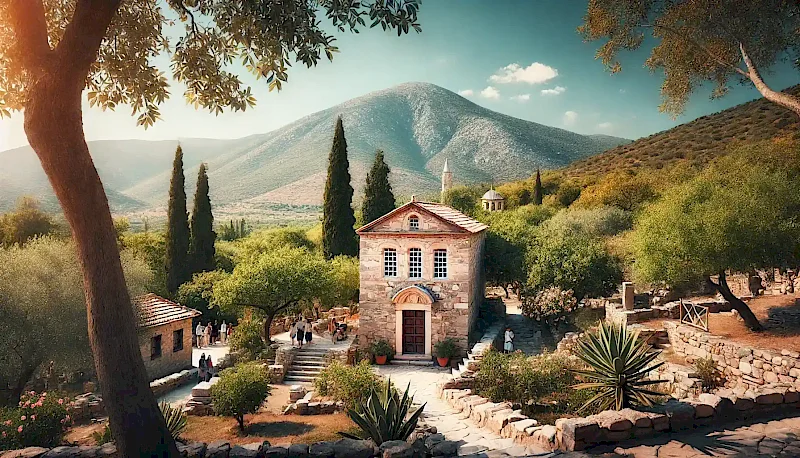
Outline the discovery of the House of the Virgin Mary near Ephesus in the late 19th century, which was prompted by Emmerich’s detailed descriptions. Explain that this small stone house was identified as a possible residence of Mary, and subsequent archaeological findings lent credibility to the site.
- Discovery by French Priests: Describe how French priests used Emmerich’s visions to locate the house, which was then declared a holy site by the Catholic Church.
- Recognition by the Catholic Church: Explain that the house was officially recognized as a place of pilgrimage by Pope Leo XIII in 1896, and several subsequent popes have visited, solidifying its importance as a Christian holy site.
Pilgrimages to the House of the Virgin Mary
Explore the popularity of the House of the Virgin Mary as a pilgrimage destination. Explain that it attracts Christians and Muslims alike, who come to pray, light candles, and seek blessings, reflecting Mary’s revered status in both religions.
- Christian Pilgrimages: Discuss the significance of the site for Christian pilgrims, who visit to honor Mary, pray for healing, and experience a connection to early Christian history.
- Muslim Devotion: Mention that Mary is also revered in Islam, and Muslim visitors often come to the site, showing the interfaith respect and shared reverence for her.
Legends and Rituals Surrounding the Site
Detail some of the legends and rituals associated with the House of the Virgin Mary, which add to its mystique and appeal for pilgrims. Explain that visitors participate in various traditions to show devotion and seek blessings.
- Wishing Wall: Describe the “Wishing Wall” near the house, where visitors leave prayers and requests written on paper or cloth, believing that Mary will intercede on their behalf.
- Healing Water: Mention the spring near the site, which is believed to have healing properties, and how pilgrims often collect the water in bottles to take home.
The Spiritual and Cultural Legacy of the House of the Virgin Mary
Reflect on the spiritual and cultural significance of the House of the Virgin Mary. Explain that it stands as a testament to Mary’s enduring influence in both Christian and Islamic traditions, and serves as a place of unity, healing, and inspiration for people from around the world.
- Mary’s Role in Christian Theology: Discuss how the site enhances the role of Mary in Christian theology, especially in the Catholic and Orthodox traditions, where she is venerated as the Mother of God.
- Interfaith Connections: Highlight the site’s role in fostering interfaith respect, as it draws people from various backgrounds who share a common reverence for Mary.
Conclusion
Conclude by emphasizing the importance of the House of the Virgin Mary as a place of pilgrimage and spiritual reflection. Encourage readers to consider visiting this sacred site to experience its history, beauty, and the sense of peace it offers to all who come in search of Mary’s blessings.
External Link Suggestion:
Link to the Wikipedia page on the House of the Virgin Mary for further reading on its history and significance.
Historical Background
The history of The House of the Virgin Mary: Legends and Pilgrimages in ... dates back to the early days of Ephesus. Archaeological evidence suggests that this aspect of Ephesian life played a crucial role in shaping the city's development and cultural identity.
Archaeological Discoveries
Recent excavations have unveiled remarkable findings related to The House of the Virgin Mary: Legends and Pilgrimages in .... These discoveries provide valuable insights into how this aspect of Ephesian life evolved over time.
Cultural Significance
Understanding The House of the Virgin Mary: Legends and Pilgrimages in ... is crucial for appreciating the broader cultural context of ancient Ephesus. Its influence extended beyond the city walls, impacting trade, religion, and daily life.
Visitor Information
Today, visitors to Ephesus can explore the remnants of The House of the Virgin Mary: Legends and Pilgrimages in ... firsthand. This section provides practical information for making the most of your visit.
Preservation and Future
Ongoing conservation efforts ensure that The House of the Virgin Mary: Legends and Pilgrimages in ... remains preserved for future generations. Learn about the challenges and successes in maintaining this important historical site.
Frequently Asked Questions
What is the historical significance of The House of the Virgin Mary: Legends and Pilgrimages in ...?
The The House of the Virgin Mary: Legends and Pilgrimages in ... holds great historical importance in ancient Ephesus, providing valuable insights into the city's cultural and social development.
What can visitors see related to The House of the Virgin Mary: Legends and Pilgrimages in ... today?
Visitors to Ephesus can explore well-preserved remains and artifacts related to The House of the Virgin Mary: Legends and Pilgrimages in ..., offering a glimpse into the ancient world.
When is the best time to visit The House of the Virgin Mary: Legends and Pilgrimages in ...?
The best time to visit is during the spring (April-May) or autumn (September-October) when the weather is mild and crowds are smaller.
Frequently Asked Questions
What is the historical significance of The House of the Virgin Mary: Legends and Pilgrimages in ...?
The The House of the Virgin Mary: Legends and Pilgrimages in ... holds great historical importance in ancient Ephesus, providing valuable insights into the city's cultural and social development.
What can visitors see related to The House of the Virgin Mary: Legends and Pilgrimages in ... today?
Visitors to Ephesus can explore well-preserved remains and artifacts related to The House of the Virgin Mary: Legends and Pilgrimages in ..., offering a glimpse into the ancient world.
When is the best time to visit The House of the Virgin Mary: Legends and Pilgrimages in ...?
The best time to visit is during the spring (April-May) or autumn (September-October) when the weather is mild and crowds are smaller.
Frequently Asked Questions
What is the historical significance of The House of the Virgin Mary: Legends and Pilgrimages in ...?
The The House of the Virgin Mary: Legends and Pilgrimages in ... holds great historical importance in ancient Ephesus, providing valuable insights into the city's cultural and social development.
What can visitors see related to The House of the Virgin Mary: Legends and Pilgrimages in ... today?
Visitors to Ephesus can explore well-preserved remains and artifacts related to The House of the Virgin Mary: Legends and Pilgrimages in ..., offering a glimpse into the ancient world.
When is the best time to visit The House of the Virgin Mary: Legends and Pilgrimages in ...?
The best time to visit is during the spring (April-May) or autumn (September-October) when the weather is mild and crowds are smaller.