

Did Mary, Mother of Jesus, Really Live in Ephesus?
Explore the historical and theological evidence surrounding the belief that Mary, the Mother of Jesus, lived in Ephesus. Discover the significance of this claim and its impact on Christian pilgrimage. The question of whether Mary, the mother of Jesus, lived in Ephesus has intrigued scholars, theologians, and pilgrims for centuries. While definitive historical evidence is limited, several factors contribute to the belief that Mary spent her later years in this ancient city. This guide explores the origins of this claim, the supporting evidence, and its significance in Christian tradition.
1. Historical Context
Early Christian Tradition:
- The belief that Mary lived in Ephesus primarily originates from early Christian tradition. It is widely held that after the crucifixion of Jesus, Mary was entrusted to the care of John the Apostle, who is believed to have settled in Ephesus.
Biblical References:
- The New Testament mentions Mary in the context of her relationship with Jesus and his disciples, but it does not explicitly state where she lived after his death. However, John 19:26-27 indicates that Jesus entrusted Mary to John, suggesting a close relationship between them.
2. The Legend of Mary’s House
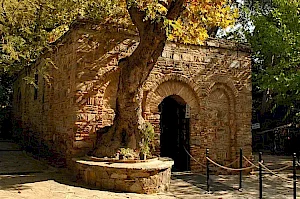
The House of the Virgin Mary:
- The House of the Virgin Mary, located on Mount Koressos near Ephesus, is traditionally believed to be the site where Mary lived. According to legend, this modest stone structure was identified by a Christian nun named Saint Mary of Ephesus in the 4th century.
Papal Recognition:
- In 1896, Pope Leo XIII recognized the House of the Virgin Mary as a place of pilgrimage, affirming its significance in Catholic tradition. Subsequent popes have endorsed the site, further solidifying its importance in Christian belief.
3. Supporting Evidence
Archaeological Findings:
- While definitive archaeological evidence directly linking Mary to the house is lacking, excavations in the area have uncovered a small structure that some believe aligns with early Christian descriptions of Mary’s residence.
- The presence of early Christian artifacts, along with the site’s historical recognition by the church, adds to its credibility as a significant location for Mary’s later life.
Testimonies of Pilgrims:
- Throughout the years, countless pilgrims and visitors have reported a profound sense of spirituality and connection to Mary at the site, reinforcing the belief in its authenticity as her home.
4. Theological Significance
Cultural and Religious Impact:
- The belief that Mary lived in Ephesus has significant cultural and religious implications. It connects the city to the life of Jesus and the early Christian community, emphasizing the role of Mary in the development of Christianity.
- The House of the Virgin Mary has become a pilgrimage site for Christians worldwide, attracting those seeking to honor Mary’s legacy and spirituality.
5. Skeptical Perspectives
Historical Critique:
- Some scholars express skepticism regarding the authenticity of the claims that Mary lived in Ephesus. They point to the lack of concrete historical documentation and argue that the association may be more legendary than factual.
- Others suggest that Mary may have lived in other locations, such as Jerusalem, following the events of Jesus's life.
Conclusion
While definitive historical evidence confirming that Mary, the mother of Jesus, lived in Ephesus is limited, the longstanding tradition and spiritual significance of the House of the Virgin Mary continue to attract pilgrims and visitors. The connection between Mary and Ephesus highlights the rich tapestry of early Christian history and the enduring legacy of Mary as a figure of faith and devotion. Whether one views the claim as historical fact or legend, the impact of this belief on Christian pilgrimage and spirituality remains profound. The House of the Virgin Mary stands as a testament to the deep reverence for Mary and the enduring search for connection to her life and legacy.
Introduction
Discover the fascinating world of Did Mary, Mother of Jesus, Really Live in Ephesus? in ancient Ephesus. This comprehensive guide explores the historical significance, archaeological findings, and cultural impact of this remarkable aspect of Ephesian heritage.
Historical Background
The history of Did Mary, Mother of Jesus, Really Live in Ephesus? dates back to the early days of Ephesus. Archaeological evidence suggests that this aspect of Ephesian life played a crucial role in shaping the city's development and cultural identity.
Archaeological Discoveries
Recent excavations have unveiled remarkable findings related to Did Mary, Mother of Jesus, Really Live in Ephesus?. These discoveries provide valuable insights into how this aspect of Ephesian life evolved over time.
Cultural Significance
Understanding Did Mary, Mother of Jesus, Really Live in Ephesus? is crucial for appreciating the broader cultural context of ancient Ephesus. Its influence extended beyond the city walls, impacting trade, religion, and daily life.
Visitor Information
Today, visitors to Ephesus can explore the remnants of Did Mary, Mother of Jesus, Really Live in Ephesus? firsthand. This section provides practical information for making the most of your visit.
Preservation and Future
Ongoing conservation efforts ensure that Did Mary, Mother of Jesus, Really Live in Ephesus? remains preserved for future generations. Learn about the challenges and successes in maintaining this important historical site.
Frequently Asked Questions
What is the historical significance of Did Mary, Mother of Jesus, Really Live in Ephesus??
The Did Mary, Mother of Jesus, Really Live in Ephesus? holds great historical importance in ancient Ephesus, providing valuable insights into the city's cultural and social development.
What can visitors see related to Did Mary, Mother of Jesus, Really Live in Ephesus? today?
Visitors to Ephesus can explore well-preserved remains and artifacts related to Did Mary, Mother of Jesus, Really Live in Ephesus?, offering a glimpse into the ancient world.
When is the best time to visit Did Mary, Mother of Jesus, Really Live in Ephesus??
The best time to visit is during the spring (April-May) or autumn (September-October) when the weather is mild and crowds are smaller.
Frequently Asked Questions
What is the historical significance of Did Mary, Mother of Jesus, Really Live in Ephesus??
The Did Mary, Mother of Jesus, Really Live in Ephesus? holds great historical importance in ancient Ephesus, providing valuable insights into the city's cultural and social development.
What can visitors see related to Did Mary, Mother of Jesus, Really Live in Ephesus? today?
Visitors to Ephesus can explore well-preserved remains and artifacts related to Did Mary, Mother of Jesus, Really Live in Ephesus?, offering a glimpse into the ancient world.
When is the best time to visit Did Mary, Mother of Jesus, Really Live in Ephesus??
The best time to visit is during the spring (April-May) or autumn (September-October) when the weather is mild and crowds are smaller.
Frequently Asked Questions
What is the historical significance of Did Mary, Mother of Jesus, Really Live in Ephesus??
The Did Mary, Mother of Jesus, Really Live in Ephesus? holds great historical importance in ancient Ephesus, providing valuable insights into the city's cultural and social development.
What can visitors see related to Did Mary, Mother of Jesus, Really Live in Ephesus? today?
Visitors to Ephesus can explore well-preserved remains and artifacts related to Did Mary, Mother of Jesus, Really Live in Ephesus?, offering a glimpse into the ancient world.
When is the best time to visit Did Mary, Mother of Jesus, Really Live in Ephesus??
The best time to visit is during the spring (April-May) or autumn (September-October) when the weather is mild and crowds are smaller.