

Introduction
Introduce the Agora of Ephesus as the central marketplace and meeting area in ancient Ephesus, serving as a hub of commerce, politics, and social interaction. Describe its significance in daily life and its role in shaping the city's economic and social structure.
The History and Structure of the Agora
Explain the layout and design of the Agora, describing its open square surrounded by colonnades, shops, and administrative buildings. Discuss how it served as a place for merchants, artisans, and citizens to gather, trade goods, and engage in public discourse.
Key Archaeological Discoveries at the Agora
Detail some of the most notable archaeological finds at the Agora, such as coins, pottery, and inscriptions that provide insights into the daily activities and economic transactions of the people of Ephesus. Highlight the discovery of public buildings and statues that depict important figures and deities worshiped in the city.
The Political and Social Role of the Agora
Explore how the Agora was more than just a marketplace; it was a center for civic life where citizens discussed politics, attended public assemblies, and participated in religious ceremonies. Describe the evidence found, such as carved reliefs and inscriptions, that illustrate the Agora's role in the political and social life of Ephesus.
Religious Significance and Rituals
Discuss the presence of altars and small shrines discovered in the Agora, which indicate that it was also a place of religious activity. Mention how archaeologists have found traces of religious ceremonies and dedications, shedding light on the religious practices that took place alongside commerce and politics.
The Agora's Transformation Over Time
Explain how the Agora evolved throughout different periods, from its original Hellenistic design to its expansion under Roman influence. Describe the architectural changes that occurred and how they reflect the shifts in Ephesus' political and cultural landscape.
Visiting the Agora Today
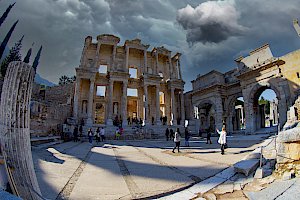
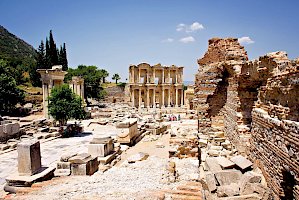
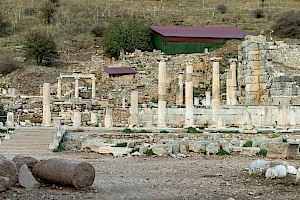
Provide information on what remains of the Agora for visitors to explore today, such as remnants of the colonnades, statues, and inscriptions. Mention nearby points of interest, like the Library of Celsus, which adds context to the historical experience of Ephesus.
Conclusion
Conclude by reflecting on the Agora's importance as a symbol of ancient Ephesus' prosperity and cultural diversity. Emphasize the value of ongoing archaeological work in uncovering the everyday lives of ancient Ephesians and preserving their legacy.
External Link Suggestion:
Link to the Wikipedia page on Ephesus for further reading.