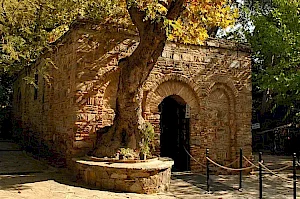


The House of Virgin Mary in Ancient Ephesus
The Significance of the House of Virgin Mary: Pilgrimage Site in Ephesus
The House of Virgin Mary, nestled on Mount Koressos near Ephesus, stands as a beacon of spirituality and pilgrimage for both Christians and Muslims. This small, modest stone house is believed to be where the Virgin Mary, mother of Jesus Christ, spent her last days, making it one of the most sacred sites in Christian history.
Tradition holds that St. John the Apostle brought Mary to Ephesus after the crucifixion of Jesus, fulfilling his duty to care for her as commanded by Christ on the cross (John 19:26-27). This ancient city, known for its worship of Artemis, eventually became a crucial hub for Christianity. The house itself, although only verified in the 19th century, is steeped in tradition and faith that spans millennia.
The History Behind the Discovery of the House of Virgin Mary
The House of Virgin Mary, also known as the Panaghia Kapoulu, was rediscovered in the 19th century through the visions of Blessed Anne Catherine Emmerich, a bedridden German nun who claimed divine revelations about the location of Mary’s last dwelling. Although Emmerich had never been to Ephesus, her descriptions of the location were incredibly accurate, leading to an expedition by Lazarist priests who successfully identified the site in 1891.
Archaeological Evidence and Pilgrimage Recognition
Archaeological excavations have confirmed that the foundation of the house dates back to the first century AD, with parts of the structure rebuilt in later centuries. The Vatican recognized the House of Virgin Mary as a sacred pilgrimage site in 1892, and in 1951, it was declared an official place of pilgrimage for all faiths, welcoming both Christians and Muslims alike.
Pilgrims from around the world visit the site to honor Mary, light candles, offer prayers, and collect water from the sacred spring nearby, which is believed to have healing properties. Several popes, including Pope Paul VI, Pope John Paul II, and Pope Benedict XVI, have visited the site, further cementing its significance in Catholic tradition.
The Spiritual Significance for Christians and Muslims
The House of Virgin Mary is unique in that it is venerated by both Christians and Muslims. For Catholics, Mary is the Mother of God (Theotokos), a title affirmed by the Council of Ephesus in 431 AD. Her role as the mother of Jesus and her example of faith and humility hold a central place in the Christian faith.
For Muslims, Mary (known as Maryam in the Quran) is also highly revered, and she is the only woman mentioned by name in the Quran. The Quran recounts her purity, her miraculous conception of Jesus (Isa), and her role as a pious and devout servant of God. The House of Virgin Mary thus serves as a unifying place for believers from both faiths, highlighting her importance in both Christianity and Islam.
Miracles and Legends of the House of Virgin Mary
One of the enduring legends associated with the House of Virgin Mary is that it was here that Mary ascended into heaven, known in Catholic tradition as the Assumption of Mary. While there is no direct biblical reference to the location of her assumption, the house remains a place of profound spiritual reflection. Visitors have reported experiencing miracles at the site, such as healings and answered prayers.
In addition to the miracles, the house’s peaceful surroundings — its bird's-eye view of the Aegean Sea and the serenity of the natural environment — contribute to the deep sense of reverence felt by pilgrims who visit the house to connect with Mary’s legacy.
Christian and Muslim Pilgrimage Traditions
Throughout the centuries, both Christian and Muslim pilgrims have made their way to this secluded spot on Mount Koressos. In Christian tradition, it is customary to visit the house on August 15th, the Feast of the Assumption, to commemorate Mary's assumption into heaven. Muslim pilgrims, too, visit the house to honor Maryam, often leaving prayers written on small slips of paper in the prayer wall near the house.
The peaceful coexistence of these two traditions at the House of Virgin Mary exemplifies the respect and reverence Mary commands across religious boundaries.
The Role of the House of Virgin Mary in Ephesus’ Christian History
Ephesus played a pivotal role in early Christianity, as both St. Paul and St. John preached here. St. John, who took care of Mary after the death of Jesus, lived and died in Ephesus. The city was also the site of the Council of Ephesus in 431 AD, where Mary was officially proclaimed the Mother of God.
The discovery and recognition of the House of Virgin Mary as a pilgrimage site further solidified Ephesus as one of the most significant cities in the development of early Christianity. The city’s history, from its pagan roots as the home of the Temple of Artemis to its transformation into a Christian center, illustrates the profound spiritual journey the city underwent over centuries.
Conclusion
The House of Virgin Mary in Ephesus is more than just a pilgrimage site. It is a place where faith, history, and tradition converge. Whether one approaches the site from a Christian or Muslim perspective, the house represents the enduring legacy of the Virgin Mary, her role in the life of Jesus, and her lasting impact on believers across faiths. For those who journey to this sacred place, it is an opportunity to connect with a piece of religious history that transcends time and unites believers from around the world.
External Links for Further Reading
- House of the Virgin Mary on Wikipedia
- Catholic Tradition of the Assumption of Mary
- Mary in Islam: Reverence in the Quran
Introduction
Discover the fascinating world of The House of Virgin Mary in Ancient Ephesus in ancient Ephesus. This comprehensive guide explores the historical significance, archaeological findings, and cultural impact of this remarkable aspect of Ephesian heritage.
Historical Background
The history of The House of Virgin Mary in Ancient Ephesus dates back to the early days of Ephesus. Archaeological evidence suggests that this aspect of Ephesian life played a crucial role in shaping the city's development and cultural identity.
Archaeological Discoveries
Recent excavations have unveiled remarkable findings related to The House of Virgin Mary in Ancient Ephesus. These discoveries provide valuable insights into how this aspect of Ephesian life evolved over time.
Cultural Significance
Understanding The House of Virgin Mary in Ancient Ephesus is crucial for appreciating the broader cultural context of ancient Ephesus. Its influence extended beyond the city walls, impacting trade, religion, and daily life.
Visitor Information
Today, visitors to Ephesus can explore the remnants of The House of Virgin Mary in Ancient Ephesus firsthand. This section provides practical information for making the most of your visit.
Preservation and Future
Ongoing conservation efforts ensure that The House of Virgin Mary in Ancient Ephesus remains preserved for future generations. Learn about the challenges and successes in maintaining this important historical site.
Frequently Asked Questions
What is the historical significance of The House of Virgin Mary in Ancient Ephesus?
The The House of Virgin Mary in Ancient Ephesus holds great historical importance in ancient Ephesus, providing valuable insights into the city's cultural and social development.
What can visitors see related to The House of Virgin Mary in Ancient Ephesus today?
Visitors to Ephesus can explore well-preserved remains and artifacts related to The House of Virgin Mary in Ancient Ephesus, offering a glimpse into the ancient world.
When is the best time to visit The House of Virgin Mary in Ancient Ephesus?
The best time to visit is during the spring (April-May) or autumn (September-October) when the weather is mild and crowds are smaller.
Frequently Asked Questions
What is the historical significance of The House of Virgin Mary in Ancient Ephesus?
The The House of Virgin Mary in Ancient Ephesus holds great historical importance in ancient Ephesus, providing valuable insights into the city's cultural and social development.
What can visitors see related to The House of Virgin Mary in Ancient Ephesus today?
Visitors to Ephesus can explore well-preserved remains and artifacts related to The House of Virgin Mary in Ancient Ephesus, offering a glimpse into the ancient world.
When is the best time to visit The House of Virgin Mary in Ancient Ephesus?
The best time to visit is during the spring (April-May) or autumn (September-October) when the weather is mild and crowds are smaller.
Frequently Asked Questions
What is the historical significance of The House of Virgin Mary in Ancient Ephesus?
The The House of Virgin Mary in Ancient Ephesus holds great historical importance in ancient Ephesus, providing valuable insights into the city's cultural and social development.
What can visitors see related to The House of Virgin Mary in Ancient Ephesus today?
Visitors to Ephesus can explore well-preserved remains and artifacts related to The House of Virgin Mary in Ancient Ephesus, offering a glimpse into the ancient world.
When is the best time to visit The House of Virgin Mary in Ancient Ephesus?
The best time to visit is during the spring (April-May) or autumn (September-October) when the weather is mild and crowds are smaller.