
Discover the ancient names of Ephesus, including its Hittite roots and titles from Greek and Roman eras, uncovering the rich history of this legendary city. Ephesus, known today as one of Turkey's most significant archaeological sites, has been called by various names throughout its long history, each reflecting a different era and cultural influence. Here are some of the other names by which Ephesus was known:
Apasa or Apasas: The Hittite Connection
The earliest known name for Ephesus is Apasa or Apasas, which dates back to the Hittite period, around 1400 BCE. During this time, Ephesus was part of the Arzawa Kingdom, an ancient civilization situated in Western Anatolia. The Hittite records, particularly the Ahhiyawa letters, mention Apasa, indicating Ephesus’s strategic importance even in ancient times. This name ties the city to its Anatolian roots, highlighting its role in the region long before the arrival of the Greeks.
Ephesos: The Greek Influence
With the arrival of Ionian settlers around the 10th century BCE, the city became known as Ephesos (Εφεσος in Greek). According to Greek legend, the city was founded by Androklos, son of the Athenian king Kodros, who was guided by an oracle to establish the settlement. The name "Ephesos" is linked to the Greek word for “bee,” symbolizing the city’s connection to bees and honey, which were sacred to the goddess Artemis. This Greek influence transformed Ephesus into a major religious, cultural, and economic center of the Ionian League.
The City of Artemis
Ephesus was also known as the City of Artemis, reflecting its deep association with the worship of the goddess Artemis. The Temple of Artemis, one of the Seven Wonders of the Ancient World, was built in her honor and attracted pilgrims from across the ancient Mediterranean. This title highlights Ephesus's role as a center for religious devotion and the influence of Artemis on the city’s identity. The city held grand festivals in her honor, making it a prominent site for followers of the goddess.
Ephesus in Roman Times
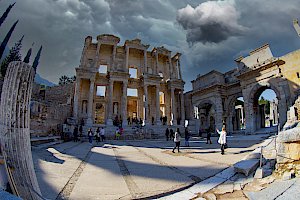
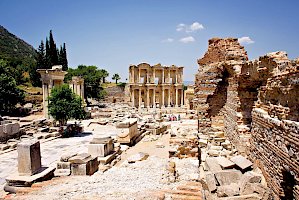
As Ephesus became part of the Roman Empire in 129 BCE, it retained the name Ephesus, but it flourished as a Roman city. The Romans expanded Ephesus, building iconic structures such as the Library of Celsus, Great Theatre, and numerous temples. Ephesus became a provincial capital and a significant trade hub, connecting Asia with the Aegean. While the name did not change during the Roman period, the city’s character evolved, blending Roman architecture with its Greek heritage.
Ephesus: The City of the Apostle Paul
In early Christian history, Ephesus became known as the City of the Apostle Paul due to his missionary work there. Paul’s time in Ephesus, as described in the Book of Acts, marked the city as an early center for Christianity. He established a strong Christian community, and his Epistle to the Ephesians further associates the city with Christian teachings. Ephesus also holds significance in Christian tradition as the possible final home of the Virgin Mary, who is believed to have lived there under the care of St. John the Apostle. You can learn more about this by visiting virginmaryhouse.com.
Ephesus Today: A UNESCO World Heritage Site
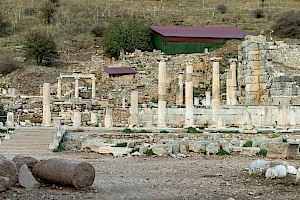
Today, Ephesus is recognized globally as a UNESCO World Heritage Site, celebrated for its rich blend of Greek, Roman, and Christian history. It continues to be known by the name Ephesus, though remnants of Apasa and its role as the City of Artemis still resonate with visitors who explore its ruins. For a comprehensive tour of Ephesus, including insights into the ongoing archaeological excavations, visit ephesustours.biz.
Conclusion
The various names of Ephesus reflect the city’s long and layered history. From Apasa during the Hittite era to Ephesos under the Greeks and its reputation as the City of Artemis, each name tells a story of the city’s evolution through time. Today, Ephesus remains a captivating destination for travelers, offering a glimpse into ancient civilizations and their legacies. Visiting Ephesus is not just a journey through a historic site, but an exploration of the diverse cultural identities that have shaped it over thousands of years.